SLS, or Selective Laser Sintering, is a 3D printing process that uses a laser to fuse fine nylon powder together layer by layer, producing strong, durable parts with complex geometry and no need for support structures. It is the workhorse process for robust, intricate awards and deal toys that must survive handling and shipping while carrying demanding shapes. At Fabit, SLS printing runs in-house in Antwerp, giving us the freedom to build interlocking, hollow and organic forms that other processes struggle with.
How SLS printing works
An SLS machine gently heats a bed of fine polymer powder, usually nylon, to just below its melting point. A laser then scans the cross-section of the part, delivering the extra energy needed to sinter the powder particles together into solid material. The build platform lowers, a roller spreads a fresh layer of powder across the whole bed, and the laser fuses the next slice. This repeats until the object is complete, encased in a block of unfused powder.
The crucial difference from SLA and FDM is that the surrounding loose powder supports the part as it builds. That means no printed support structures are needed, no matter how complex the geometry, so there are no support scars to remove and no design compromises to avoid overhangs.
Why the no-support advantage matters
Support-free printing is a genuine superpower for award design. Overhangs, bridges, enclosed cavities, moving parts printed pre-assembled and dense lattices are all achievable in a single print. A deal toy can include a floating internal element or an interlocking chain straight off the machine. Because the powder cradles everything, the designer’s imagination, not the machine’s mechanics, sets the limit. Fabit uses this to produce pieces that look impossible, which is exactly the reaction a memorable award should provoke.
Strength and durability
SLS nylon parts are tough. They have good impact resistance, some flexibility before breaking, and consistent strength in every direction because the sintered structure is fairly isotropic. This makes SLS a natural choice for awards that will be posted around the world, handled at ceremonies and kept on desks for years. Where a brittle material might chip, a well-made SLS piece absorbs knocks. For Fabit’s worldwide clients, that resilience is a practical reassurance as much as an engineering one.
SLS versus SLA and metal
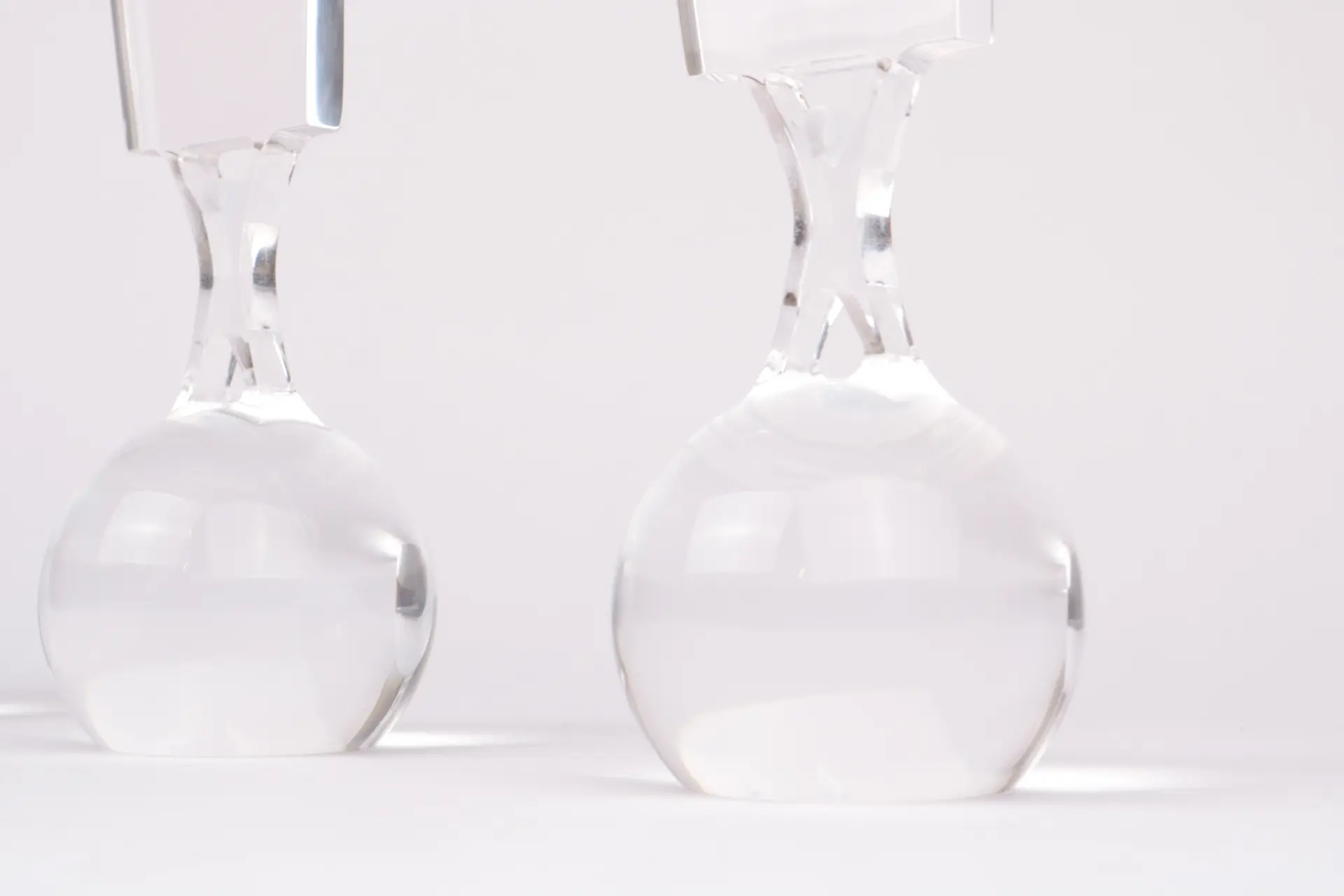
The three processes serve different intents:
- SLS for strength, complex self-supporting geometry and durable functional forms, with a naturally matte, slightly grainy surface.
- SLA for the smoothest surfaces and finest detail, ideal for crisp text and glass-like finishes.
- Metal (DMLS) for genuine weight and material authenticity in steel or titanium.
None is universally best. Fabit’s advantage is that we run all three in-house, so we can pick the right one for each element and even combine them, pairing an SLS structural core with an SLA detail or a metal accent.
Finishing SLS awards
Straight from the machine, an SLS part has a uniform matte, sandy texture and a pale colour. Turning it into a premium award is finishing work. Parts are cleaned of residual powder, then dyed, smoothed, primed, painted, coated or given specialist finishes. Because the surface is porous, careful sealing and priming are important before painting, and this is where in-house control pays off: Fabit’s makers know exactly how each finish behaves on sintered nylon and can deliver a consistent, high-quality result across an entire run.
SLS in Fabit’s workflow
SLS is one of the three core additive processes in Fabit’s Antwerp studio, alongside SLA resin and DMLS metal printing. Keeping it in-house means we control the whole journey, from validating the design file to printing, finishing, protective packaging and worldwide shipping, with a 24-hour response to every enquiry. To see complex SLS geometry in finished pieces, browse our 3D printed trophy page, review the choices on our materials overview, or start shaping an idea in our online design studio.
Frequently asked questions
What makes SLS different from other 3D printing? SLS needs no support structures because loose powder supports the part, so it can build extremely complex, self-supporting geometry that other processes cannot.
Are SLS parts strong? Yes. SLS nylon parts are durable and impact resistant with fairly even strength in all directions, making them well suited to awards that are shipped and handled.
What does an SLS part look like before finishing? Matte, slightly grainy and pale. Fabit finishes SLS pieces with dyeing, smoothing, priming, painting or coating to reach a premium appearance.
Can SLS be combined with other materials? Yes. Fabit frequently combines an SLS structural core with SLA detail elements or metal accents in a single bespoke award.
Related terms