Additive manufacturing is the industrial process of building a physical object layer by layer directly from a digital 3D model, adding material only where it is needed rather than cutting it away from a solid block. For custom trophies, awards and deal toys, it is the technology that lets a shape exist in the real world exactly as it was imagined on screen, with geometry that no mould or milling tool could produce. At Fabit, additive manufacturing is not an outsourced convenience. It is the core craft we run in-house in Antwerp, and it is why we can promise a bespoke object rather than a catalogue item with a logo bolted on.
What additive manufacturing actually means
The word “additive” is the key. Traditional manufacturing is usually subtractive or formative: you either carve a form out of a larger piece of material, or you force material into a fixed mould. Additive manufacturing reverses that logic. A digital model is mathematically sliced into hundreds or thousands of ultra-thin horizontal layers, and a machine reconstructs the object one layer at a time, fusing, curing or bonding material as it goes. Because the machine only ever adds material, complexity is essentially free. A hollow lattice, an interlocking chain, a floating internal element or an organic curved surface costs the same to print as a simple cube of the same volume.
This is a profound shift for anyone who wants a truly custom award. When the constraint of “can it be moulded or milled” disappears, the design conversation changes. Instead of asking what is manufacturable, we ask what the piece should say, and then let the technology follow.
The main additive manufacturing technologies
Additive manufacturing is a family of processes, not a single machine. The ones that matter most for high-end awards are:
- SLA and DLP resin printing cure liquid photopolymer with light, giving glass-smooth surfaces and razor-sharp detail, ideal for crisp lettering and premium finishes.
- SLS printing fuses fine nylon powder with a laser, producing strong, self-supporting parts with no visible support marks, excellent for complex functional geometry.
- Metal 3D printing (DMLS) fuses metal powder layer by layer, producing genuine stainless steel, titanium or aluminium components with real weight and presence.
- FDM extrudes molten thermoplastic and is often used for large concept models and internal structures.
Because Fabit operates these processes together in one studio, we can combine them within a single trophy. A metal-printed core, a resin-printed detailed element and an embedded component can all live in the same piece, chosen material by material for exactly the right effect.
Why additive manufacturing suits bespoke awards
An award is not a mass-produced part. It is usually a run of one, ten or fifty, and each one carries meaning. Additive manufacturing is uniquely suited to this because it has no tooling cost. There is no expensive mould to amortise across thousands of units, so a run of twelve is entirely viable and a run of one is normal. That makes genuinely bespoke work economically sensible in a way that casting alone rarely allows for small quantities.
It also compresses time. A design can move from an approved 3D file to a physical object in days, which is why Fabit can respond within 24 hours and still hit tight event and ceremony deadlines. When a client in another country needs a milestone piece for a launch, additive manufacturing removes the weeks that tooling would demand.
Freedom of form and the design conversation
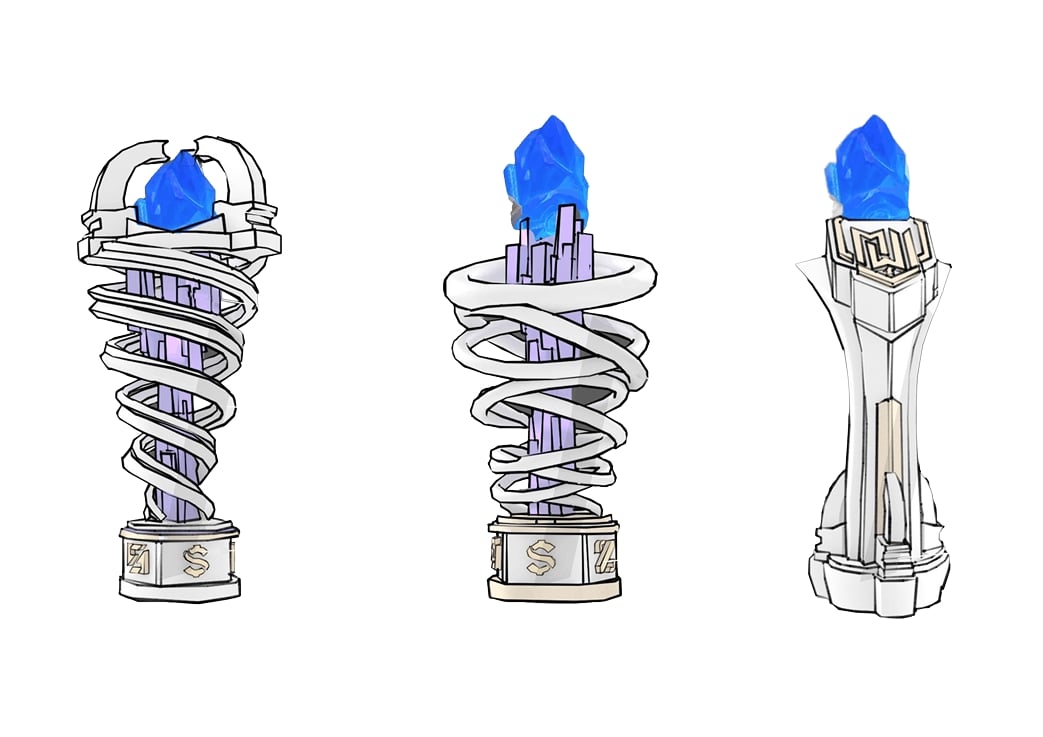
The single greatest benefit is design freedom. With additive manufacturing you can produce undercuts, enclosed voids, thin organic walls, moving parts printed pre-assembled, and shapes derived directly from a brand’s own 3D assets or product renders. A deal toy can literally be a miniature of the building, the device or the molecule at the heart of the deal. A trophy can express a brand’s signature curve rather than approximate it.
At Fabit this freedom is guided by advice, not left to chance. Our team steers each project toward the process and material that will make the finished object feel considered and permanent, whether that means the cold density of metal or the optical clarity of cured resin.
Additive manufacturing and finishing craft
Printing is only the first act. A raw print, however precise, is not yet a premium award. Additive manufacturing pairs with hand finishing: supports are removed, surfaces are sanded and polished, parts are primed, painted, plated, anodised or clear-coated, and components are assembled and bonded. This marriage of digital precision and human craft is where Fabit lives. The machine guarantees geometry; the maker’s hand guarantees feel.
From file to finished object at Fabit
A typical Fabit project runs from brief and sketch, to 3D modelling, to a validated print-ready file, to in-house printing, to finishing, and finally to protective packaging and worldwide shipping. Because every step after the brief happens under one roof in Antwerp, we control quality end to end and can iterate quickly when a client wants a change. You can start a project or explore possibilities through our online design studio, browse examples on our 3D printed trophy page, or review the options on our materials overview.
Frequently asked questions
Is additive manufacturing the same as 3D printing? Yes. “Additive manufacturing” is the formal industrial term, and “3D printing” is the everyday name for the same layer-by-layer process. In practice they are interchangeable.
Can additive manufacturing produce metal awards? Yes. Through metal powder-bed fusion such as DMLS, Fabit produces genuine metal parts in materials like stainless steel and titanium, with the weight and finish clients expect from a serious award.
Is it only suitable for small quantities? No. Additive manufacturing is ideal for one-offs and small runs because there is no tooling cost, but it also scales cleanly to larger series, and can be combined with casting when very high volumes call for it.
How fast can Fabit deliver? Once a design is approved, additive manufacturing lets us move to a physical object in days. We respond to enquiries within 24 hours and ship worldwide from our Antwerp studio.
Related terms