Investment casting is a precision metal-forming process in which a wax or printed pattern is coated in a ceramic shell, melted out to leave a hollow mould, and filled with molten metal to produce a detailed, high-quality metal part. Also known as lost-wax casting, it is one of the oldest and most refined ways to make metal objects, and it pairs beautifully with modern 3D printing. At Fabit, investment casting extends our in-house additive work, letting us reproduce a printed master in solid bronze, brass, aluminium or precious metal with exquisite fidelity.
How investment casting works
The process follows a precise sequence. First, a pattern of the object is made in a material that can be melted or burned away, traditionally wax, but increasingly a 3D printed resin pattern. Patterns are attached to a central wax or resin channel to form a tree. The tree is repeatedly dipped in fine ceramic slurry and coated with stucco until a thick shell builds up. The shell is heated so the pattern melts and drains out, leaving a hollow cavity that is an exact negative of the original. Molten metal is poured into the hot shell, allowed to solidify, and the ceramic is then broken away to reveal the metal parts, which are cut from the tree and finished.
Because the mould is formed around a precise pattern and destroyed to release the part, investment casting captures fine surface detail and complex shapes that reusable moulds cannot.
Why 3D printing transformed investment casting
Traditionally, the wax pattern itself needed a metal injection mould, which was expensive and slow to produce, making small runs impractical. 3D printing changed the economics entirely. A pattern can now be printed directly from a digital file in castable resin, with no injection tooling at all. This means a bespoke design can go from screen to cast metal in a fraction of the old time and cost, and a run of one is genuinely feasible. Fabit exploits this directly: we print the master pattern in-house, then cast from it, marrying digital design freedom to the material richness of casting.
Investment casting versus direct metal printing
Both routes yield metal awards, and the right choice depends on the piece:
- Direct metal printing (DMLS) is ideal for one-offs and geometry that must be enclosed or internally complex, with no casting step needed.
- Investment casting shines when you want warmer metals like bronze and brass, a particular cast surface character, or several identical copies from one printed master at lower per-unit cost.
Fabit advises which path serves the design, and sometimes combines them within a project, casting some elements while printing others.
Metals and finishes
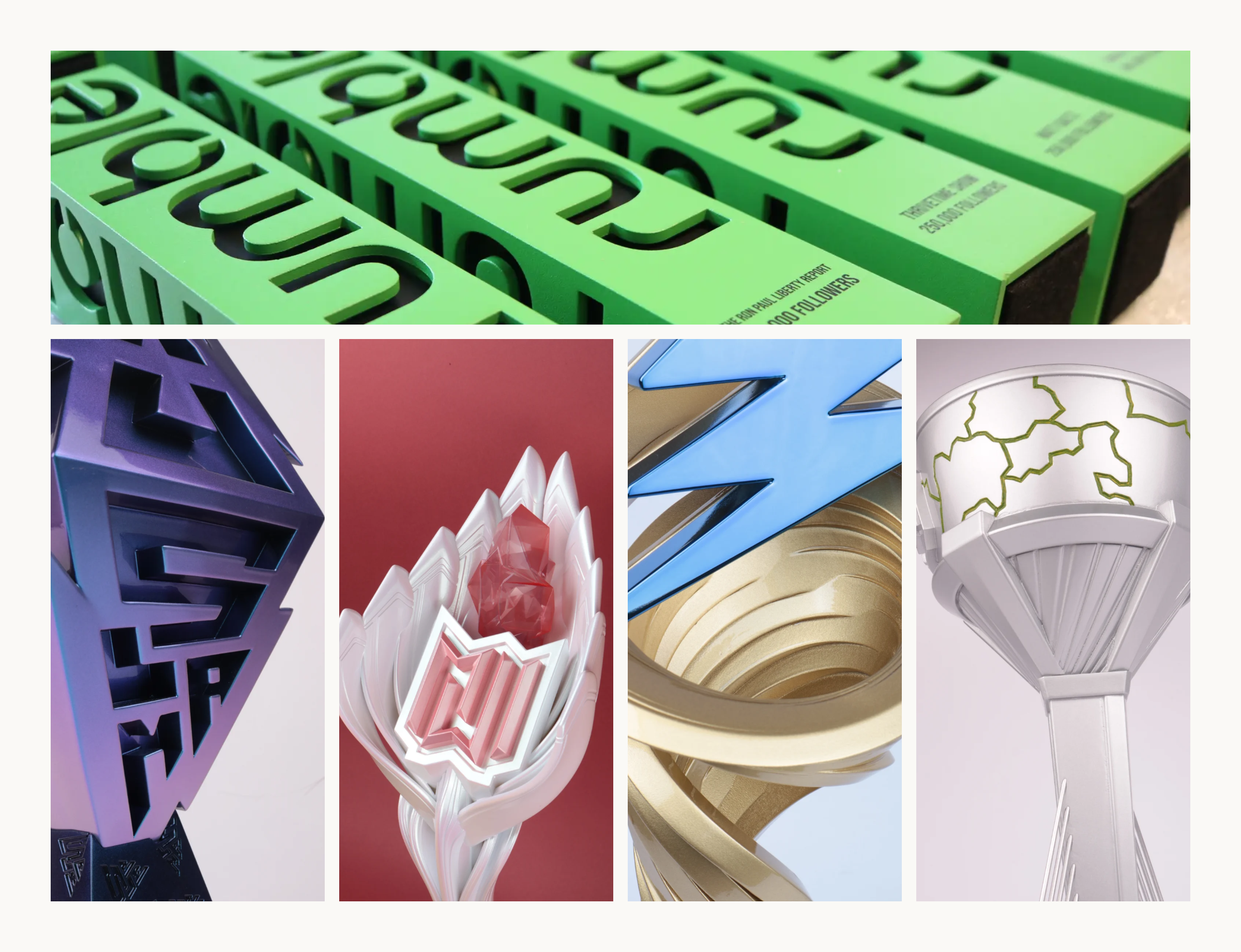
Investment casting opens a palette that suits traditional and prestigious awards. Bronze carries a timeless, sculptural warmth. Brass offers a bright golden tone. Aluminium keeps weight down while reading as solid metal. Precious metals such as silver are possible for the most exclusive pieces. Each can be patinated, polished, brushed, plated or coated, and cast surfaces take these treatments with a depth that is hard to replicate. Fabit guides this material and finish choice as part of the advisory design conversation.
Where investment casting fits for awards
Investment casting is the natural choice when an award should feel classical, weighty and sculptural, or when a client needs a set of matching metal pieces. Lifetime achievement awards, commemorative medallions, sculptural deal toys and heritage-brand trophies all benefit from the cast metal aesthetic. Combined with a 3D printed master, the process delivers this character without the tooling burden that once made small bespoke runs prohibitive.
Investment casting in Fabit’s workflow
At Fabit, investment casting is an extension of our in-house 3D capability rather than a separate outsourced service disconnected from design. We model and print the pattern, oversee casting, and bring the raw casting back for hand finishing, assembly and protective packaging before worldwide shipping. As with everything we do, enquiries receive a response within 24 hours. To explore cast metal within a bespoke piece, see our materials overview, browse examples on our 3D printed trophy page, or start an idea in our online design studio.
Frequently asked questions
Is investment casting the same as lost-wax casting? Yes. Investment casting is the industrial name for the lost-wax process, in which a pattern is invested in a ceramic shell that is then filled with molten metal.
How does 3D printing help investment casting? A castable pattern can be printed directly from a digital file, removing the need for expensive injection tooling and making bespoke and small-run casting fast and affordable.
Which metals suit investment casting? Bronze, brass, aluminium and precious metals are all well suited, each offering a distinct colour and character that finishing can enhance.
When should I choose casting over metal printing? Choose casting for warmer metals, cast surface character or multiple matching copies from one master; choose direct metal printing for one-offs and enclosed, internally complex geometry. Fabit will advise per project.
Related terms