Metal 3D printing is the family of additive manufacturing processes that build solid metal objects layer by layer from a digital model, producing genuine steel, titanium or aluminium parts without any mould or milling. For high-end trophies, awards and deal toys, it is the technology that gives a bespoke object real weight and material authenticity while preserving the geometric freedom of digital design. At Fabit, metal printing is part of an in-house craft, not an outsourced afterthought, which is why we can guide clients toward metal with genuine authority.
How metal 3D printing works
Most metal 3D printing for detailed objects uses a powder-bed fusion process. A thin layer of fine metal powder is spread across a build plate, and an energy source, usually a laser, selectively melts or sinters the powder to match the cross-section of the part. The plate drops, a new layer of powder is applied, and the cycle repeats until the full object is complete, buried in surrounding powder that is then brushed away. The best-known variant is DMLS, Direct Metal Laser Sintering, which Fabit uses for crisp, fully dense metal parts.
The process happens inside a sealed chamber filled with inert gas to prevent oxidation, and finished parts are usually heat-treated to relieve internal stresses before finishing begins. The result is a part that is metallurgically real, not a coating over a lighter core.
Why metal matters for an award
There is a reason the most significant awards are heavy. Weight signals importance. When a recipient lifts a metal award, the density is felt before the design is even read, and that physical seriousness is impossible to fake with plated plastic. Metal 3D printing delivers this gravity while still allowing shapes that traditional metalworking cannot reach, so a brand’s own geometry can be rendered honestly in solid metal.
Metal also ages well. A finished stainless steel or titanium piece keeps its presence for decades, which matters for lifetime achievement awards, founding milestones and deal toys meant to sit on a desk for years.
Metals used in 3D printing
The palette is broad, and each metal carries its own character:
- Stainless steel is the workhorse: durable, corrosion resistant, and beautiful either brushed or mirror polished.
- Titanium is light yet strong, with a distinctive tone that suits technology and aerospace narratives.
- Aluminium is lighter and takes coloured anodising well, useful for vivid brand-matched finishes.
- Bronze and precious metals can be achieved through printed patterns feeding casting, when a warmer or more traditional material is wanted.
Fabit treats material selection as a design decision. We advise which metal best carries the intended message, then match the finish to it.
Metal printing versus casting and machining
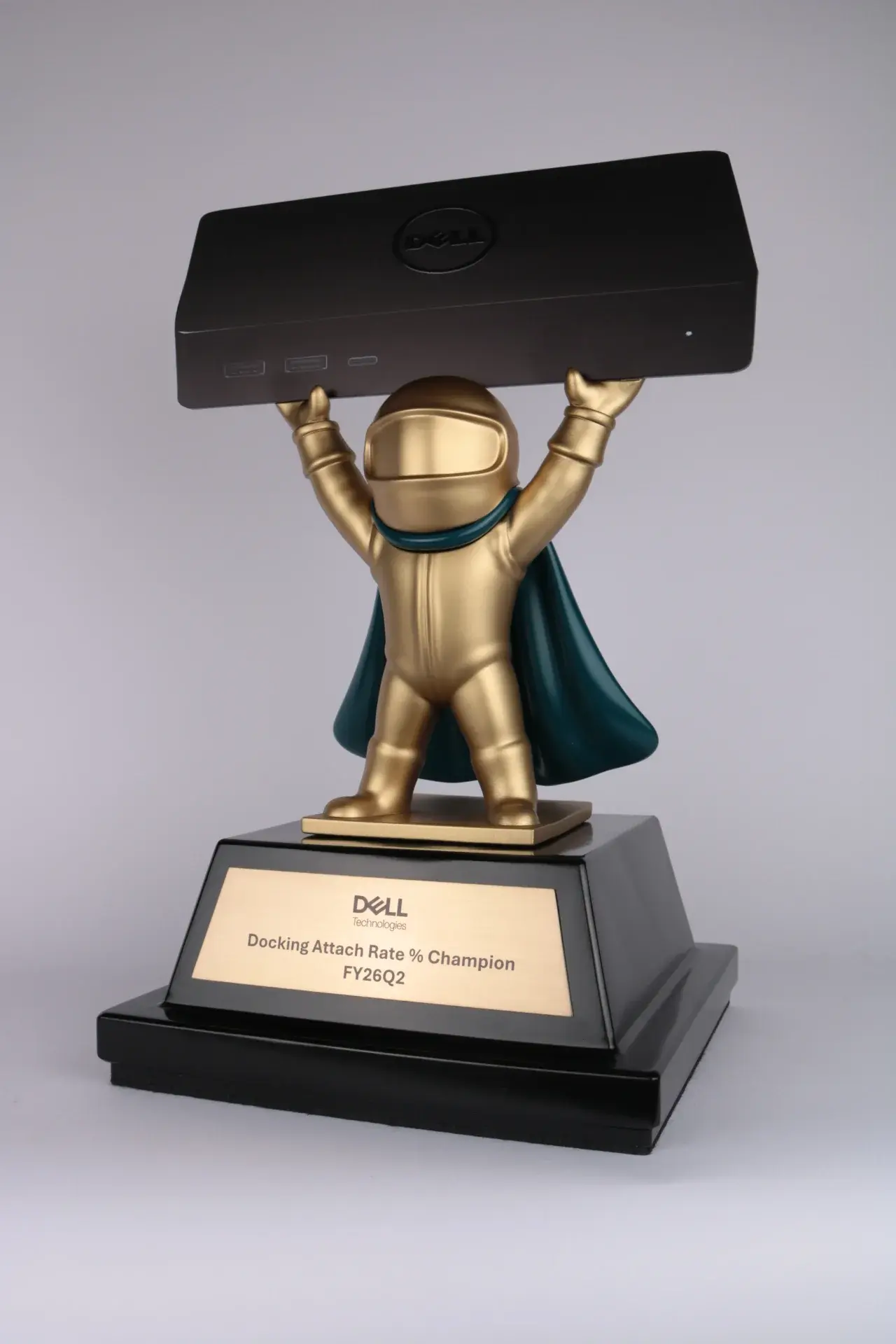
Casting and CNC machining are the classic routes to a metal object. Casting excels at volume once a mould exists, but tooling is costly and slow for small runs, and internal complexity is limited. Machining is superbly precise but subtractive, so it cannot produce enclosed voids or highly organic forms and it wastes material. Metal 3D printing needs no tooling, so one-off and small-batch awards are economical, and it adds material only where needed, so intricate geometry is essentially free. For a bespoke run of metal awards, printing is frequently the smartest choice, and Fabit can combine it with casting when volumes climb.
Finishing metal-printed awards
A metal print leaves the machine matte and supported, and the transformation into a premium award is hand craft. Supports are removed, the surface is blasted, tumbled or hand sanded, and then polished, brushed, plated, coated or anodised to the chosen finish. Engraving, colour fills and assembly of multiple components follow. This finishing stage is where the object gains its soul, and it is exactly where Fabit’s makers concentrate their skill in the Antwerp studio.
Metal 3D printing at Fabit
Because Fabit runs metal, resin and nylon printing in-house, we can build multi-material awards that mix a solid metal core with fine resin detail or an embedded element, all controlled end to end. We validate the design, print, finish, protect and ship worldwide, and we respond to every enquiry within 24 hours. Explore the possibilities on our materials overview, see finished work on our 3D printed trophy page, or begin an idea in our online design studio.
Frequently asked questions
Are metal 3D printed awards solid metal? Yes. Powder-bed fusion produces fully dense metal throughout, so a printed stainless steel award is solid stainless steel, not a plated shell.
Which metals can Fabit offer? We work primarily in stainless steel, titanium and aluminium via metal printing, and can reach bronze and precious metals through printed patterns and casting when the design calls for it.
Is metal printing worth it for a single award? Often yes. With no tooling required, a one-off metal award avoids the mould cost that casting would demand, making a single flagship piece surprisingly practical.
Can metal be combined with other materials? Absolutely. Fabit regularly pairs metal-printed elements with resin detail or lucite embedment to create layered, distinctive awards.
Related terms