The choice between 3D printing and casting for a trophy comes down to quantity, geometry, material and time: 3D printing wins for bespoke one-offs, complex shapes and speed with no tooling, while casting wins for larger runs and traditional metals once a pattern or mould exists. They are not enemies but complementary tools, and the real expertise lies in knowing which to use for each element of an award. At Fabit, both live in-house in Antwerp, so we advise without bias and often combine the two within a single bespoke piece.
The core difference
3D printing is additive: an object is built layer by layer directly from a digital file, with no mould required. Casting is formative: a pattern is used to create a mould, and molten material is poured or forced into that mould to take its shape. The consequence is fundamental. Printing carries no tooling cost, so complexity and low quantity are free, while casting front-loads cost into making the pattern and mould, which then pays off across a run. Understanding this single distinction answers most of the choice.
When 3D printing wins
Printing is the stronger choice in several common situations:
- One-offs and small runs, because there is no mould to justify. A single bespoke trophy is entirely practical.
- Complex or organic geometry, including enclosed voids, lattices and interlocking forms that no mould could release.
- Speed, since an approved file can become a physical object in days rather than the weeks tooling demands.
- Direct use of digital assets, turning a brand’s own 3D logo or product model straight into a physical piece.
For the bespoke, low-volume, design-led work that defines premium awards and deal toys, printing is very often the right primary process.
When casting wins
Casting earns its place too, and dismissing it would be a mistake:
- Medium and larger runs, where the per-unit cost drops once the pattern exists, especially with investment casting fed by a printed master.
- Traditional metals like bronze and brass, whose warmth and sculptural character casting renders beautifully.
- High-volume standardised pieces such as medals and coins, where die casting’s low per-unit cost is unbeatable.
- A particular cast surface aesthetic that some clients specifically want.
The modern twist is that 3D printing and casting are no longer separate worlds. A printed pattern can feed investment casting, giving the design freedom of printing with the material character of casting.
Cost and quantity: the decisive factor
Quantity usually decides. At a run of one to a few dozen, printing is almost always more economical because casting’s tooling cost has too few units to spread across. As quantity climbs into the hundreds, investment casting from a printed pattern becomes competitive. At many thousands of identical pieces, die casting takes over. Plotting cost against quantity gives three clear zones, and an honest studio simply tells the client which zone their project sits in. Fabit does exactly that rather than pushing whichever process is most convenient.
Material and finish considerations
Material intent also guides the choice. If a piece must be genuine solid metal in a one-off, direct metal printing via DMLS delivers it without a mould. If the desired material is bronze or brass with a warm patina, investment casting is the natural route. If the design is intricate resin detail with a glass-smooth finish, SLA printing is unbeatable. Both printed and cast parts are then transformed by the same finishing craft, polishing, plating, painting and assembly, so the final quality depends as much on the hands that finish it as on the process that formed it.
Why Fabit combines both
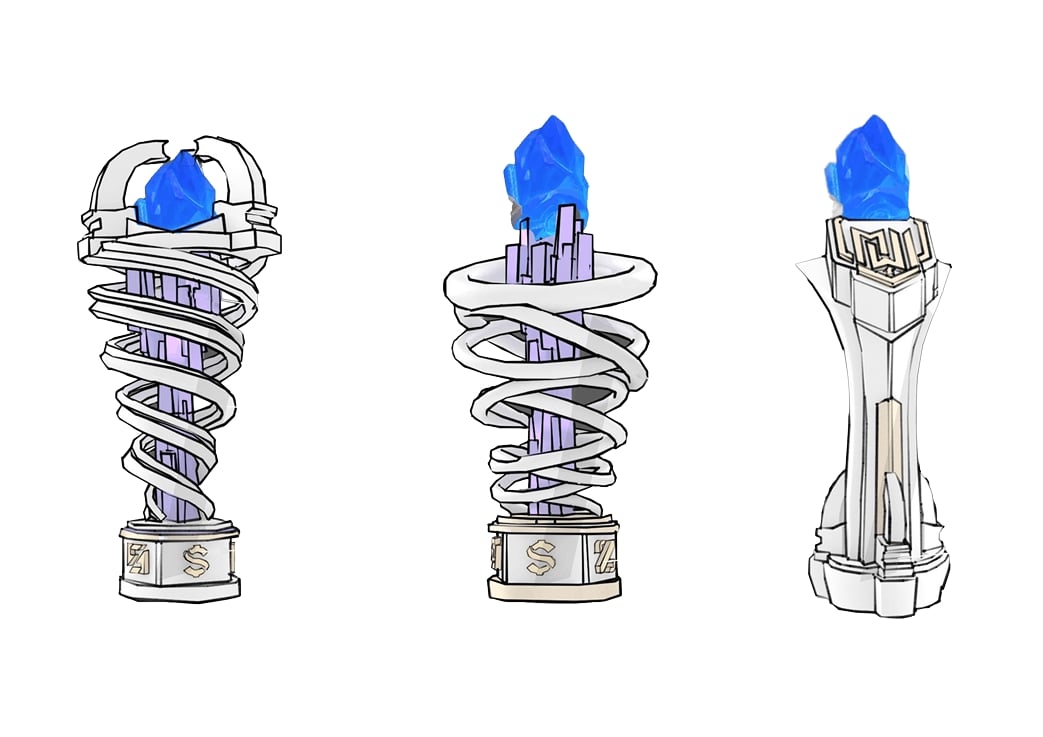
The most sophisticated awards rarely use just one process. A trophy might have a DMLS metal accent, an SLA resin detail, a CNC machined base and a cast element, each chosen for what it does best. Because Fabit runs printing and casting in-house together, we design an award holistically and select the ideal process for every part, then finish and assemble it as one coherent object. This is the advantage a single-process supplier cannot offer, and it is why we frame the question not as 3D printing versus casting, but as 3D printing and casting.
Getting advice for your trophy
The right answer depends on your quantity, timeline, material and design ambition, and the best way to decide is a conversation with makers who use both methods every day. Fabit responds to every enquiry within 24 hours and delivers worldwide from Antwerp. To weigh your options, explore our materials overview, see combined-process work on our 3D printed trophy page, or start shaping your idea in our online design studio.
Frequently asked questions
Is 3D printing or casting better for a single trophy? For a one-off, 3D printing is almost always better because it needs no mould, making a single bespoke piece fast and economical.
When does casting become the better choice? As quantities rise. Investment casting from a printed pattern suits medium runs and traditional metals, and die casting suits very high-volume medals and coins.
Can the two processes be combined? Yes. A 3D printed pattern can feed investment casting, and a single award can mix printed, cast and machined elements. Fabit does this routinely in-house.
How do I decide for my project? Consider quantity, material, complexity and deadline, then talk to Fabit. We use both methods daily and advise on the best route without bias, responding within 24 hours.
Related terms