SLA, or stereolithography, is a resin 3D printing process that uses a precise light source to cure liquid photopolymer resin layer by layer into a solid object, producing exceptionally smooth surfaces and fine detail. It is the technology behind crisp lettering, sharp edges and the glass-like finish that a premium award demands. At Fabit, SLA printing runs in-house in Antwerp, which lets us push detail and surface quality to a level that off-the-shelf trophies simply cannot reach.
Looking for a trophy in this material? See our custom resin trophies.
How SLA printing works
An SLA printer holds a vat of liquid photopolymer resin, a material that hardens when exposed to specific wavelengths of light, usually ultraviolet. A laser or a digital light projector traces each cross-section of the object onto the resin surface, curing a thin layer solid. The build platform then moves by one layer thickness and the next layer is cured onto the last. Because light can be focused very finely, SLA achieves layer heights and feature detail far beyond what molten-plastic processes manage.
Once printing finishes, the part is washed to remove uncured resin and then post-cured under UV light to reach its full hardness and stability. Supports are removed and the surface, already smooth, is refined further by hand.
Why SLA excels for premium awards
The signature of SLA is surface quality. Where powder and filament processes leave visible texture, SLA produces walls so smooth they can be polished to near-glass clarity or painted to a flawless gloss. For an award, this matters enormously. Fine engraved text stays legible, logos keep their exact curves, and thin decorative elements survive intact. When a client wants a piece that looks precise and considered from every angle, SLA is usually the answer.
SLA also renders clear and translucent resins, opening the door to pieces that play with light, transparency and internal colour, a quality Fabit exploits in more sculptural awards.
SLA versus SLS and metal printing
Each process has a role. SLS fuses nylon powder and is prized for strength and self-supporting complexity, but its surface is inherently matte and slightly grainy. Metal printing delivers weight and authenticity but at higher cost. SLA sits at the detail-and-finish end of the spectrum: lighter than metal, smoother than SLS, and unmatched for crisp features. Fabit does not treat these as rivals but as complementary tools, and often combines an SLA detail element with an SLS or metal core in a single award.
Materials and finishes with SLA
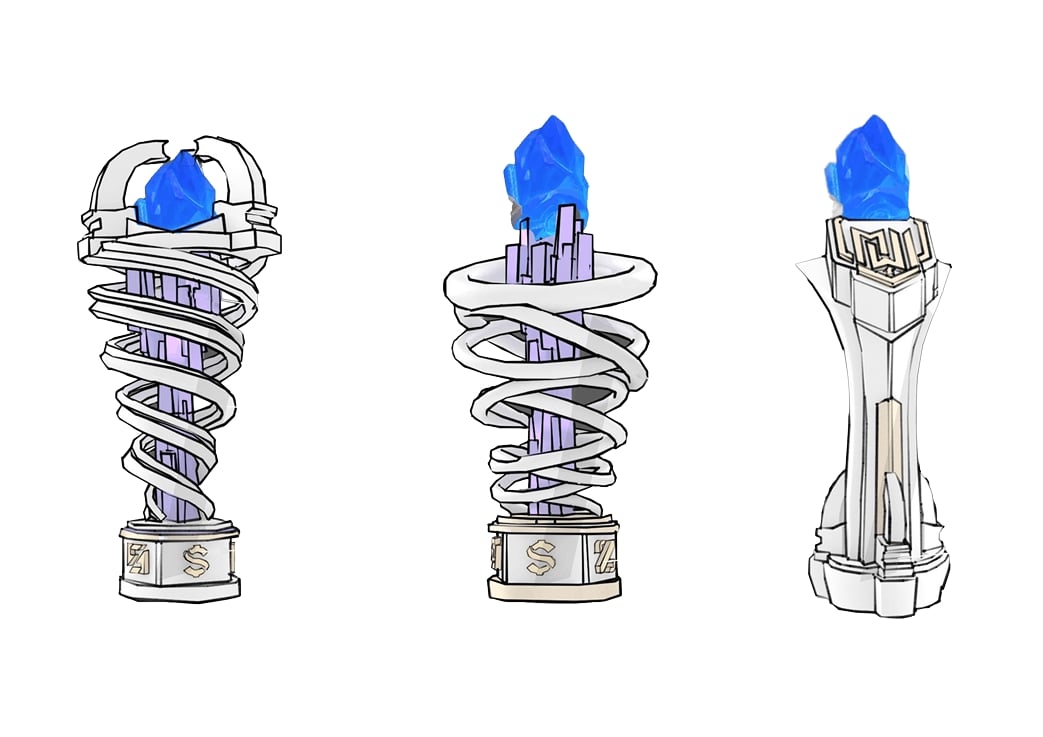
Modern SLA resins are a rich toolkit, and the choice shapes the final piece:
- Standard opaque resins take paint, primer and clear coat beautifully for solid, coloured or metallic-finished awards.
- Clear resins can be polished to transparency for light-catching, glass-like pieces.
- Tough and durable resins add impact resistance for parts that must survive shipping and handling.
- High-detail resins capture the finest text and texture for intricate designs.
Fabit advises which resin suits the design intent and finishing plan, because the resin and the finish must be chosen together.
Finishing an SLA award
SLA gives a head start on finish, but the premium result still comes from craft. After post-curing and support removal, surfaces are sanded, primed and painted, or polished for clarity. Metallic paints, soft-touch coatings, colour fills in engraved recesses and multi-part assembly all happen by hand. Because the printed surface is already smooth, less filling is needed, so the crispness of the original design carries through to the finished object. This is where Fabit’s finishing team turns a clean print into a piece that feels expensive.
SLA in Fabit’s in-house workflow
SLA is one pillar of Fabit’s in-house additive capability, sitting beside SLS and metal printing in our Antwerp studio. That co-location means we can mix processes within one award and control quality from design validation through printing, finishing and worldwide shipping, always with a 24-hour response to enquiries. To see SLA detail in finished work, explore our 3D printed trophy page, compare options on our materials overview, or start designing in our online studio.
Frequently asked questions
What is the main advantage of SLA? Surface quality and detail. SLA produces the smoothest surfaces and sharpest features of the common 3D printing processes, which is why it suits premium awards with fine text and logos.
Can SLA make clear or transparent awards? Yes. Clear resins can be printed and polished to a glass-like transparency, ideal for light-catching sculptural pieces.
Is SLA strong enough for a trophy? With the right tough or durable resin and proper finishing, SLA parts are robust enough for awards that are handled and shipped. Fabit selects the resin to match how the piece will be used.
How does SLA compare to SLS? SLA is smoother and more detailed; SLS is stronger and better for complex functional geometry. Fabit often combines both in a single design.
Related terms