Vector engraving and raster engraving are two ways a laser or engraving tool translates a design onto a surface. Vector engraving follows continuous lines and outlines like a pen drawing, while raster engraving fills areas by sweeping back and forth line by line like an inkjet print. Choosing the right one, or combining both, determines how crisp, detailed, and efficient your engraved award will be.
Engraving looks simple from the outside, but the way a machine interprets your artwork has a large effect on the result. Understanding the difference between vector and raster engraving helps you supply the right artwork and specify the effect you want, so the finished award reads exactly as intended.
How vector engraving works
Vector artwork is made of mathematical paths, lines and curves defined by points rather than pixels. When a machine engraves a vector, it moves the tool or laser continuously along those paths, cutting or marking the outline directly. Because it follows the line itself, vector engraving is fast, produces very crisp thin lines, and is ideal for outlines, fine text, logos built from clean shapes, and cut through operations. Think of it as the machine tracing your drawing with a single continuous stroke.
How raster engraving works
Raster engraving treats the design as a grid of dots, the same way a photograph is made of pixels. The machine sweeps across the surface line by line, turning the marking on and off dot by dot to build up filled areas, shading, and images. This makes raster engraving the right choice for solid filled shapes, photographs, gradients, and detailed textures. It is slower than vector because it must cover the whole area, but it can reproduce tonal detail that vector cannot.
Why the distinction matters for premium awards
A premium award often carries several kinds of content: crisp brand text, a logo, perhaps a photographic portrait or a textured background. Each of these is best served by a different method. Fine text and clean logo outlines look sharpest as vectors, while a photograph or a shaded emblem needs raster. Knowing this in advance means we prepare the artwork correctly and the finished engraving looks intentional rather than compromised.
It also affects time and cost. Vector engraving is efficient, while large raster fills take longer. On a big programme, understanding the mix helps balance detail against production time.
When to choose vector
- Fine text: small lettering stays crisp and legible as vector outlines.
- Clean logos: logos made of solid shapes and lines reproduce sharply.
- Outlines and borders: decorative frames and rules are quick and precise.
- Cutting through: when the goal is to cut a shape rather than mark it.
- Speed: when efficiency matters across a large batch.
When to choose raster
Raster is the right tool whenever you need filled areas or tonal detail. Photographs of a person or place, logos with gradients or shading, textured backgrounds, and large solid engraved zones all call for raster. It can render subtle transitions from light to dark that a line based method simply cannot achieve. The trade off is time, since the machine must sweep the entire filled area, but for the right content the result is worth it.
Combining both for the best result
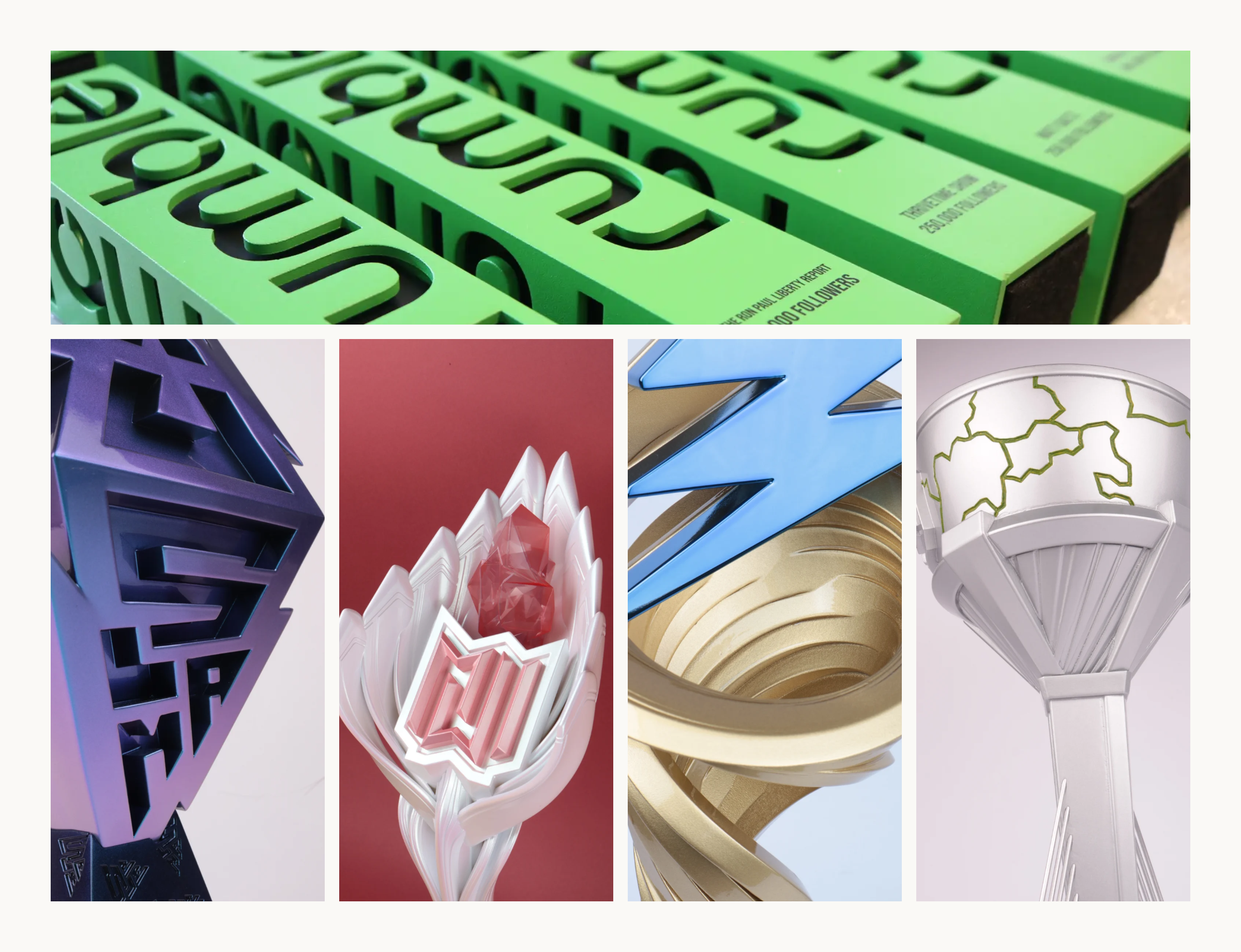
The most refined awards frequently use both methods in one piece. A design might raster engrave a photographic emblem for depth, then vector engrave crisp text and a clean border around it. Because the two methods are combined in a single controlled workflow, the transitions look seamless. Deciding this split is part of the artwork preparation we handle for every engraved project, and it is why supplying good source files matters so much.
Preparing artwork for engraving
For vector engraving we need true vector files, where text and shapes are defined as paths. For raster engraving we need high resolution images with good contrast. Supplying a low resolution logo when crisp vector text is expected leads to disappointing results, so we always review artwork before production and advise on what will engrave best. You can see the range of engraved and hybrid pieces we produce on our custom trophies service page, and the substrates that engrave well on our materials overview.
How Fabit approaches it
Engraving is where artwork meets material, and getting it right depends on preparing files correctly and choosing the right method for each element. Because we engrave in house, our team reviews your artwork, splits it intelligently between vector and raster, and tests the result on the actual material before committing. That care is what makes the difference between engraving that merely marks a surface and engraving that elevates it.
Send us your concept and artwork and we respond within twenty four hours, delivering finished awards worldwide.
Frequently asked questions
Which is better, vector or raster?
Neither is universally better. Vector suits crisp lines and text, raster suits fills and photographs. The best awards often use both.
What file should I supply?
Vector files such as clean paths for text and logos, and high resolution images for photographic content. We will advise on your specific artwork.
Can a photograph be engraved?
Yes, using raster engraving, which reproduces tonal detail. High resolution, high contrast images give the best results.
Does the method affect cost?
It can. Large raster fills take longer than vector lines, so on big batches the mix influences production time and therefore cost.
How material affects the engraving choice
The vector or raster decision does not happen in isolation from the material being engraved. Different substrates respond differently to marking, and the same artwork can look distinct on anodised metal, coated metal, clear acrylic, or wood. On some materials the engraving removes a coating to reveal a contrasting layer beneath, which favours crisp vector lines, while on others the mark is a controlled colour change or frosting that suits raster shading. A photographic portrait that looks superb rendered as raster on one material may need adjusting for another. Because of this, we always test the intended artwork on the actual chosen material before committing to a full run, confirming that both the method and the substrate deliver the contrast and clarity the design depends on.
Understanding vector versus raster engraving turns you into a better collaborator on your own award. It ensures your text stays razor sharp, your photographs carry real depth, and your logo appears exactly as your brand intends. Start your engraved design in our online design studio.
Related terms
- laser engraving
- reverse engraving on acrylic
- second-surface printing
- sandblasting
- facet cutting
- flame polishing