Flame polishing is a finishing technique in which a controlled flame is passed over the cut edge of a material, most often acrylic, momentarily melting the surface so that it flows smooth and becomes optically clear. It turns a frosted, saw cut edge into a transparent, glass-like finish.
Clear acrylic is one of the most elegant materials in the awards world because it appears to hold light itself. But that beauty depends entirely on the quality of the edges. A raw cut acrylic edge is cloudy and matte, which breaks the illusion of clarity. Flame polishing is the technique that restores it, and it is essential to producing acrylic awards that look like solid crystal.
How flame polishing works
When acrylic is cut or machined, the edge is left with a rough, light scattering surface full of microscopic irregularities. Flame polishing passes a precisely controlled flame, typically fuelled by a clean burning gas, along that edge. The intense heat briefly liquefies the outermost layer of the material. Surface tension immediately pulls this molten layer smooth, and as it cools it solidifies into a glossy, transparent surface. The change from cloudy to clear happens in seconds under a skilled hand.
The skill lies entirely in control. Too little heat leaves the edge cloudy, while too much introduces bubbles, distortion, or internal stress. It is a technique that rewards experience.
Why it matters for premium awards
An acrylic award lives or dies by its transparency. A recipient holds the piece up, turns it in the light, and looks through it. Beautifully flame polished edges make the whole object read as a single flawless block of crystal, which conveys exactly the sense of value a premium award should. Dull edges, by contrast, immediately signal a cheaper product no matter how good the engraving is.
Polished edges also enhance any internal detail. Light entering through a clear edge illuminates engraving and printing within the acrylic far more vividly than light entering through a frosted one.
Which materials suit flame polishing
Cast acrylic is the classic material for flame polishing and responds superbly, which is why it is so prevalent in premium recognition pieces. The technique is specific to materials that soften cleanly under heat, so it is not universal across all plastics. We match the finishing method to the substrate at the design stage, and you can explore the transparent and coloured options we offer on our materials overview.
Flame polishing versus other edge finishes
There are several ways to finish an acrylic edge. Diamond polishing uses a precision cutting tool to produce an extremely flat, optically perfect edge, ideal for straight lines. Buffing uses wheels and compounds for a softer result. Flame polishing is fast and produces a lovely glossy clarity, and it handles curved and contoured edges that a diamond tool cannot reach. For many sculptural acrylic awards, flame polishing is the natural choice, sometimes combined with diamond polishing on the flat faces.
What the finish looks and feels like
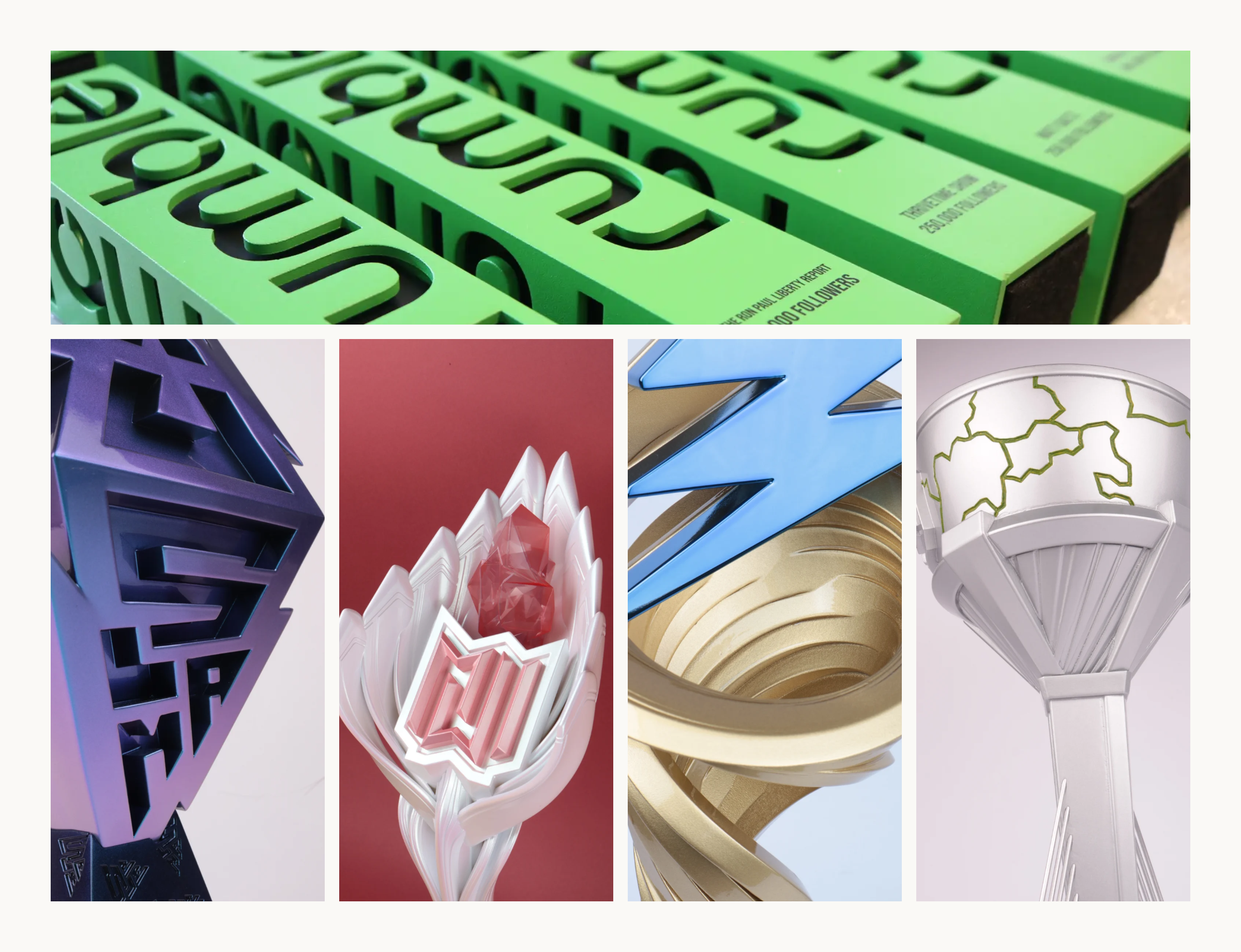
A well flame polished edge is glossy, transparent, and glass-like. Looking at the piece, the eye passes straight through the edge rather than being stopped by a cloudy band. The surface feels smooth and slightly rounded to the touch. In good lighting the whole award seems to glow from within, because light now enters and travels through the material without being scattered at the boundary.
Design considerations before you commit
- Edge geometry: flame polishing excels on curves and contours, while very sharp corners are reviewed individually.
- Thickness: thicker acrylic showcases the crystal effect beautifully and benefits most from polished edges.
- Internal detail: polished edges make internal engraving and printing glow, so plan them together.
- Material grade: cast acrylic gives the best clarity, decided at design stage.
- Combination finishes: flat faces can be diamond polished while contours are flame polished for the best of both.
How Fabit approaches it
Flame polishing is a hands on craft, and keeping it in house means our finishers work directly alongside the team engraving and printing the same piece. That closeness is how we ensure the polished edges, the internal detail, and the overall form all serve one coherent design. You can see how acrylic sits within our wider range on the custom trophies service page.
Every acrylic project receives a response within twenty four hours, and we deliver finished pieces worldwide.
Frequently asked questions
Is flame polishing the same as diamond polishing?
No. Flame polishing melts the surface smooth with heat and suits curves, while diamond polishing machines a perfectly flat edge and suits straight faces. We often combine them.
Can any plastic be flame polished?
No. The material must soften cleanly under heat. Cast acrylic is ideal, and we confirm suitability before committing.
Does flame polishing affect internal engraving?
It enhances it. Clearer edges let more light into the piece, making internal detail appear brighter and more three dimensional.
Will the polished edge stay clear over time?
Yes. Once cooled, the polished surface is stable and clear. Normal care, such as avoiding abrasive cleaning, keeps it looking new.
The skill behind a clean edge
It is worth dwelling on just how much of flame polishing rests on the operator’s judgement. There is no dial that guarantees a perfect edge; there is only the finisher’s reading of how the flame is behaving, how quickly the surface is flowing, and when to lift away. Move too slowly and the acrylic overheats, trapping bubbles or introducing internal stress that can lead to crazing over time. Move too quickly and the edge stays cloudy. The finisher also has to account for the thickness of the material and the shape of the edge, adjusting pace and distance continuously. This is why flame polishing is genuinely a craft rather than a mechanical step, and why entrusting it to experienced hands makes such a visible difference to the finished award.
Flame polishing is the difference between an acrylic award that looks like plastic and one that looks like crystal. It is a fast technique in skilled hands but an unforgiving one, which is precisely why it belongs with experienced makers. Begin designing your clear acrylic piece in our online design studio.
Related terms