Facet cutting is the process of shaping a material into multiple flat, angled surfaces, or facets, so that light reflects and refracts across them to create sparkle and visual depth. In awards it is used to give crystal, acrylic, and metal pieces a jewel-like brilliance and a strong geometric identity.
Think of the way a cut gemstone catches the light, throwing brightness in every direction as it moves. That effect is not an accident of the material, it is the result of precisely arranged flat surfaces. Facet cutting brings the same principle to awards, and it is one of the most powerful tools for making a recognition piece feel precious and alive.
How facet cutting works
A facet is simply a flat plane cut into the surface of an object. When many facets are arranged at carefully chosen angles, each one acts like a small mirror or lens. Light striking the piece reflects off some facets and refracts through others, and because the surfaces sit at different angles, the eye perceives constant sparkle as the piece or the viewer moves. The geometry of the facets, their size, angle, and arrangement, determines the character of that sparkle.
Facets can be cut by precision machining, by hand lapping against abrasive wheels, or as part of a moulding process, depending on the material and the design.
Why it matters for premium awards
A faceted award commands attention. Where a smooth surface reflects light in a single predictable way, a faceted one animates it, drawing the eye and holding it. On a stage or a shelf, that liveliness makes the piece stand out and signals craftsmanship. Facets also give an award a distinctive silhouette and a modern, architectural character that flat forms cannot match.
There is a psychological dimension too. Faceting is strongly associated with fine jewellery and crystal, so a faceted award borrows that sense of preciousness, reinforcing the value of the recognition it carries.
Which materials suit facet cutting
Transparent materials such as crystal and cast acrylic are the most spectacular candidates, because facets let light travel into and through the body of the piece for maximum sparkle. Metals can also be faceted for a bold, contemporary reflective effect, though the result is reflective rather than refractive. The choice of material shapes the whole aesthetic, and we discuss it at the outset, drawing on the options shown in our materials overview.
Facet cutting versus smooth forms
A smooth, continuous surface is calm, minimal, and elegant, and it suits certain brand identities perfectly. A faceted surface is dynamic, ornate, and attention seeking. Neither is better in the abstract, they simply serve different design intentions. Many of the most striking awards combine the two, pairing smooth polished zones with faceted accents so that the sparkle has a quiet frame to shine against.
What a faceted piece looks and feels like
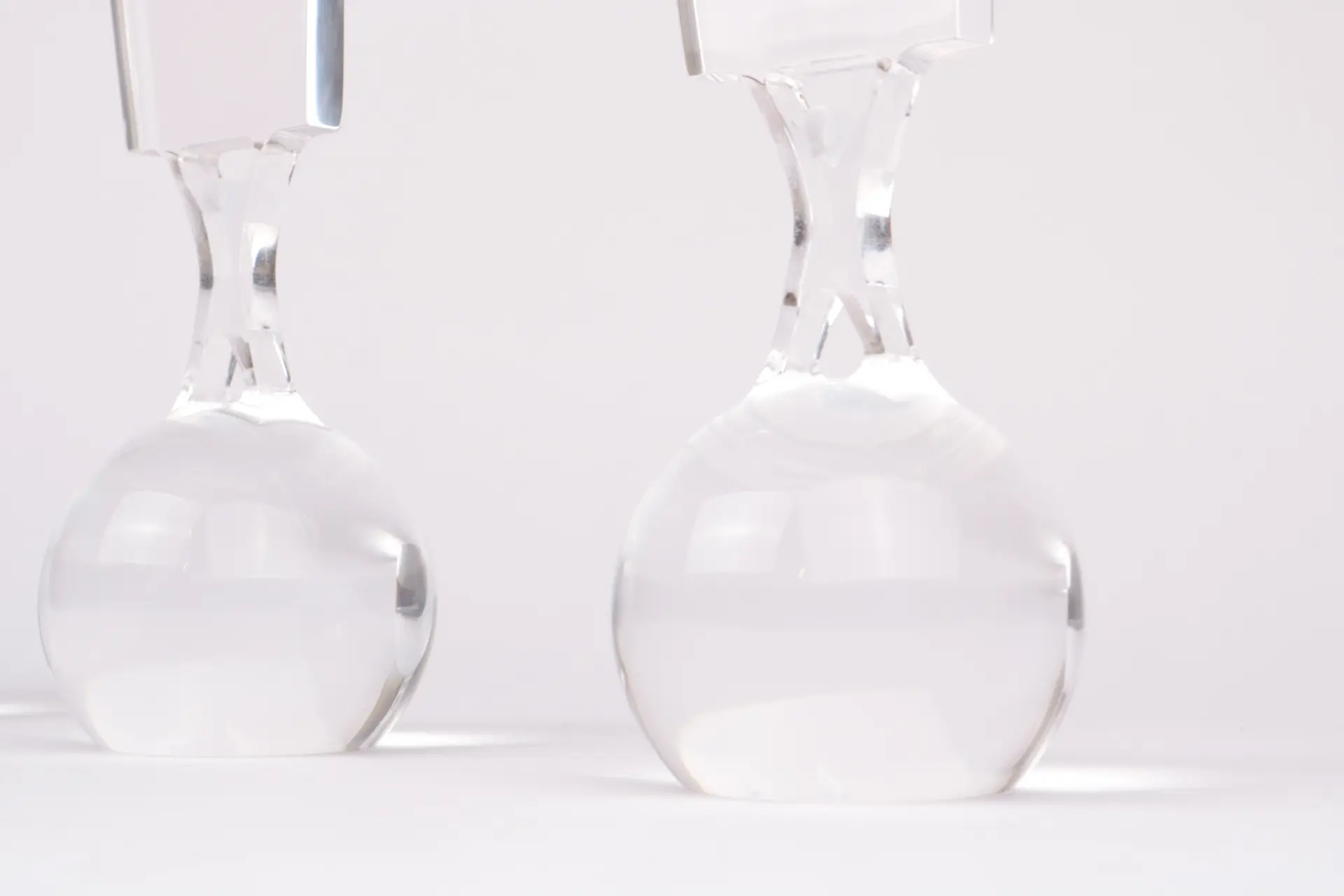
A faceted award reads as geometric and precise. Its surfaces meet in crisp edges, and it feels considered and engineered in the hand. In transparent materials the interior seems to fracture and multiply the light, producing a shifting play of brightness. In metal the facets create a mosaic of reflections that changes with every angle. Either way, the piece never looks static.
Design considerations before you commit
- Material transparency: clear materials maximise refractive sparkle, while metals give reflective drama.
- Facet scale: larger facets read as bold and architectural, smaller ones as delicate and jewel-like.
- Edge finishing: facets on acrylic usually need polishing so the cut planes stay clear.
- Engraving placement: plan where text sits so it is legible against an active, sparkling surface.
- Lighting context: facets shine brightest under directional light, so consider where the award will be displayed.
How Fabit approaches it
Faceting is where geometry, material, and light meet, and it demands precise execution. Because we design and produce in house, we can model the facet geometry digitally, prototype it, and refine it before committing to the final piece. That control lets us balance sparkle with legibility so the award dazzles without losing its message. You can see how faceted forms sit within our full range on the custom trophies service page, and for printed and additive approaches to geometric forms our 3D printed trophy page is a useful companion.
We respond to design enquiries within twenty four hours and ship finished awards worldwide.
Frequently asked questions
Is facet cutting only for crystal?
No. Crystal and acrylic give the most sparkle, but metals and other materials can be faceted too for a reflective, geometric effect.
Do facets make engraving harder to read?
They can, if placed carelessly. We plan smooth zones or well chosen facets for text so the message stays clear against the sparkle.
Can facets be combined with colour?
Yes. Tinted materials, printing, or coatings can be combined with faceting for coloured sparkle, which we advise on during design.
Are faceted awards more fragile?
Not inherently. Sharp facet edges are designed and finished to be durable, and material choice accounts for the intended handling.
Designing facets with intent
The temptation with faceting is to add more, on the assumption that more facets mean more sparkle. In practice, the most memorable faceted awards are the ones where the geometry has been designed with restraint and purpose. A few large, boldly angled planes can read as confident and architectural, while a dense field of tiny facets reads as delicate and ornamental. The relationship between the facets and the overall silhouette matters just as much as the facets themselves, because a piece that sparkles but has no clear form quickly loses its impact. This is where digital modelling earns its keep: we can visualise how light will move across a proposed facet arrangement before any material is cut, refining the geometry until the sparkle serves the design rather than overwhelming it.
Facet cutting is how an award earns a second glance and then a third. It takes a static object and fills it with movement and light, borrowing the language of fine jewellery to elevate the moment of recognition. Start shaping your faceted concept in our online design studio.
Related terms