Anodising is an electrochemical finishing process that thickens and controls the natural oxide layer on aluminium, creating a hard, durable, corrosion-resistant surface that can be dyed in a wide range of colours while becoming an integral part of the metal rather than a coating applied on top. Because the colour and protection are built into the metal’s own oxide layer, an anodised finish is exceptionally tough, will not chip or peel like paint, and gives aluminium awards a clean, contemporary, premium character.
Fabit uses anodising to bring colour and durability to aluminium components at our Antwerp workshop. It is the finish of choice when a piece calls for a modern, minimal aesthetic in a specific colour, with a surface that feels precise and engineered. Combined with laser engraving, anodised aluminium produces some of the sharpest, most contemporary awards we make.
How anodising works
Aluminium naturally forms a thin oxide layer when exposed to air, which protects it from corrosion. Anodising takes control of that process and dramatically enhances it. The aluminium part is submerged in an acid electrolyte bath and connected as the anode, the positive electrode, hence the name. When electric current passes through the bath, oxygen ions bond with the aluminium surface, growing a controlled, porous oxide layer that is far thicker and harder than the natural one. Crucially, this layer is not added on top of the metal, it is grown from the metal itself, so it is fully integrated and cannot flake off.
The porous structure of the fresh oxide layer is what allows colouring. While the pores are open, dye can be drawn deep into them. The layer is then sealed, typically in hot water or a sealing solution, which closes the pores and locks the colour and protection permanently into the surface. The thickness of the anodised layer can be varied to suit the application, with a heavier coating offering greater hardness and a deeper colour reservoir, and a lighter one giving a more delicate finish. Because the whole surface is treated uniformly in the bath, the colour lands evenly across the piece, including on edges and contours that a sprayed finish might cover unevenly.
Colour and the dyeing process
One of anodising’s great advantages is colour. After the oxide layer is grown, the porous surface readily absorbs dye, allowing a broad palette from bold reds, blues and greens to sleek blacks and subtle metallic tones. Because the dye sits within the oxide structure and is then sealed in, the colour is deep, even and remarkably resistant to fading and wear. This produces a colour finish quite different in character from paint or powder coating: it feels like coloured metal rather than a coated surface, with a slightly translucent, high-quality depth.
Why anodising suits modern awards
Anodised aluminium has a distinctly contemporary, precise aesthetic that suits technology brands, design-led companies and any recognition piece aiming for a clean modern look. The finish is smooth, uniform and available in exact colours, so it pairs beautifully with minimal geometry. It is also extremely practical: the hardened surface resists scratches, corrosion and everyday handling far better than bare or painted aluminium, so an anodised award stays looking pristine. Aluminium is light too, which gives designers freedom to create larger forms without excessive weight.
Anodising and engraving together
Anodised aluminium is a superb surface for laser engraving. A laser can remove the coloured oxide layer to reveal the bright aluminium beneath, producing crisp, high-contrast marks without any need for colour fill. This is why so many anodised awards carry sharp, clean engraving, black anodised aluminium with silver engraved text is a modern classic. The engraving is permanent and the contrast is excellent, making this combination one of the most effective and cost-efficient ways to personalise a run of contemporary awards. We use it constantly for corporate recognition series.
Materials and the aluminium requirement
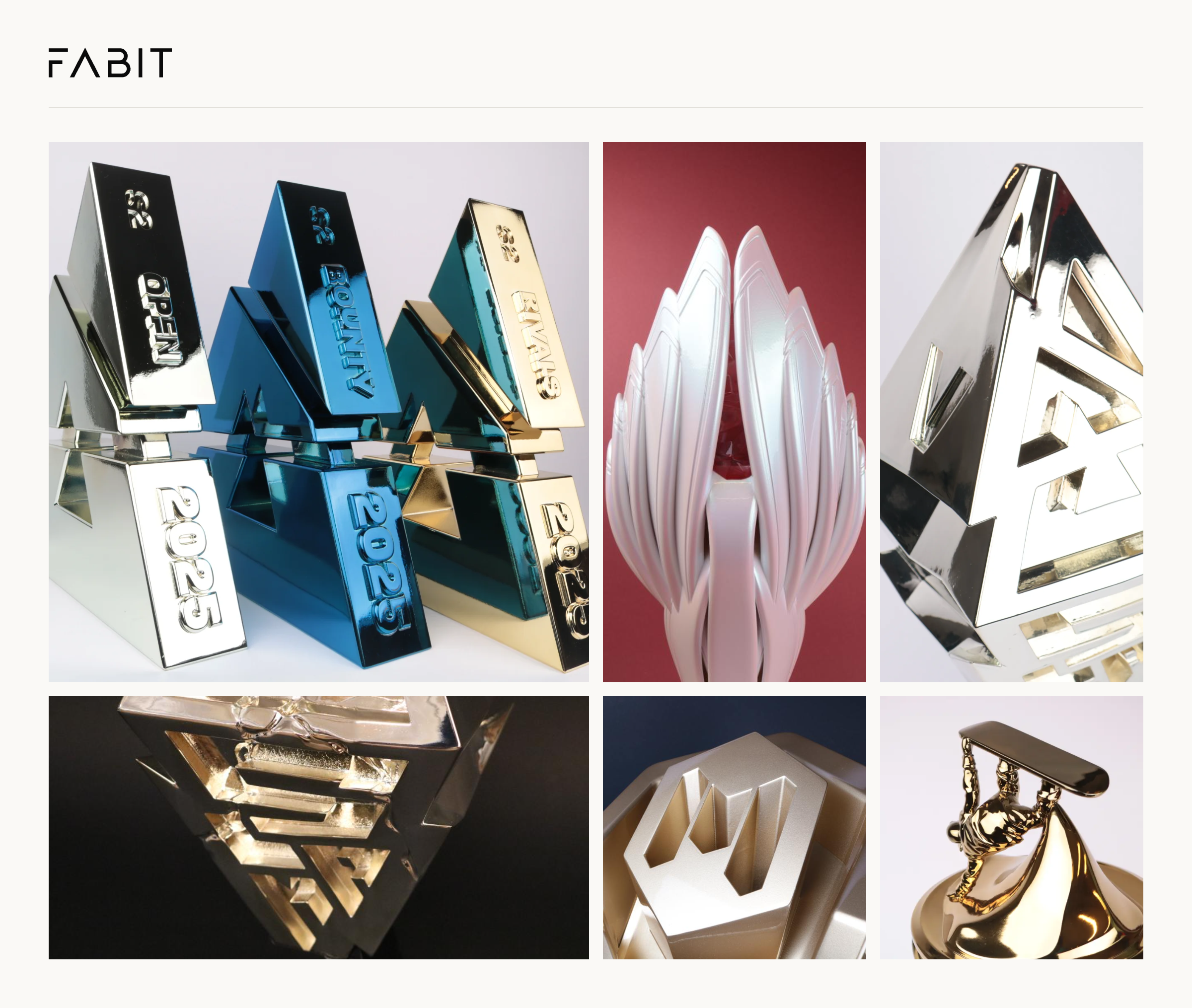
Anodising is specific to aluminium and a few other metals such as titanium; it does not work on steel, brass or most other metals, which take different finishes. This is an important design consideration: if you want an anodised colour finish, the piece, or at least the anodised component, must be aluminium. We often combine anodised aluminium elements with other materials, such as a crystal or glass feature on an anodised base, to get the best of each. Our materials overview explains which materials suit anodising and how we combine them.
Anodising compared with other finishes
Anodising, electroplating and powder coating all give metal a finished surface, but they differ fundamentally. Electroplating deposits a layer of a different metal, such as gold or chrome, for a genuine metallic finish. Powder coating applies a durable coloured polymer over the surface. Anodising is unique in that it transforms the aluminium’s own surface into a hard, coloured, integrated oxide layer, giving a colour finish that is part of the metal and exceptionally tough. Where you want coloured aluminium with a precise, engineered feel and outstanding durability, anodising is the ideal choice. See finished pieces on our custom trophies service.
How Fabit approaches anodising
We integrate anodised aluminium into designs from our Antwerp workshop, advising on colour, form and how the anodised element combines with engraving and other materials. We prepare each piece so the finish is even, plan engraving to make the most of the contrast, and inspect the result carefully. We ship completed awards worldwide and respond to every enquiry within 24 hours. To start designing, visit our online design studio.
Frequently asked questions
Is anodising more durable than paint?
Yes. Because the finish is grown into the metal’s own oxide layer, it will not chip or peel the way paint or some coatings can.
Can anodising be any colour?
A wide range of colours is possible, from bold hues to black and metallic tones. The finish has a distinctive depth different from paint.
Does anodising work on all metals?
No. It is specific to aluminium and a few metals such as titanium. Other metals take different finishes, and we advise accordingly.
Can anodised awards be engraved?
Yes, beautifully. Laser engraving cuts through the coloured layer to reveal bright aluminium, giving crisp high-contrast marks.
Related terms