Acid etching is a chemical finishing process that uses an acid or mordant to selectively eat into the exposed surface of a metal, creating a fine, even, matte-textured design where a protective resist has been removed, producing crisp logos, text and detailed artwork with a distinctive soft finish. Because the acid works chemically rather than mechanically, it can reproduce very fine detail uniformly across a surface, which makes it a favoured technique for detailed metal awards, plaques and decorative panels.
Fabit uses acid etching in our Antwerp workshop where its particular strengths shine: intricate detail, a refined matte texture and excellent consistency across a design. It is a traditional process with a long pedigree in fine metalwork, and in the right application it delivers a look that no other finish quite replicates.
How acid etching works
Acid etching begins with a resist, a protective coating applied over the metal surface. The design is defined by removing the resist wherever the metal should be etched, leaving those areas exposed while the rest stays protected. The piece is then treated with an etchant, an acid solution chosen for the specific metal. The acid chemically dissolves the exposed metal, biting into it to a controlled depth and leaving the protected areas untouched. Once the desired depth is reached, the piece is rinsed and the remaining resist removed, revealing the etched design.
The depth and texture of the etch are governed by the strength of the acid, the temperature and the exposure time. A short etch produces a shallow, fine matte texture; a longer etch bites deeper for a more pronounced recessed design. Because the chemical acts evenly across all exposed areas at once, fine detail and broad shapes etch to the same depth simultaneously, which is a key advantage over point-by-point mechanical methods. There is a subtlety worth noting, which is that acid tends to undercut very slightly beneath the edges of the resist as it works, so an experienced hand plans for this behaviour when preparing the design. Managed well, that characteristic gives etched edges their distinctive soft quality rather than a hard mechanical line, and it is part of what makes a fine etch look so refined.
Materials suited to acid etching
Acid etching is specifically a metal-finishing technique, with different etchants for different metals.
- Stainless steel: etches to a clean, fine matte design, popular for detailed corporate plaques.
- Brass and bronze: take etching beautifully, with warm tones that complement the recessed texture.
- Aluminium and copper: both respond well, each with its own character.
Glass, crystal and plastics are finished with other methods such as sandblasting or laser engraving, so we match the technique to the material. Our materials overview sets out which metals we etch and how they behave.
The distinctive look of acid etching
Acid etching produces a finish unlike any mechanical process. The etched areas carry a fine, uniform matte texture with soft edges, giving a look that feels refined and traditional rather than sharp and modern. This suits heritage brands, formal recognition and pieces where a sense of craft and permanence matters. The even texture also takes colour fill and oxidation treatments well, so etched designs can be darkened for contrast or filled with brand colour. Because the design is chemically part of the metal, it is completely permanent and will not wear away.
Detail and consistency
The great strength of acid etching is its ability to reproduce fine, intricate detail with perfect consistency across an entire design. Because the whole exposed surface etches simultaneously, a design with delicate line work, small text and larger shapes all reaches the same depth at the same time. This makes etching ideal for detailed crests, intricate logos and fine ornamental work that would be laborious to reproduce mechanically. For a run of matching plaques, the process also delivers excellent uniformity from piece to piece.
Acid etching compared with other methods
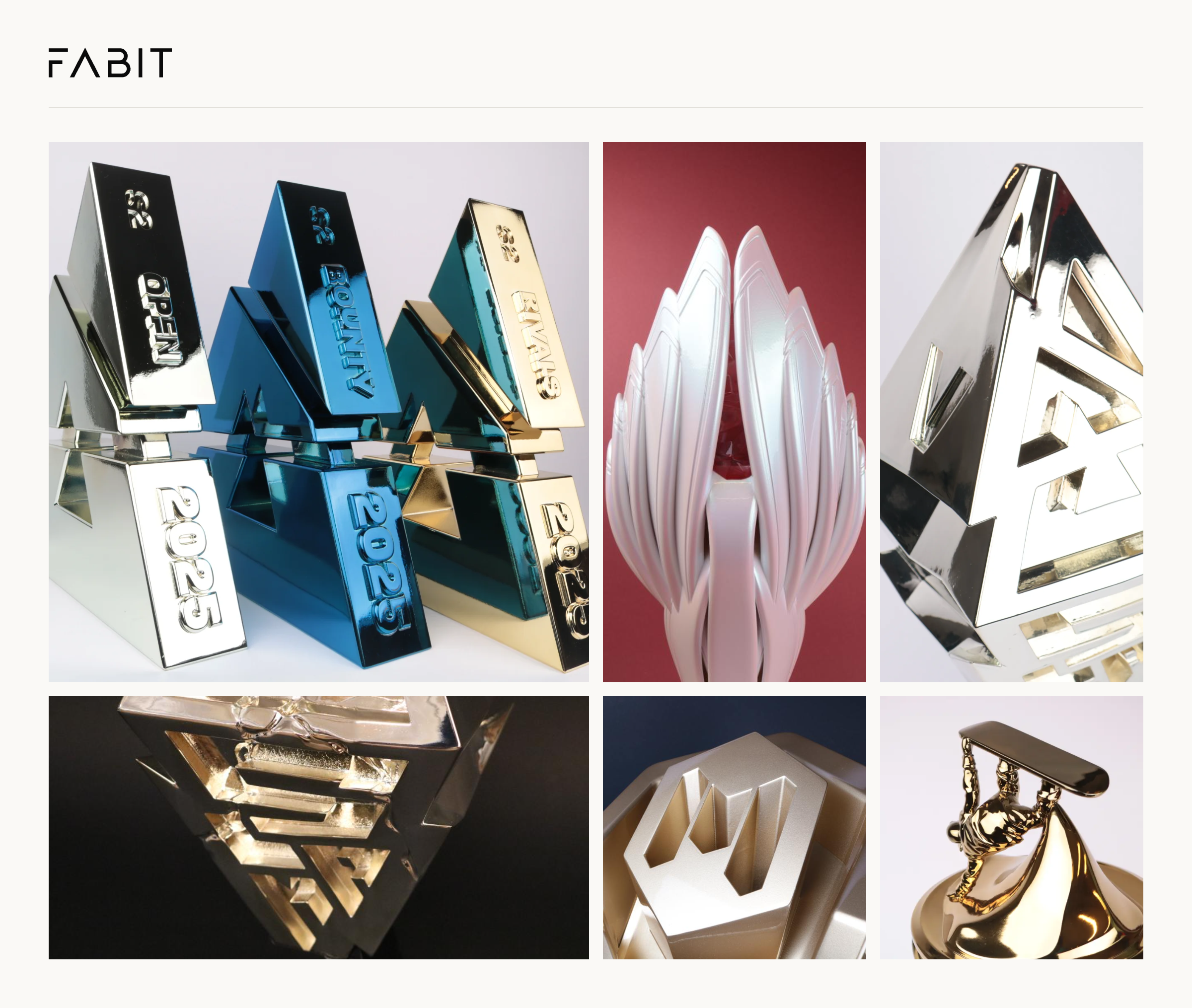
Each finishing method has its niche. Laser engraving is fast, versatile across materials and superb for photographic detail. Rotary engraving cuts deep, tactile grooves in solid metal. Sandblasting frosts glass and metal surfaces. Acid etching stands apart for its fine, even matte texture and its unmatched ability to hold intricate detail uniformly across metal. Where a design calls for delicate, consistent detail with a soft traditional character, etching is often the ideal route. On many projects we combine it with other treatments, for instance etching a detailed crest and then oxidising or colour filling it. See finished pieces on our custom trophies service.
Combining etching with colour and plating
Etched recesses are excellent for adding colour and contrast. A colour fill dropped into an etched area sits below the surface and stays protected, while oxidation treatments can darken recesses to make raised detail stand out. Etching also pairs with electroplating: a piece can be etched and then plated, or plated and then etched to reveal a contrasting layer beneath. These combinations expand the design possibilities considerably, and choosing among them is part of the advisory conversation we have with every client.
How Fabit approaches acid etching
All etching is carried out in our Antwerp workshop under controlled conditions, so we manage the resist, the etchant and the finishing safely and consistently. We prepare artwork to make the most of etching’s detail capability, test on the working metal where precision is critical, and inspect each finished piece for clean, even results. We ship completed awards worldwide and respond to every enquiry within 24 hours. To start your design, visit our online design studio.
Frequently asked questions
Is acid etching permanent?
Yes. The design is chemically cut into the metal itself, so it will not fade, peel or wear away.
What materials can be acid etched?
Etching is a metal process, working well on stainless steel, brass, bronze, aluminium and copper. Non-metals are finished with other techniques.
Can etched designs be coloured?
Yes. The etched recess holds colour fill well, and oxidation can darken areas for contrast.
How detailed can etching be?
Very detailed. Because the whole design etches at once, intricate line work and fine text reproduce cleanly and consistently.
Related terms