Sandblasting is a finishing process that propels a stream of fine abrasive particles at high pressure against a surface to erode it, creating a frosted, matte texture that contrasts elegantly with polished areas, most commonly used to render logos, text and designs on glass, crystal and metal awards. A stencil or mask protects the areas that should stay smooth, so only the exposed design is frosted, producing clean, controlled contrast between matte and gloss.
Fabit uses sandblasting in our Antwerp workshop as a refined decorative technique, not a rough industrial one. In skilled hands it delivers a soft, sophisticated frost that suits premium glass and crystal beautifully, and it remains one of the most timeless ways to finish a high-end award.
How sandblasting works
Sandblasting, sometimes called abrasive blasting, works by directing abrasive media through a nozzle using compressed air. When the particles strike the surface they chip away microscopic amounts of material, roughening it into a matte, light-scattering texture. On clear glass this reads as an attractive frost; on metal it produces a uniform satin surface.
To turn this into a controlled design rather than an all-over texture, we apply a resist mask, essentially a stencil, to the workpiece. The mask is cut to the exact shape of the artwork, so that abrasive only reaches the areas meant to be frosted while the protected surface stays polished. The pressure, the choice of abrasive and the distance of the nozzle all influence how deep and how coarse the frosting becomes. Lighter settings give a surface frost; heavier settings begin to cut into the material, which shades into the deeper technique of sand carving.
Materials suited to sandblasting
Sandblasting is especially at home on transparent and reflective materials.
- Glass and crystal: the frosted design contrasts sharply with the clear body, catching light and reading cleanly from any angle.
- Metals: blasting creates an even satin or matte finish, either as a decorative design or as a uniform surface texture across a whole piece.
- Stone and wood: both take blasting well, revealing texture and grain in interesting ways.
- Acrylic: can be frosted, though we test settings because it is softer than glass.
Our materials overview explains how each of these behaves and where sandblasting produces the most refined result.
The look and feel of a sandblasted finish
The appeal of sandblasting lies in contrast. On a clear crystal award, a frosted logo appears to sit within the glass, softly catching light while the surrounding material stays brilliantly transparent. That interplay of matte and gloss feels understated and expensive, which is exactly why it suits recognition pieces for senior audiences. The frosted texture is also tactile: run a finger across a sandblasted design and you feel a gentle change in surface. Because the effect is created by the material itself rather than an applied layer, it will never peel or fade. The finish also photographs beautifully, which matters when an award is destined for press images, social media or an annual report, because the soft frost reads clearly against the glass without the glare or reflection that can trouble printed or glossy surfaces.
Design considerations for sandblasting
Sandblasting reads best with bold, confident shapes. Solid logos, clear typography and defined graphic elements frost cleanly and legibly. Extremely fine hairlines or very small text can be harder to hold because the mask and the spread of abrasive have practical limits, so our design team reviews artwork and adjusts where needed to keep everything crisp. We also consider whether the design should be frosted as positive shapes on a clear ground or reversed out, since each creates a different visual weight. Thinking this through early ensures the finished contrast looks intentional. The orientation of the design on the piece matters too, because light entering a crystal award from one direction will reveal the frost more strongly than from another, and a considered placement lets the design catch the eye exactly where you want it.
Sandblasting compared with related techniques
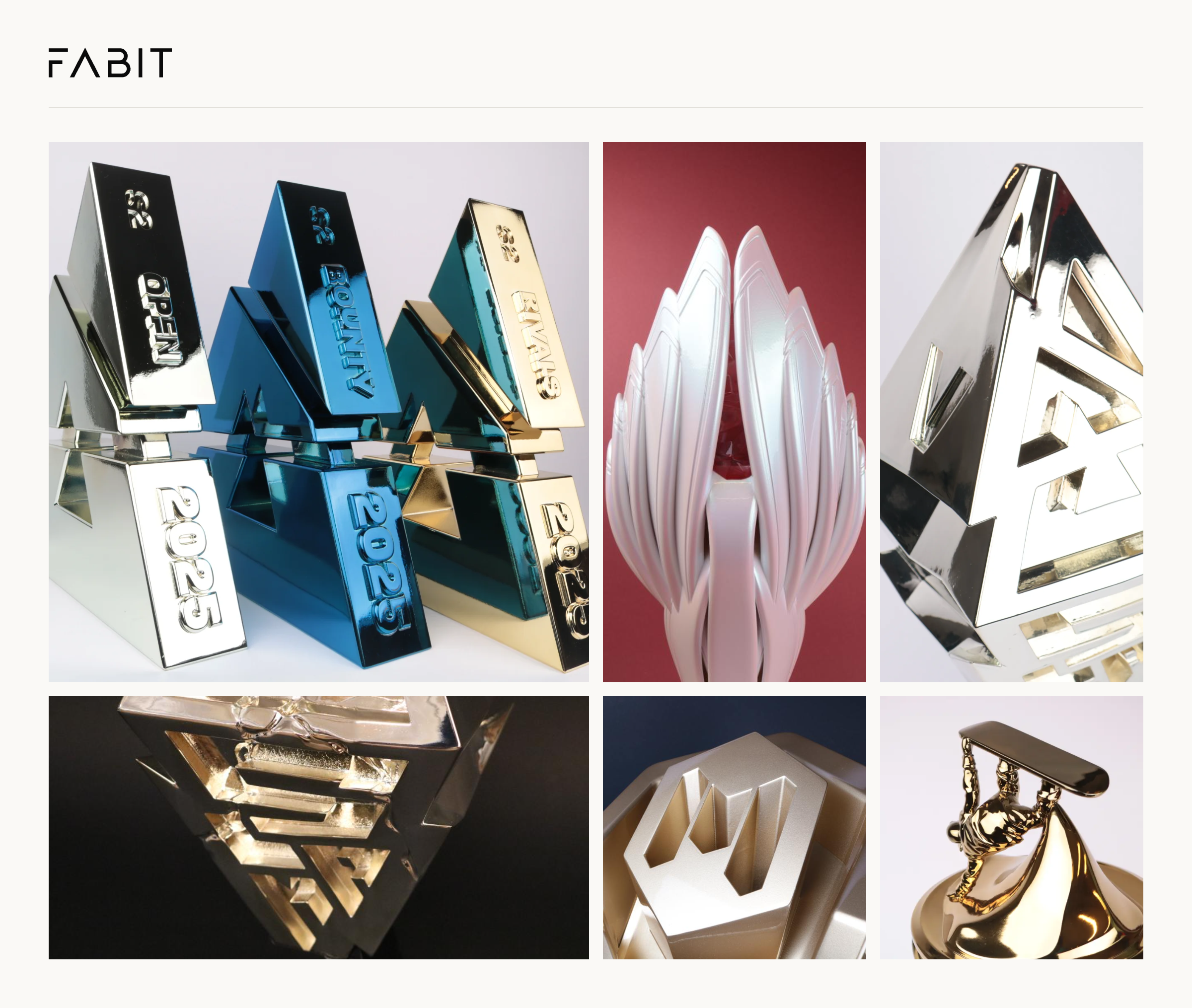
Sandblasting, sand carving and acid etching all create matte effects, but they differ in depth and character. Sandblasting produces a surface frost with subtle contrast. Sand carving uses the same abrasive method but drives it deeper to create recessed, dimensional designs with shadow and relief. Acid etching uses chemicals rather than abrasive to produce a very fine, even matte texture on metal. Laser engraving can also frost glass, though the character differs. Choosing among them is a design decision, and we guide clients toward the method that best matches the effect they want. Finished examples appear across our custom trophies service.
Combining sandblasting with colour
The frosted recess left by sandblasting is an excellent base for colour. Because the texture holds pigment well and the surrounding polished surface repels it, a colour fill applied into a sandblasted area stays neatly within the design. This lets us introduce brand colour into an otherwise clear crystal piece, or add subtle tinting that lifts a logo. On metal, a blasted satin background can set off polished or engraved elements. These combinations turn a simple frosted mark into a considered, multi-layer finish.
How Fabit handles sandblasting
All sandblasting is carried out in our Antwerp workshop, where we cut our own masks, control pressure and media, and inspect every piece for clean edges and even frosting. Because the technique is manual in character, experience matters, and our team has the hands to make it look effortless. We ship finished awards worldwide and respond to every enquiry within 24 hours. To start your design, visit our online design studio.
Frequently asked questions
Is sandblasting permanent?
Yes. It physically alters the surface of the material, so the frosted design will not fade, peel or wear away.
Can sandblasting be coloured?
Yes. The frosted texture holds a colour fill well, so we can add brand colour or tinting within a blasted design.
What is the difference between sandblasting and sand carving?
Sandblasting creates a surface frost, while sand carving uses the same method more deeply to produce recessed, dimensional designs.
Does it work on metal as well as glass?
Yes. On metal it produces an even satin or matte finish, useful both as decoration and as an all-over texture.
Related terms