Laser engraving is a non-contact finishing process that uses a tightly focused laser beam to remove or alter the surface of a material, producing permanent, high-resolution marks such as logos, names, dates and fine artwork on trophies, awards and deal toys. Because the beam is guided by digital files rather than a physical tool, laser engraving reproduces intricate detail with a consistency that hand methods cannot match, which is why it has become a cornerstone of premium award finishing.
At Fabit we treat laser engraving as far more than a way to add a name to a plaque. It is a craft discipline that we run entirely in-house at our Antwerp workshop, where our team calibrates power, speed and focus for each material and each piece. That control is what separates a flat, generic mark from an engraving that catches light beautifully and reads cleanly for decades.
How laser engraving works
A laser engraving machine directs a concentrated beam of light onto the surface of a material. The energy in that beam heats a very small area to the point where it vaporises, melts or discolours, depending on the substrate. A galvanometer system steers the beam across the surface at high speed, tracing the vector paths and raster patterns defined in a digital design file. Because nothing physically touches the workpiece, there is no tool wear and no lateral force to distort delicate items.
The depth and appearance of the mark are governed by three main variables: the power of the beam, the speed at which it moves and the number of passes. Increasing power or slowing the beam removes more material and deepens the engraving. Reducing power produces a light surface mark, ideal for frosted effects on glass or subtle tonal shading on coated metals. Our operators build tested settings for every combination we use, so the result is repeatable across a full production run of matching awards.
Materials that suit laser engraving
Laser engraving is remarkably versatile, but each material responds differently and demands its own approach.
- Coated and anodised metals: the laser removes the coating to reveal a contrasting layer beneath, giving crisp, high-contrast text without any additional infill.
- Bare metals such as stainless steel, aluminium and brass: a fibre laser can create annealed marks or frosted finishes directly in the metal.
- Wood: the beam chars and vaporises fibres to produce warm, tactile engravings with natural depth.
- Acrylic and cast plastics: engraving frosts the surface, and edge-lit designs glow when illuminated.
- Glass and crystal: the laser micro-fractures the surface to create a frosted, matte mark, though for imagery inside the material we use sub-surface techniques instead.
- Leather, stone and certain composites: each takes engraving with its own character, which we test before committing to a client run.
You can explore the full range of substrates we work with on our materials overview, and see how engraving integrates into finished pieces across our custom trophies service.
Why laser engraving suits high-end awards
Premium recognition pieces carry meaning, so the finishing must feel deliberate and refined. Laser engraving delivers the sharpness that a discerning recipient notices: hairline serifs stay legible, small logos keep their proportions, and long lists of names align perfectly. The permanence matters too. A laser mark is physically part of the material, so it will not rub off, fade or peel the way printed labels can. For a trophy meant to sit on a desk for years, that durability protects the impression your brand makes every time someone looks at it.
Precision, repeatability and scale
When a corporate client orders forty matching awards for an event, every piece must look identical. Laser engraving driven from a single master file guarantees that consistency. The same file can also be scaled or personalised, so a base design stays uniform while individual names or roles change from piece to piece. This blend of uniformity and personalisation is difficult to achieve with manual methods, and it is one reason laser engraving underpins so much of our production for both single commissions and larger series.
Design considerations before engraving
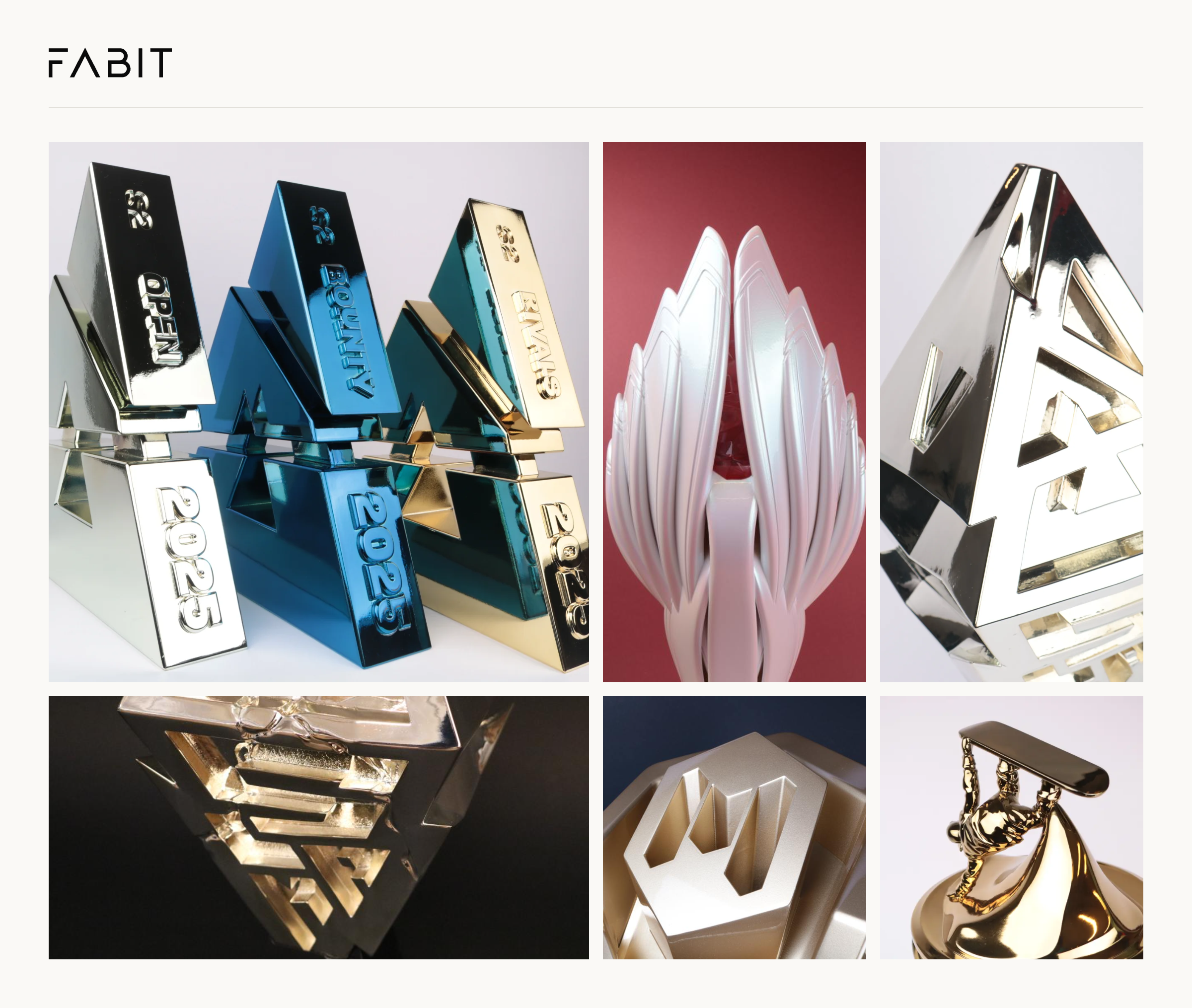
Good engraving starts with good artwork. Vector files reproduce most cleanly because the laser follows their exact paths. Very fine lines, tiny reversed-out text and heavy solid fills each behave differently under the beam, so our design team reviews every file and advises on adjustments before production. We also consider contrast: on some materials the engraved mark reads best on its own, while on others we combine it with a colour fill or a frosted background to lift the design. Thinking these choices through early avoids compromises later.
Laser engraving compared with other methods
Laser engraving is one of several finishing routes we offer, and the right choice depends on the material and the effect you want. Rotary engraving cuts with a physical bit and suits deep marks in thick metal. Sandblasting and sand carving create tactile, recessed frosting ideal for glass. Acid etching gives a distinctive matte texture on metal. Laser engraving stands out for its speed, its detail resolution and its ability to move between materials without retooling. For many projects we combine methods, for example laser engraving a logo and then applying a colour fill to make it pop.
How Fabit handles your engraving project
Every engraving we produce is made in our own Antwerp workshop, never outsourced, so quality control stays in our hands from proof to packing. We prepare a digital proof for your approval, run test marks on the actual material where needed, and inspect each finished piece before it leaves. We ship completed awards worldwide, and we respond to every enquiry within 24 hours, so you always know where your project stands. If you are ready to start, you can begin a design directly through our online design studio.
Frequently asked questions
Is laser engraving permanent?
Yes. The mark is created by physically altering the material itself, so it will not fade, peel or wear off under normal use.
Can you laser engrave in colour?
The engraving itself is not coloured, but we frequently combine it with a colour fill or use contrasting coated materials to achieve a coloured appearance.
What file format do you need?
Vector files such as AI, EPS, PDF or SVG give the best results. Our team will review your artwork and advise before we begin.
How small can the text be?
Laser engraving holds very fine detail, but legibility depends on the material. We test small text on samples and confirm the outcome with you first.
Related terms