Sand carving is an advanced abrasive finishing technique that drives fine media deep into a material to create recessed, three-dimensional designs with genuine relief, shadow and layered depth, going well beyond the surface frost of standard sandblasting. By controlling how much material is removed in different areas, a skilled artisan can produce carvings that feel sculptural, with foreground shapes standing proud of deeply cut backgrounds, most strikingly in glass and crystal.
Fabit practises sand carving in our Antwerp workshop as one of our most craft-intensive finishes. It demands careful masking, staged blasting and a designer’s eye for depth, and the reward is an award that reads as a carved object rather than a decorated surface. For clients who want something with real presence, it is a superb choice.
How sand carving works
Sand carving uses the same fundamental principle as sandblasting: abrasive media propelled by compressed air erodes the surface of a material. The difference is depth and control. Where sandblasting stops at a surface frost, sand carving continues, cutting progressively deeper into the material to create recesses of varying depth. This is achieved by blasting for longer, at higher pressure, and by using multi-stage masking. Areas that should be cut deepest are exposed first and blasted longest; areas meant to stay shallow are unmasked later or protected for more of the process. The result is a design with true relief, where different elements sit at different levels.
This staged approach is what makes sand carving an art. The carver must plan the sequence of masking and blasting in advance, visualising how depth will translate into shadow and highlight once the piece is finished. Done well, the carving takes on a dimensional, almost sculptural quality that flat techniques cannot reach. There is no way to undo a cut once the material is gone, so every stage is committed and deliberate, and the carver relies on experience to judge how each pass will read in the finished piece. It is precisely this element of skilled, irreversible craft that gives a well-carved award its sense of value, because the recipient is holding something that could not have been mass produced or rushed.
Multi-stage carving and depth control
The signature of fine sand carving is its layering. A typical piece might have several depth levels: a deeply carved background, a mid-level element and a shallow foreground detail. Each level is created by removing and reapplying masking between blasting stages, so the abrasive reaches different areas for different lengths of time. This gradation produces subtle shading as light falls into the deeper recesses and skims across the raised areas. In glass and crystal especially, this creates a beautiful play of light and shadow that gives the design remarkable depth for its size, and the effect shifts as the viewer moves, so the piece never looks flat or static from any angle.
Materials suited to sand carving
Sand carving works best on materials solid and thick enough to be cut deeply without weakening.
- Crystal and thick glass: the ideal canvas, where depth reads as luminous shadow and the clear body shows off the relief.
- Stone and marble: take deep carving with a natural, architectural character.
- Thicker acrylics: can be carved for dimensional effects, tested case by case.
Because depth is central, material thickness matters, and our team advises on suitable blanks. See the options on our materials overview.
Why sand carving suits statement awards
Some awards are meant to command attention, and sand carving delivers that presence. A deeply carved crystal piece has weight and dimensionality that a surface finish cannot match; it invites the recipient to pick it up, turn it in the light and appreciate the craft. This makes it well suited to headline honours, lifetime achievement pieces and flagship corporate awards where the object should feel genuinely special. Because the design is carved into the material, it is also permanent and protected, so it looks as impressive years later as on the day it was presented.
Sand carving compared with sandblasting
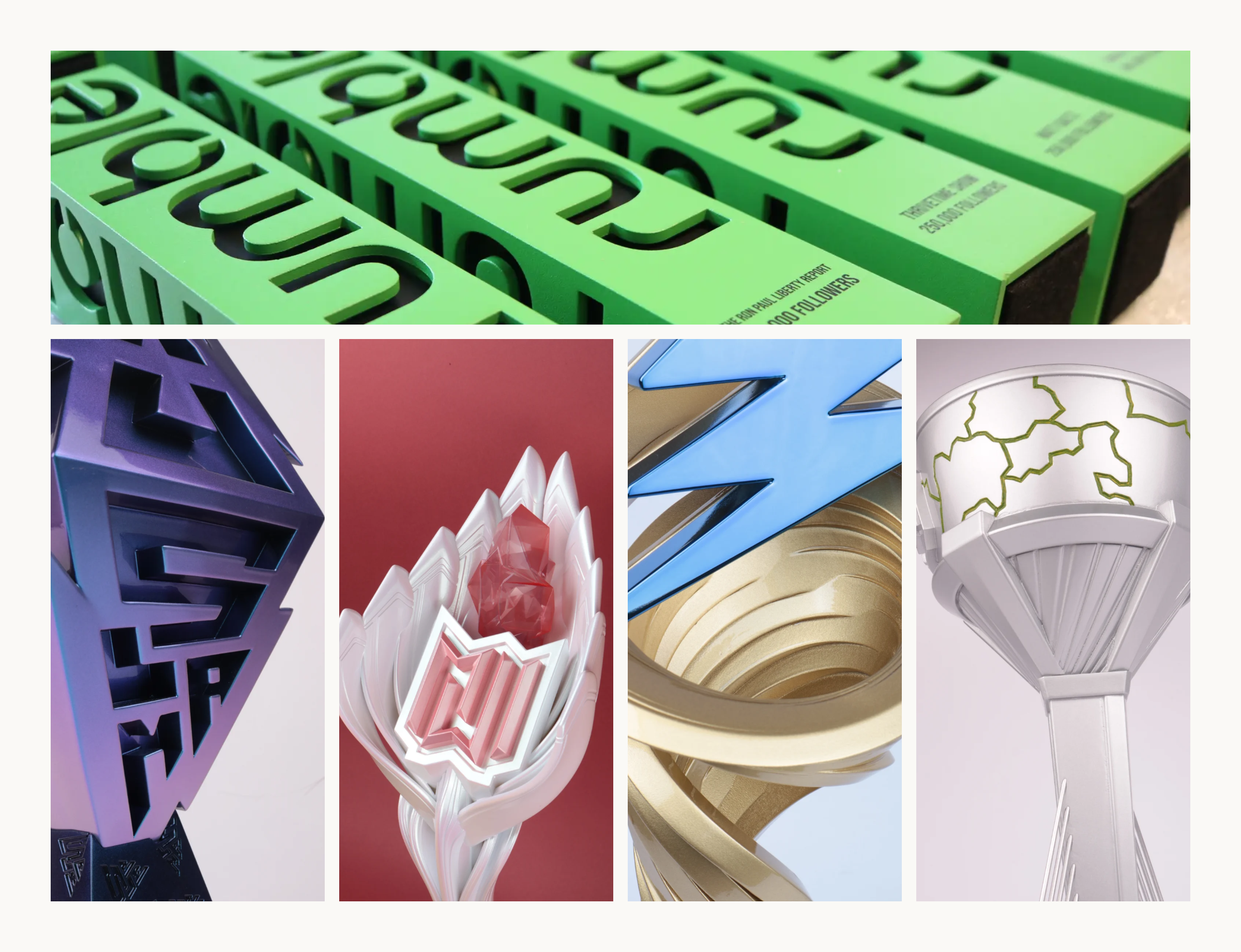
The two techniques share a method but differ in ambition. Sandblasting creates a surface frost with subtle matte-versus-gloss contrast, ideal for clean logos and elegant restraint. Sand carving pushes deeper to create recessed, multi-level, dimensional designs with shadow and relief. Sandblasting is quicker and suits high-contrast simplicity; sand carving is slower and more artisanal, suited to pieces where depth and drama are the point. Both are worthwhile, and the right choice depends on the effect you want. Our team helps you decide, and you can see finished work across our custom trophies service.
Combining sand carving with colour and other finishes
The recesses created by sand carving are excellent for colour fill. Pigment settles into the deep areas and pools at different levels, so a carved design can carry subtle tonal variation or bold brand colour. We also combine sand carving with sub-surface laser engraving, placing a floating 3D image inside a crystal block while carving relief into its surface, or pairing carved glass with an engraved metal base. These combinations are where a piece stops being a product and becomes a designed object, and they are a core part of our advisory approach.
How Fabit produces sand carving
Every sand-carved piece is made in our Antwerp workshop, where our artisans cut the staged masks, plan the blasting sequence and control depth by hand and eye. Because this is a craft technique, experience is decisive, and we treat each carving as an individual piece of work. We review the design and depth plan with you, inspect the finished carving carefully, and ship worldwide with protective packaging suited to fragile crystal. We respond to every enquiry within 24 hours. To begin, visit our online design studio.
Frequently asked questions
How is sand carving different from engraving?
Engraving typically marks or cuts a design with a laser or tool, while sand carving uses staged abrasive blasting to create recessed, multi-level relief with genuine depth.
Can sand carving include several depth levels?
Yes. Multi-stage masking lets us carve different elements to different depths, creating shadow and dimensionality within one design.
Does sand carving work on metal?
It is most effective on crystal, thick glass and stone. For metal we usually recommend engraving, etching or blasting instead.
Can we add colour to a carved design?
Yes. The recesses hold colour fill beautifully, allowing subtle tonal effects or strong brand colour within the carving.
Related terms