PVD coating, short for physical vapour deposition, is a vacuum based process that bonds an ultra thin layer of metal or ceramic onto a surface at the molecular level, giving trophies and awards durable, richly coloured finishes such as gold, rose gold, black, and gunmetal that resist scratching, tarnishing, and fading. Unlike paint or electroplating, PVD builds its colour from vaporised material that condenses atom by atom onto the piece, creating a coating that is exceptionally hard, thin, and permanently fused to the substrate. For premium metal awards, it delivers the look of solid precious metal with the toughness of an industrial finish.
Understanding the PVD process
PVD takes place inside a sealed vacuum chamber. A solid source material, often titanium, zirconium, or chromium based compounds, is vaporised using either an electric arc or a high energy sputtering process. The vapour fills the chamber and condenses onto the award, which is rotated to ensure even coverage. Reactive gases introduced during the cycle determine the final colour, so nitrogen produces golds, while carbon based gases yield dark tones.
The coating that results is measured in microns, thinner than a human hair, yet it is extraordinarily hard and tightly bonded. Because the process happens in a vacuum and at controlled temperatures, it produces a clean, uniform, and consistent finish that is difficult to achieve with wet plating or spray methods. This precision is exactly what discerning clients expect from a bespoke award.
Why PVD is prized for high end awards
The appeal of PVD comes down to a rare combination of beauty and endurance. The colours are deep and even, with none of the patchiness that can affect cheaper finishes. A PVD gold reads as genuinely luxurious, and a PVD black has a depth that painted black cannot match. Crucially, these colours do not chip or flake like paint, because they are fused into the surface rather than layered on top.
Durability is where PVD truly earns its reputation. The coating resists scratching, corrosion, salt, sweat, and UV exposure. An award finished in PVD will look as impressive years later as it did on the day it was presented. For recognition pieces intended to become heirlooms or long standing symbols of achievement, this longevity is a meaningful advantage.
Colour and finish options
- Gold and champagne: Warm, luxurious tones that suit classic and celebratory awards.
- Rose gold: A contemporary, elegant option popular with design led brands.
- Black and gunmetal: Modern, understated finishes that pair beautifully with minimalist forms.
- Bronze and copper tones: Rich, characterful colours for heritage or artisan themed pieces.
PVD can be applied over different underlying textures, so the same colour can look glossy on a polished surface or muted on a brushed or blasted one. This interplay between colour and texture gives designers a wide creative palette. We often discuss the desired mood first, then select the substrate finish and PVD colour together to achieve it.
Substrate preparation matters
The quality of a PVD finish depends heavily on what lies beneath it. Because the coating is so thin, it faithfully follows the surface it covers, revealing rather than hiding imperfections. A mirror polished base yields a brilliant reflective PVD, while a brushed or blasted surface produces a satin or matte effect. Proper cleaning and preparation before coating are essential, as any contamination compromises adhesion. This is meticulous work, and it is where craftsmanship separates an exceptional result from a mediocre one.
PVD in the context of a custom award
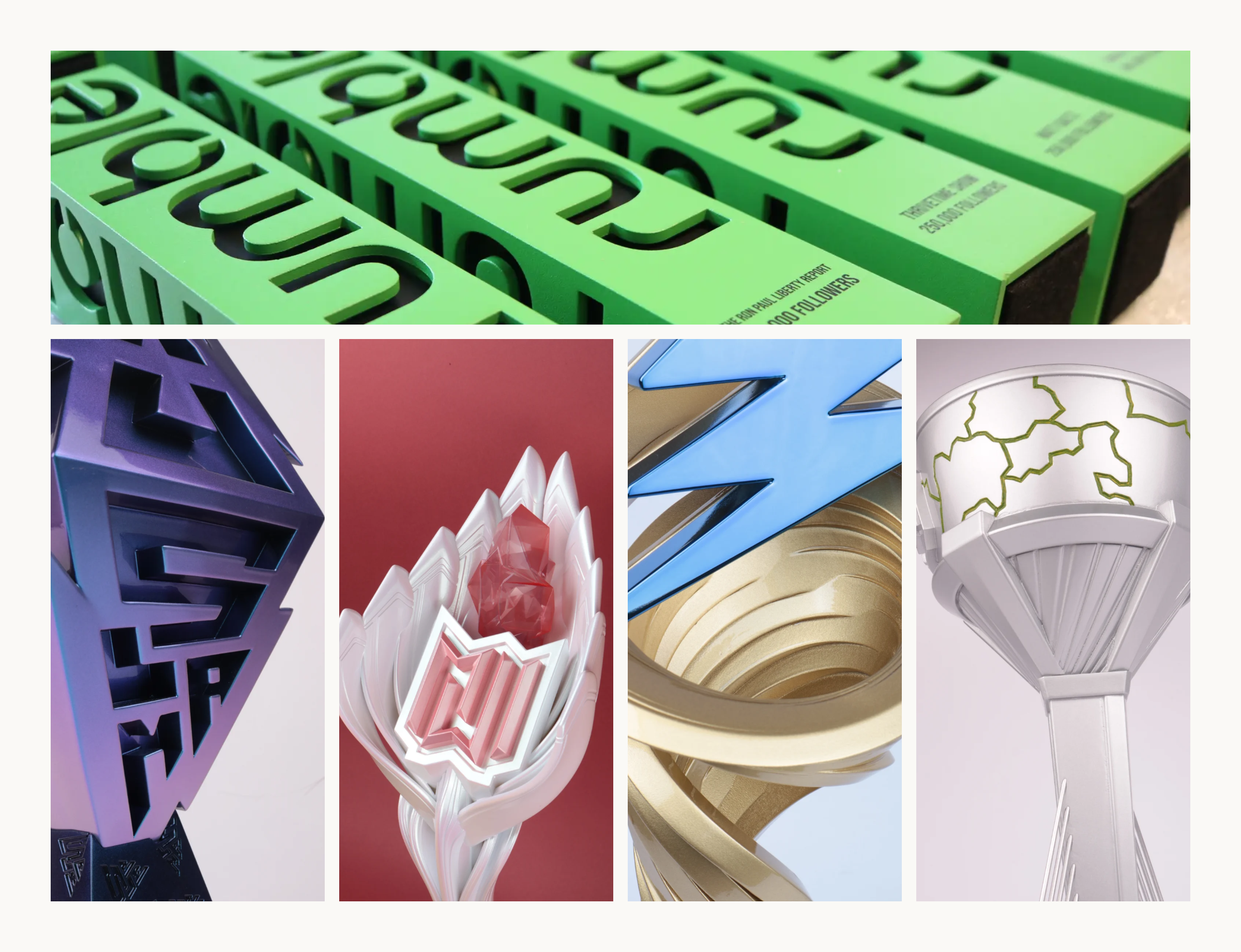
PVD is best suited to metal components, so it frequently appears on machined or cast elements of a larger piece. A metal figure, a decorative band, or a nameplate can be PVD coated and then combined with acrylic, glass, or wood to create a mixed material award. Our custom trophy service regularly integrates PVD finished metal into designs that also feature other techniques, giving each project a distinctive character.
For clients experimenting with newer production methods, metal 3D printed parts can also be PVD coated after post processing, marrying digital fabrication with a premium surface finish. This opens the door to complex geometries that would be difficult to machine, finished to the same high standard.
Environmental and practical advantages
Beyond aesthetics, PVD is a comparatively clean process. It does not rely on the hazardous liquid baths associated with traditional electroplating, and it generates minimal waste. For brands with sustainability commitments, this is a welcome characteristic. The durability of the finish also means pieces are less likely to need replacement, extending their useful life.
PVD versus other metal finishes
Compared with electroplating, PVD is harder, more uniform, and more environmentally friendly, though it requires specialised vacuum equipment. Compared with painting or powder coating, PVD is far thinner and more scratch resistant, and it delivers a genuine metallic depth that pigmented coatings cannot replicate. Its main considerations are cost and the need for suitable substrate preparation, but for awards where longevity and prestige matter, it is frequently the ideal choice.
Frequently asked questions
Is PVD coating scratch proof? No finish is entirely scratch proof, but PVD is among the hardest decorative coatings available and resists everyday scratching far better than paint or plating.
Can PVD be applied to any metal? It works best on stainless steel, titanium, and certain alloys. Softer or porous metals may need preparation or an intermediate layer. We assess suitability before quoting.
Will the colour fade over time? PVD colours are highly stable and UV resistant, so they retain their appearance for many years under normal display conditions.
How do I request a PVD finished award? Begin your project through our design tool and we will respond within 24 hours. We ship finished awards worldwide.
Related terms