A brushed finish is a surface treatment that creates fine, uniform, directional lines on metal by abrading it with a fine grit belt, brush, or pad, producing a soft satin sheen that reflects light gently rather than mirror sharp, and that hides fingerprints and minor marks remarkably well. On trophies and awards, a brushed finish communicates quiet confidence and contemporary restraint. It is the finish of choice for brands that favour understated sophistication over overt shine, and it forms an excellent foundation for coloured coatings such as PVD and DLC.
How a brushed finish is created
Brushing is achieved by moving an abrasive medium across the metal in a consistent direction. This can be done with an abrasive belt, a wire or nylon brush, a non woven abrasive pad, or specialised machinery for larger and more uniform surfaces. The abrasive cuts a series of fine, parallel scratches into the surface. When these lines are even and consistent, they catch light softly along their length, producing the characteristic satin glow.
The grit of the abrasive determines how fine or coarse the finish appears. A finer grit yields tighter, subtler lines and a smoother satin, while a coarser grit produces a more pronounced grain. Skilled hands are needed to keep the direction consistent and the pressure even, because irregularities are visible under raking light. This is craftsmanship as much as process, and the difference between an amateur and an expert brushed finish is immediately apparent.
Why brushed finishes suit premium awards
There is an elegance to a brushed surface that appeals to design conscious clients. Where a mirror polish shouts, a brushed finish speaks softly. It reads as modern, architectural, and refined, echoing the finishes found on luxury watches, high end electronics, and premium appliances. For recognition pieces that should feel current and considered, this understated quality is a strong asset.
There is also a practical dimension. Mirror surfaces show every fingerprint and smudge, which can be a liability on an object that people naturally want to pick up. A brushed finish is far more forgiving; its texture diffuses reflections and disguises the minor marks of handling. An award that still looks immaculate after being passed around a room retains its dignity, and brushed finishes deliver exactly that resilience.
Materials that take a brushed finish
- Aluminium: A favourite for brushing, lightweight, and producing a clean, bright satin.
- Stainless steel: Brushes to a durable, sophisticated grey satin with excellent longevity.
- Brass and bronze: Brushing softens their warmth into a refined, muted glow.
- Anodised metals: A brushed base beneath anodising or PVD gives coloured finishes a satin character.
The choice of base metal shapes the final look, so we discuss material options alongside the finish. Each metal brings its own tone and reflectivity to the brushed effect.
Directionality and design
One of the defining features of a brushed finish is its grain direction. Because the lines run one way, the finish looks different depending on the viewing angle and how the piece is oriented. This directionality can be used deliberately in design. Vertical brushing can make an award feel taller and more monumental; horizontal brushing can feel calm and grounded. On multi panel pieces, alternating or aligning the grain direction creates subtle visual rhythm.
We consider grain direction from the sketching stage, ensuring it complements the form and any engraving or applied detail. When engraving cuts across a brushed surface, the contrast between the bright cut and the satin ground can be beautifully crisp, which is a technique we use to make text and logos read clearly.
Brushed finish as a foundation for coatings
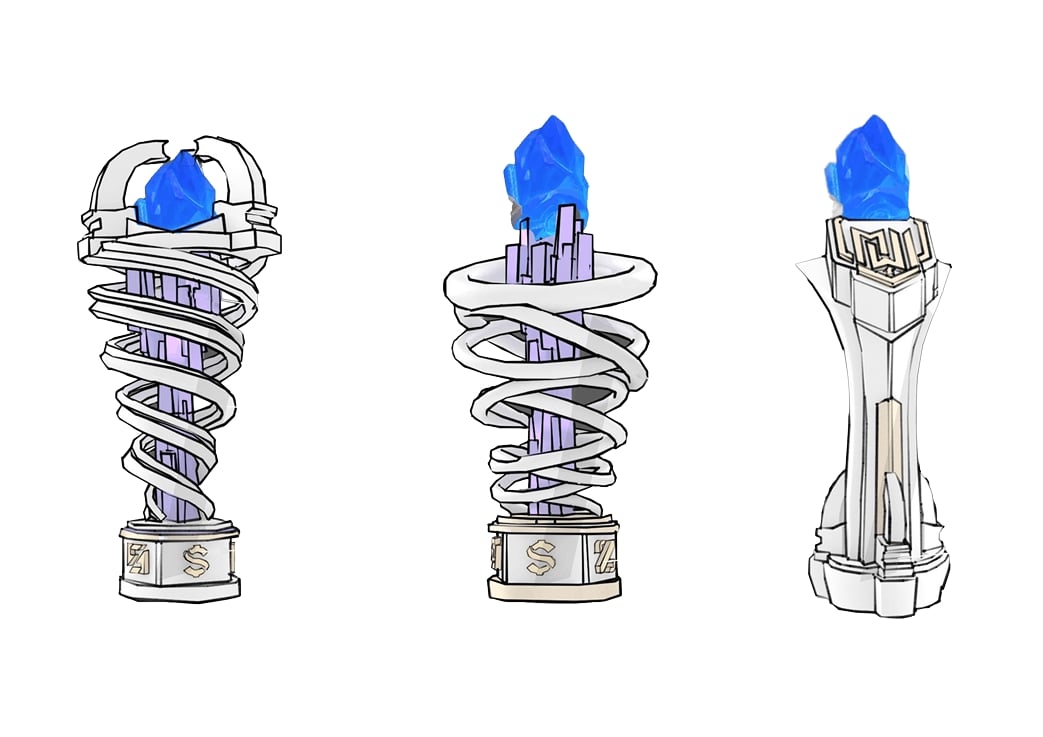
A brushed surface is frequently the starting point for a coloured coating. Because PVD and DLC coatings follow the texture beneath them, applying them over a brushed base produces a satin coloured finish rather than a glossy one. A brushed then gold PVD award, for example, has a muted, luxurious warmth quite different from a shiny polished gold. This layering of texture and colour gives designers a rich vocabulary, and it is a common approach within our custom trophy service.
Combining brushed with other finishes
Contrast is a powerful design tool. A brushed body paired with a mirror polished edge or a domed emblem creates visual interest through the interplay of matte and gloss. On modern awards, a predominantly brushed surface with a single polished or PVD accent draws the eye exactly where intended. This restraint, one hero detail against a calm satin field, is a hallmark of premium design and something we frequently recommend.
Care and durability
Brushed finishes are practical to live with. They hide fingerprints and light scuffs, and minor scratches that align with the grain are barely noticeable. If a brushed surface does become marked over time, it can often be refreshed by rebrushing along the grain, something that is far harder to do with a mirror finish. For cleaning, a soft cloth wiped along the grain direction keeps the finish looking its best.
Frequently asked questions
Does a brushed finish scratch easily? It scratches less noticeably than a mirror finish because its texture disguises marks, and light damage can often be blended back into the grain.
Can a brushed finish be coloured? Yes. Applied over a brushed base, PVD, DLC, and anodising produce satin coloured finishes that retain the underlying texture.
Is brushed or mirror better for engraving? Both work well. Engraving on a brushed surface offers strong contrast between the bright cut and the satin ground, which many clients find especially crisp.
How do I request a brushed award? Start your project through our design tool. We respond within 24 hours and ship worldwide.
Related terms