A mirror polish is the highest level of surface refinement for metal, achieved through progressively finer abrasive and buffing stages until the surface becomes perfectly smooth and reflects light like a mirror, giving trophies and awards a brilliant, luxurious, and highly reflective finish. It is the most demanding finish to produce well and the most dramatic in effect. A true mirror polish transforms a piece into an object of pure light, reflecting its surroundings and commanding attention. For flagship awards and centrepiece designs, nothing conveys prestige quite like a flawless mirror surface.
How a mirror polish is achieved
Mirror polishing is a patient, multi stage process. The surface is worked through a sequence of increasingly fine abrasives, each stage removing the scratches left by the previous one. As the abrasive grit becomes finer, the scratches become smaller until they are no longer visible to the eye. The final stages use soft buffing wheels and polishing compounds to bring the surface to a flawless, reflective shine.
The difficulty lies in the fact that a mirror surface reveals absolutely everything. Any remaining scratch, wave, or imperfection is magnified by the reflection. Achieving a genuine mirror polish therefore requires meticulous preparation of the underlying form and considerable skill at each stage. There are no shortcuts, and the quality of the result is a direct reflection, quite literally, of the care taken. This is why a properly executed mirror polish is a mark of true craftsmanship.
The visual and emotional impact
A mirror finish is extroverted and celebratory. It sparkles under lights, reflects the faces of those admiring it, and creates a sense of occasion. On a stage, a mirror polished award catches spotlights and throws them back, making the moment of presentation feel genuinely special. This theatrical quality is why mirror finishes remain popular for prestigious ceremonies and headline categories.
The finish also carries strong associations with luxury and value. Polished precious metals, fine jewellery, and high end sculpture all rely on brilliant surfaces. When an award mirrors this level of finish, it borrows that sense of preciousness, elevating how the recipient perceives the honour.
Best materials for mirror polishing
- Stainless steel: Polishes to a brilliant, durable mirror that resists tarnishing.
- Brass: Achieves a warm, golden mirror, though it benefits from a protective coating.
- Aluminium: Can be polished bright, often protected with clear anodising or lacquer.
- Chrome plated surfaces: Deliver an intense reflective finish for dramatic effect.
Some materials hold a mirror finish better than others, and certain metals need a protective layer to prevent tarnishing over time. We advise on the most suitable material for a lasting mirror result, balancing brilliance with practicality.
Design considerations for mirror surfaces
Because a mirror reflects everything around it, the environment becomes part of the design. This is a powerful effect, but it also means mirror surfaces show fingerprints, dust, and smudges readily. For that reason, mirror polishing is often used strategically rather than across an entire large surface. A polished accent, edge, or feature against a brushed or matte body draws the eye and creates contrast while limiting the areas most prone to marking.
Form matters greatly with mirror finishes. Clean, simple, well resolved shapes look extraordinary when polished, while complex or poorly finished forms have nowhere to hide. We pay particular attention to the underlying geometry when a mirror finish is planned, ensuring curves are fair and edges are crisp.
Mirror polish as a base for coatings
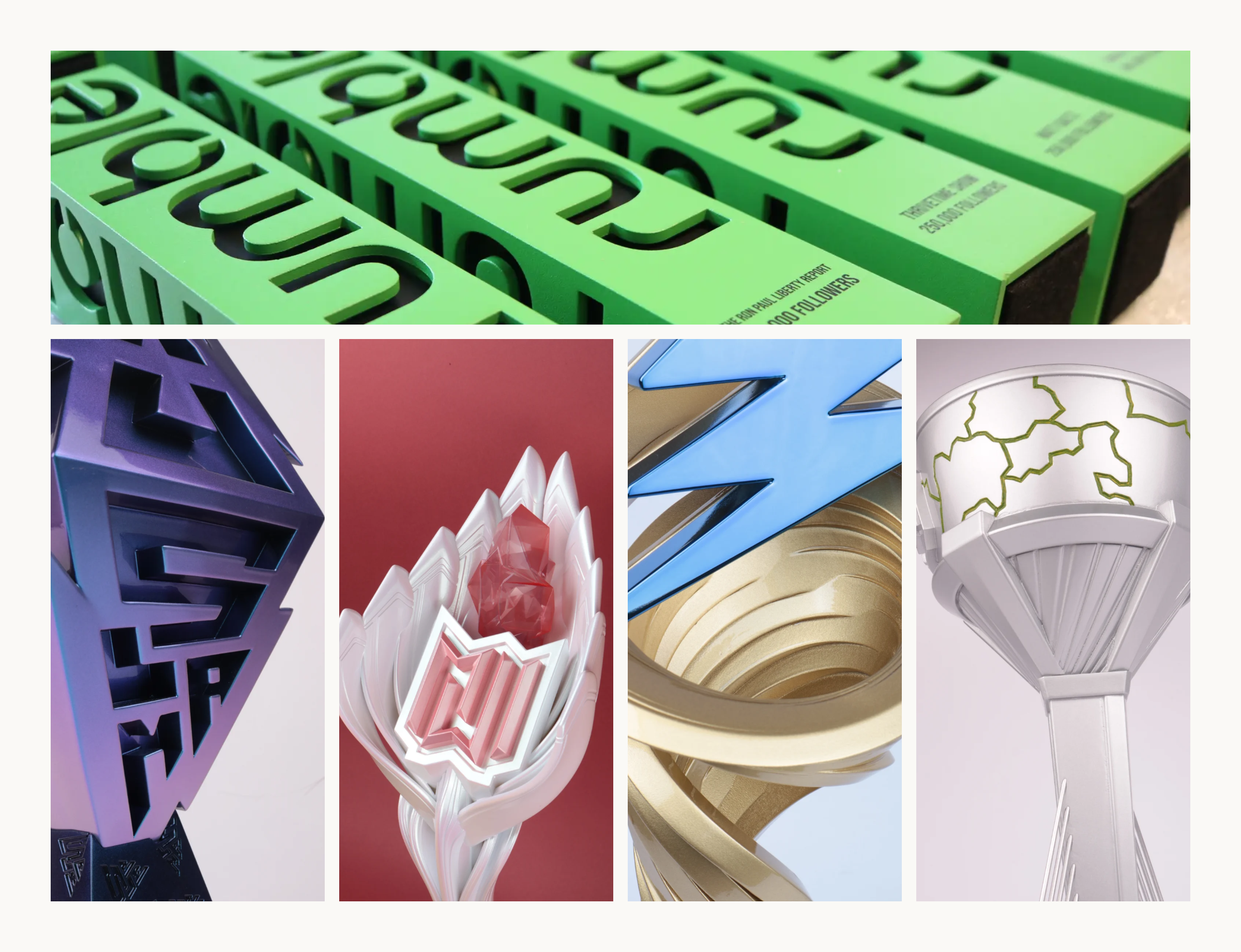
A mirror surface is also the ideal foundation for glossy coloured coatings. Because PVD and DLC coatings follow the surface beneath, applying them over a mirror base produces a brilliant, reflective coloured finish. A mirror polished then gold PVD award gleams with a lustre that a brushed base cannot achieve. This makes mirror polishing not only a finish in its own right but a starting point for some of the most striking coloured metal effects, techniques we deploy across our custom trophy service.
Combining mirror polish with other finishes
The interplay between mirror and matte is one of the most effective tools in award design. A predominantly brushed or blasted piece with a single mirror polished feature has a clear focal point and a satisfying tension between calm and brilliance. Engraving into a mirror surface also produces striking results, as the matte engraved detail stands out crisply against the reflective ground. We frequently use these contrasts to build hierarchy and interest into a design.
Care and maintenance
A mirror finish demands a little more care than a brushed one, precisely because it shows marks so readily. Regular gentle cleaning with a soft, lint free cloth keeps it looking pristine, and for metals prone to tarnish, an appropriate protective coating or occasional polishing maintains the shine. Handled thoughtfully and displayed indoors, a mirror polished award retains its brilliance for many years. For pieces likely to be handled often, we sometimes recommend a protective clear coat to preserve the finish.
Frequently asked questions
Does a mirror polish tarnish? It depends on the metal. Stainless steel resists tarnishing well, while brass and some others benefit from a protective coating to maintain their shine.
Are mirror finishes high maintenance? They show fingerprints and dust more than matte finishes, so they need occasional wiping, but with a soft cloth they are easy to keep looking flawless.
Can the whole award be mirror polished? Yes, though we often recommend using mirror finishes strategically alongside matte areas to balance drama with practicality.
How do I commission a mirror polished award? Begin through our online design tool. We reply within 24 hours and deliver worldwide.
Related terms