Electropolishing is an electrochemical finishing process that removes a microscopically thin layer of metal from a workpiece, leaving behind an exceptionally smooth, bright, and clean surface. For custom trophies and awards, it delivers a mirror-like shine that mechanical polishing alone cannot match.
At the highest end of the awards world, the surface is the message. A trophy that catches light cleanly, that feels cool and flawless in the hand, communicates value before a single word is read. Electropolishing is one of the quiet techniques behind that impression, and understanding it helps you specify metal awards with confidence.
How electropolishing works
Electropolishing is sometimes described as reverse plating. Instead of depositing metal onto a surface, the process draws metal away from it. The piece is submerged in a temperature controlled electrolyte bath and connected as the anode in an electrical circuit. When current flows, metal ions dissolve from the surface, and they leave fastest from the tiny peaks and burrs that make a surface feel rough. The result is a levelled, brightened finish measured in microns of removed material.
Because the process is driven by electrical current and chemistry rather than physical abrasion, it reaches into recesses, around curves, and along edges that a buffing wheel would struggle to touch evenly. This makes it particularly valuable for sculptural award forms with complex geometry.
Why it matters for premium awards
A hand-buffed finish can look superb, but it always carries the faint directional traces of the wheel. Electropolishing removes those traces and produces a uniform brightness across the whole surface. For a recognition piece that will be photographed, handed across a stage, and displayed for years, that consistency is what separates a good object from a truly refined one.
There is also a functional benefit. By stripping away the outermost contaminated layer, electropolishing exposes fresh, clean metal underneath. On stainless steel this improves corrosion resistance, which matters for pieces that will be handled often or kept in humid environments.
Which metals respond best
Stainless steel is the classic candidate and responds beautifully, which is why it features so often in architectural and corporate awards. Many nickel and copper alloys also polish well. Aluminium behaves differently and is more commonly finished by anodising or mechanical methods. When we plan a project, material choice and finish are decided together, never in isolation, because the two are inseparable in the final look.
Electropolishing versus mechanical polishing
Mechanical polishing uses abrasives and buffing compounds to physically wear a surface smooth. It is fast, flexible, and excellent for many jobs. Electropolishing is the finer instrument. It produces a deeper, more even brightness, deburrs microscopic edges, and cleans the surface at the same time. In practice the two are often combined: a piece is mechanically refined first, then electropolished to lift it to its final brilliance.
What the finish looks and feels like
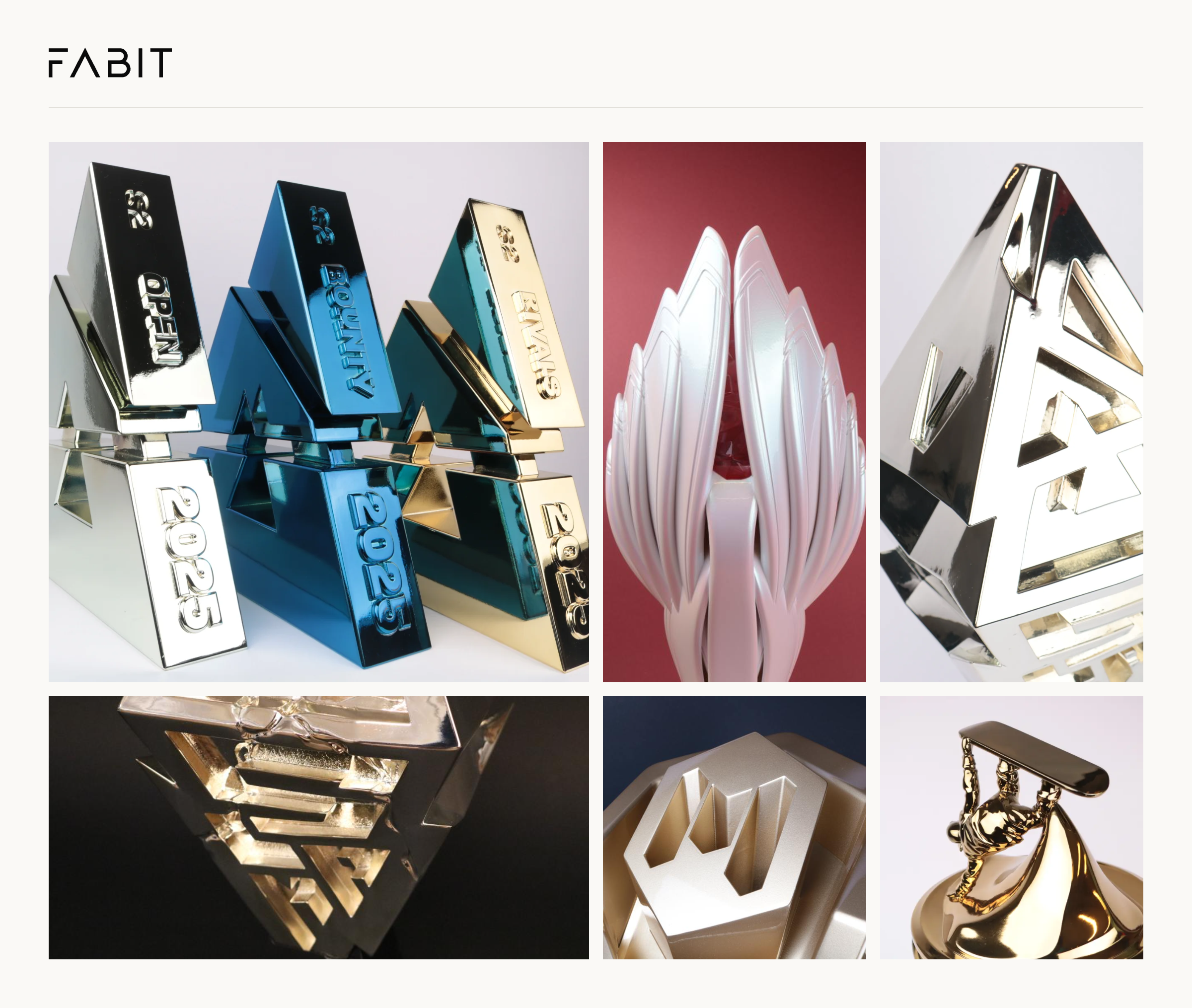
The signature of electropolishing is a bright, reflective surface with remarkable depth. Fingerprints wipe away easily. Edges feel softened rather than sharp. Under gallery lighting the metal reads as liquid and continuous rather than as a collection of polished facets. It is a finish that rewards close inspection, which is exactly what a recipient does with an award they are proud of.
Design considerations before you commit
- Base material: confirm the alloy early, because it governs how bright the final result can be.
- Wall thickness: the process removes material, so very thin or delicate features should be reviewed before finishing.
- Engraving sequence: decide whether text and logos go on before or after polishing, since this changes the visual effect.
- Contrast: a mirror finish can be paired with a matte or sandblasted zone to make engraved detail stand out.
- Handling: a bright surface shows smudges, so consider where the piece will live and how often it is touched.
How Fabit approaches it
Every finish decision at Fabit begins with the story the award needs to tell. We craft in house, which means the polishing, engraving, and assembly stages stay under one roof and one standard. That control is what lets us combine a mirror electropolished body with a precisely engraved plate and know the two will meet perfectly. You can explore the range of metal and hybrid pieces we produce on our custom trophies service page, and review the substrates we work with on the materials overview.
When you are ready to translate a concept into a finished object, our team responds within twenty four hours, and we deliver worldwide. You can begin a design conversation directly through our online design studio.
Frequently asked questions
Does electropolishing change the dimensions of my piece?
Only slightly. The process removes a very thin layer, typically a few microns to a few tens of microns. For decorative awards this is negligible, but we account for it on any part with tight tolerances.
Can engraving survive electropolishing?
Yes, when sequenced correctly. Deep engraving done before polishing keeps crisp edges, while surface marking is usually applied afterwards. We plan the order for each design.
Is electropolishing suitable for coloured awards?
It produces a bright metal finish rather than colour. If colour is required we combine it with anodising, coating, or printing, which we will advise on during design.
How durable is the finish?
Very. Because it improves corrosion resistance and leaves no coating to chip, an electropolished surface stays bright for years with only occasional wiping.
Caring for an electropolished award
One of the pleasures of an electropolished finish is how little it asks of the owner. Because there is no coating to degrade, care amounts to occasional wiping with a soft, lint free cloth, and for stubborn marks a little mild soapy water followed by a dry buff. Abrasive cloths and harsh cleaners should be avoided, since they can dull the very brightness the process created. Displayed away from constant direct handling, an electropolished piece will look as fresh in a decade as it did on the day it was presented. This longevity is part of what makes the finish worth specifying: the award continues to reward the recipient every time they catch sight of it, which is precisely the quiet, lasting recognition our clients are seeking.
Electropolishing is a small word for a large difference. It is the step that turns a well made metal award into one that genuinely gleams, and it is exactly the kind of detail we obsess over so that the finished trophy honours the achievement it represents.
Related terms