
Silicone moulding is a process in which a flexible silicone rubber mould is created from a master pattern, then used to cast copies in materials such as resin, wax or low melt metal. For custom awards it is prized for capturing extraordinarily fine detail and for reproducing intricate, undercut geometry that rigid moulds simply cannot release, all at modest tooling cost.
Silicone moulding sits at the heart of detailed reproduction work in our Antwerp studio. When a design carries delicate texture, crisp lettering, or complex forms that a hard mould could never surrender, the flexibility of silicone becomes indispensable. It is the quiet enabler behind many of the most tactile, richly detailed awards we produce, and it pairs naturally with our in house 3D printing and hand finishing.
How Silicone Moulding Works
The process begins with a master, the original pattern, which today is very often 3D printed and hand refined in our studio. The master is placed in a containment box and liquid silicone rubber is poured around it, then left to cure into a flexible solid. Once cured, the silicone is carefully cut or peeled away to release the master, leaving a hollow cavity that is an exact negative of the original.
Casting material, most commonly resin, is then poured or injected into this cavity. Because silicone flexes, it releases even complex parts with undercuts and fine surface detail without damage. The mould can be reused many times before the fine detail begins to soften, making it well suited to small and medium production runs.
Why Silicone Captures Detail So Well
Silicone rubber reproduces surface texture at a remarkably fine level, down to fingerprints, brush strokes and the subtle layering of a printed master. This fidelity is why it is the standard for objects where tactile richness and crisp definition matter. Rigid moulds, by contrast, must be designed to open and release, which forces compromises in geometry. Silicone flexes around obstacles, freeing the designer from many of those constraints.
This is precisely why we build so many masters through 3D printing. The printed master captures the intended detail, and the silicone faithfully carries it into every cast copy. Our 3D printed trophy page shows how printing feeds directly into this moulding workflow.
The Role of the Master Pattern
The quality of a silicone mould can never exceed the quality of its master. Every flaw, every fingerprint and every rough edge on the master is faithfully reproduced in the mould and therefore in every cast part. For this reason we invest care in preparing masters, refining printed surfaces, sealing porous areas and perfecting detail before any silicone is poured.
This is where craft meets technology in our studio. A 3D printed master gives geometric accuracy, and skilled hand finishing gives it the surface quality that the silicone will then multiply across an entire run. The two disciplines are inseparable in premium reproduction.
Materials You Can Cast in Silicone Moulds
Silicone moulds accept a broad range of casting materials, which is part of their versatility.
- Polyurethane resins: the mainstay, available in rigid, flexible, clear and filled grades.
- Epoxy resins: for high clarity or structural cast elements.
- Wax: as patterns for later investment casting in metal.
- Low melt alloys: for small metal detail parts.
- Filled resins: blended with metal or stone powders for weight and finish.
This range lets a single mould serve very different aesthetic goals. Our materials overview explains how these cast substrates behave in a finished award.
Silicone Moulding Versus Rigid Tooling
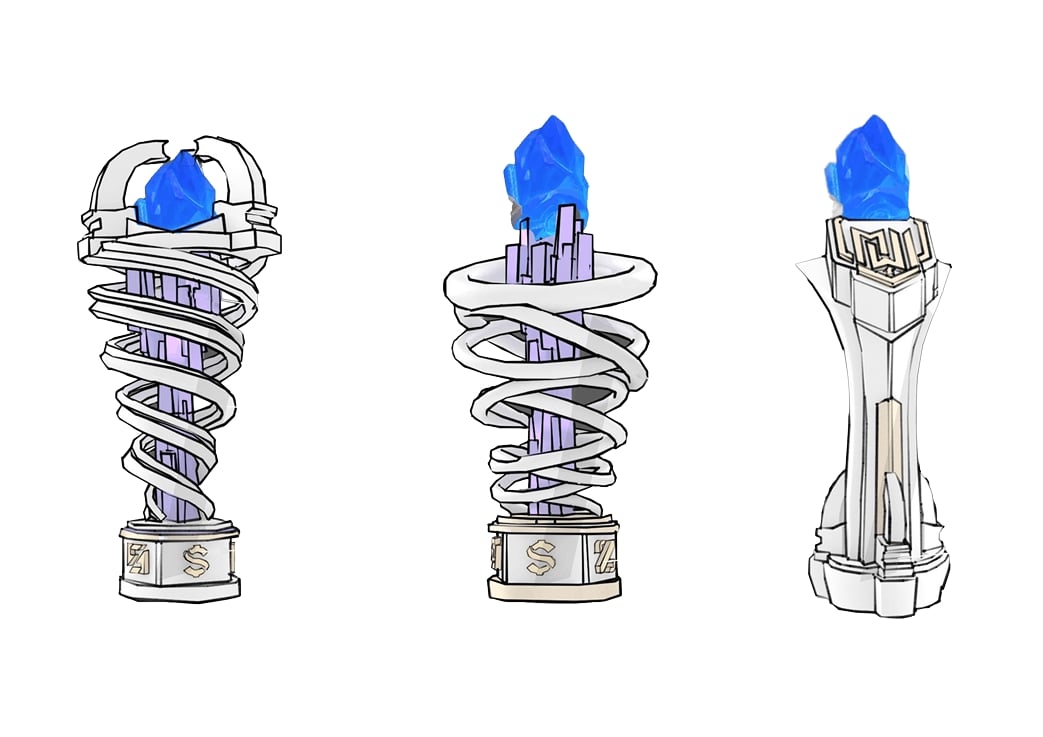
Compared with the hard steel tooling of injection moulding, silicone moulds are inexpensive, quick to make and far more forgiving of complex geometry, but they wear faster and suit lower volumes. Injection tooling wins decisively at high volume and for the toughest thermoplastics, while silicone owns the territory of detailed, low to medium volume cast parts.
We choose between them on the merits of each brief. For a richly detailed award produced in tens or low hundreds, silicone moulding with resin casting is almost always the right answer. For tens of thousands of a simpler part, we would look to injection moulding instead.
Practical Considerations and Limits
Silicone moulds are not eternal. Fine detail gradually softens with each cast, and aggressive resins shorten mould life, so for larger runs we plan for multiple moulds from the same master. Very large parts require significant volumes of silicone, which raises cost. Air entrapment must be managed carefully, often with pressure or vacuum during casting, to avoid bubbles in visible surfaces.
These are manageable realities rather than obstacles. Our experience lets us anticipate them, planning mould counts, gating and degassing so the finished award is flawless. Transparency about these factors is part of how we advise clients honestly.
When Fabit Recommends Silicone Moulding
We recommend silicone moulding when a design carries fine detail or complex undercut geometry and is needed in small to medium quantities. It is the natural partner to our 3D printed masters and to resin casting, and it underpins many of our most tactile awards. For very high volumes or the toughest engineering plastics, we look elsewhere.
Because we hold master making, moulding, casting and finishing all in house, the process runs seamlessly under one roof. See finished results on our custom trophies service page.
Frequently Asked Questions
How many casts can one silicone mould produce?
Depending on the casting material and detail, a mould typically yields dozens of good parts before fine detail softens. For larger runs we make multiple moulds from the same master.
Can silicone reproduce very fine detail?
Yes, exceptionally well. It captures texture down to fine surface marks, which is why it is favoured for detailed awards.
What is the master made from?
Most often a 3D printed and hand finished pattern from our studio, prepared carefully because every detail transfers to the mould.
Can I cast clear parts in a silicone mould?
Yes. Clear polyurethane and epoxy resins cast well, though managing bubbles requires vacuum or pressure for a flawless result.
If your award depends on fine detail or intricate form, our Antwerp studio replies within 24 hours and delivers worldwide. Start your brief at our design studio and we will reproduce your design faithfully.
Related terms