
Antiquing is a finishing technique that deliberately darkens the recessed areas of a metal surface while leaving the raised areas bright, creating contrast that emphasises detail, adds dimensional depth, and gives an award the appearance of age and gravitas. Closely related to patination, antiquing focuses specifically on the interplay between light and shadow across a textured or relief surface. On medals, coins, plaques, and sculptural awards, it is the technique that makes engraved and embossed detail leap into legibility, turning a flat impression into a piece with genuine three dimensional presence.
What antiquing does
Antiquing works by introducing a darkening agent, typically an oxidising solution, across the entire surface of a piece, then selectively removing it from the raised areas. The solution reacts with the metal to create a dark tone, which is allowed to settle into every recess and detail. Once the desired darkness is achieved, the high points are gently polished or relieved to bring back the bright metal, leaving the dark tone only in the low areas.
The result is a surface with pronounced contrast. Recessed text, textures, and background areas remain dark, while raised logos, figures, and rims shine bright. This contrast is what our eyes read as depth and age. A newly struck medal can look flat and undifferentiated; the same medal antiqued suddenly reveals every nuance of its relief, with a richness that suggests history and craftsmanship.
Why antiquing is valued for awards
The primary benefit of antiquing is legibility and drama. Fine detail that would otherwise be hard to perceive becomes clearly visible, because the dark recesses provide contrast against the bright highlights. For medals and relief plaques in particular, this is transformative. It ensures that the effort invested in modelling detailed artwork is fully appreciated in the finished piece.
Antiquing also lends emotional weight. A bright, uniform metal surface can feel modern and clean, but it lacks the sense of permanence and heritage that many prestigious awards seek. Antiquing introduces exactly that gravitas, suggesting an object of lasting significance rather than a shiny novelty. For lifetime achievement honours, commemorative medals, and traditional trophies, this quality is deeply appropriate.
Where antiquing works best
- Medals and coins: The classic application, where antiquing reveals struck relief with beautiful clarity.
- Relief plaques: Modelled scenes and portraits gain depth and readability.
- Sculptural trophies: Figurative and textured forms are accentuated by the light and shadow contrast.
- Detailed logos and crests: Intricate heraldic and brand detail becomes crisp and legible.
Antiquing depends on there being relief or texture to work with, so it is most effective on pieces with modelled, engraved, or embossed surfaces rather than perfectly flat ones. We consider this from the design stage, ensuring the form offers the depth that antiquing will bring to life.
The role of surface texture
Antiquing often pairs with a textured background such as a bead blasted or matte finish. The matte areas hold the darkening agent well and provide a rich, even ground against which polished highlights stand out. A common and effective approach is to antique the recessed, textured background while relieving the raised, polished detail, producing a clear and elegant contrast. This combination of techniques, texture plus antiquing plus selective polishing, is a sophisticated way to build visual hierarchy into a piece, and it is well suited to our metal award materials.
The craft of relieving
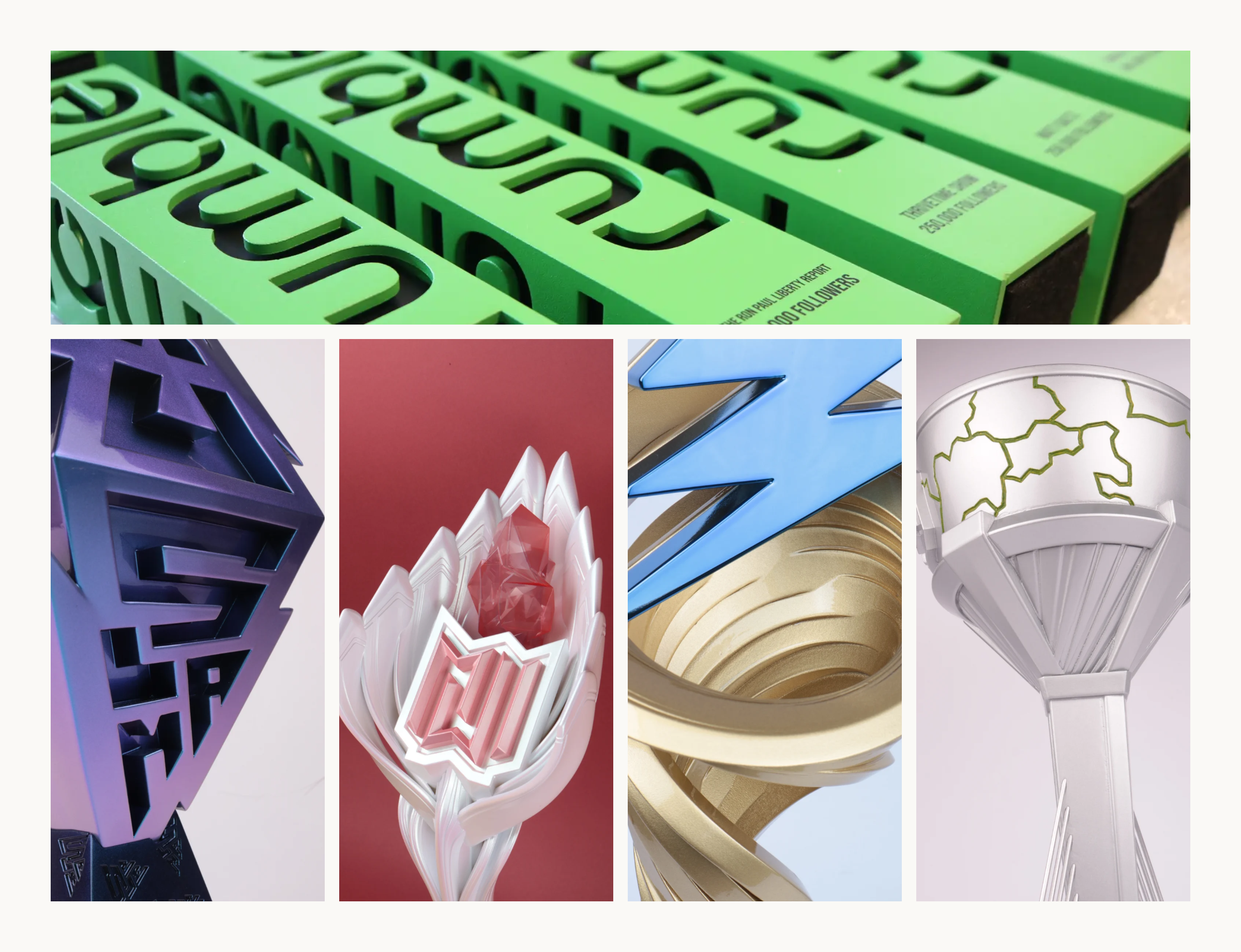
The step that defines the character of an antiqued finish is relieving, the selective removal of the dark tone from the high points. How much is relieved, and how brightly the highlights are polished, dramatically changes the look. A light relieving leaves the piece dark and moody with subtle highlights; a heavy relieving produces bright, sparkling high points against dark recesses. This is a matter of artistic judgement and skilled handwork, and it is where the experience of the finisher makes a decisive difference. We tailor the degree of relieving to the mood the client wants, from restrained and antique to bright and lively.
Antiquing versus a full patina
Clients sometimes ask how antiquing differs from a patina, since both involve chemically colouring metal. The honest distinction is one of intent and scope. A patina is about developing rich, often varied colour across a surface as a finish in its own right, embracing tonal variation and sometimes colours like green or blue. Antiquing is more specific and functional: it uses darkening principally to create contrast that reveals relief and suggests age, usually in brown to black tones, with the raised areas deliberately brought back to bright metal. In practice the techniques overlap, and a piece may involve elements of both. When the goal is to make detail legible and add dimensional depth, antiquing is the precise term; when the goal is a rich coloured surface with artistic variation, patina is more apt.
Antiquing with modern fabrication
Antiquing is not limited to traditional cast or struck pieces. It works beautifully on machined and 3D printed metal components too, wherever there is relief or texture to accentuate. A 3D printed trophy with modelled detail can be antiqued to bring out its geometry, marrying contemporary production with a classic finishing technique. This flexibility allows us to apply the depth and gravitas of antiquing to designs that would have been impossible to produce by traditional means.
Care and durability
Like a patina, an antiqued finish is usually sealed with a protective wax or lacquer to stabilise the darkening and protect the polished highlights. This makes the finish durable and long lasting. Gentle cleaning with a soft dry cloth maintains the contrast, while abrasive cleaners should be avoided, as vigorous polishing could remove the dark tone from the recesses. Handled with reasonable care, an antiqued award retains its dimensional richness indefinitely.
Frequently asked questions
Does antiquing work on flat surfaces? Antiquing relies on relief or texture to create its contrast, so it is most effective on modelled, engraved, or textured pieces rather than perfectly flat ones.
Is antiquing the same as a patina? They overlap, but antiquing specifically darkens recesses and relieves highlights to reveal detail and suggest age, while a patina is about developing rich coloured surfaces more broadly.
Will the dark tone rub off? Once sealed with a protective coating, the antiquing is stable and durable. Avoiding abrasive cleaning preserves the contrast.
How do I request an antiqued award? Start through our design tool. We respond within 24 hours and deliver worldwide.
Related terms