Thermoforming is a manufacturing process in which a plastic sheet is heated until pliable, then formed over or into a mould to take its shape, and finally trimmed into a finished part. For custom awards it excels at producing large, lightweight, smoothly contoured shells, housings and display elements at moderate volumes, bridging the gap between one off fabrication and full injection moulding.
At Fabit, thermoforming is one of the quieter workhorses in our Antwerp studio. It rarely takes centre stage, yet it solves a particular set of problems with unusual grace: how to make a large curved surface, a protective cover, or a repeatable shell without the heavy tooling cost of injection moulding. Knowing when to deploy it is a matter of experience, and that experience is what we bring to every brief.
The Thermoforming Process Step by Step
A thermoplastic sheet is clamped in a frame and heated with radiant elements until it becomes soft and drapeable. The softened sheet is then shaped against a mould, either by pressing it down mechanically, by drawing it with vacuum, or by pushing it with air pressure. Once the plastic cools and stiffens against the mould, it retains that geometry. The formed sheet is removed and trimmed, often on a CNC router, to its final outline.
The elegance of the process lies in its tooling. Because the sheet only touches one side of the mould, tools can be made from far cheaper materials than the hardened steel injection moulding demands. This drops the entry cost dramatically and shortens lead times.
Thermoforming Versus Injection Moulding
The two processes are often confused, but they serve different territories. Injection moulding fills a closed cavity with molten plastic under high pressure, producing fully detailed parts on both faces at very high volume, at the cost of expensive tooling. Thermoforming shapes a pre made sheet over a single sided mould, producing detail on one face at moderate volume, with far cheaper tooling.
For an awards programme, this distinction matters. If you need a thousand identical detailed parts, moulding wins. If you need fifty large curved shells or protective display domes, thermoforming is faster and more economical. We help clients read this trade off honestly, guided by the brief rather than by any single technique.
Where Thermoforming Serves Premium Awards
Thermoforming shines in specific roles within a finished award. It produces sweeping transparent covers that protect an internal sculpture, contoured bases with generous curves, and lightweight shells that give an object presence without weight. It is also the natural choice for display and packaging elements, such as fitted trays that cradle an award in its presentation case.
These parts rarely stand alone. A thermoformed dome might sit over a 3D printed and hand painted centrepiece, or a formed base might carry a CNC machined metal plaque. This layering of processes is how we build objects that feel considered from every angle. Our materials overview shows the substrates we pair with formed elements.
Materials Used in Thermoforming
The sheet material defines the character of the formed part, from optical clarity to matte solidity.
- PETG: tough, clear and easy to form, a reliable all rounder for covers and shells.
- Acrylic: superb optical clarity and a premium polished look, ideal for showcase elements.
- Polycarbonate: extreme impact resistance where durability is paramount.
- ABS: opaque, rigid and easy to finish or paint for structural shells.
- HIPS: economical for internal trays and packaging inserts.
Because the material arrives as a manufactured sheet, colour and surface consistency are excellent from the start, which reduces finishing work on transparent or coloured elements.
Design Considerations for Formed Parts
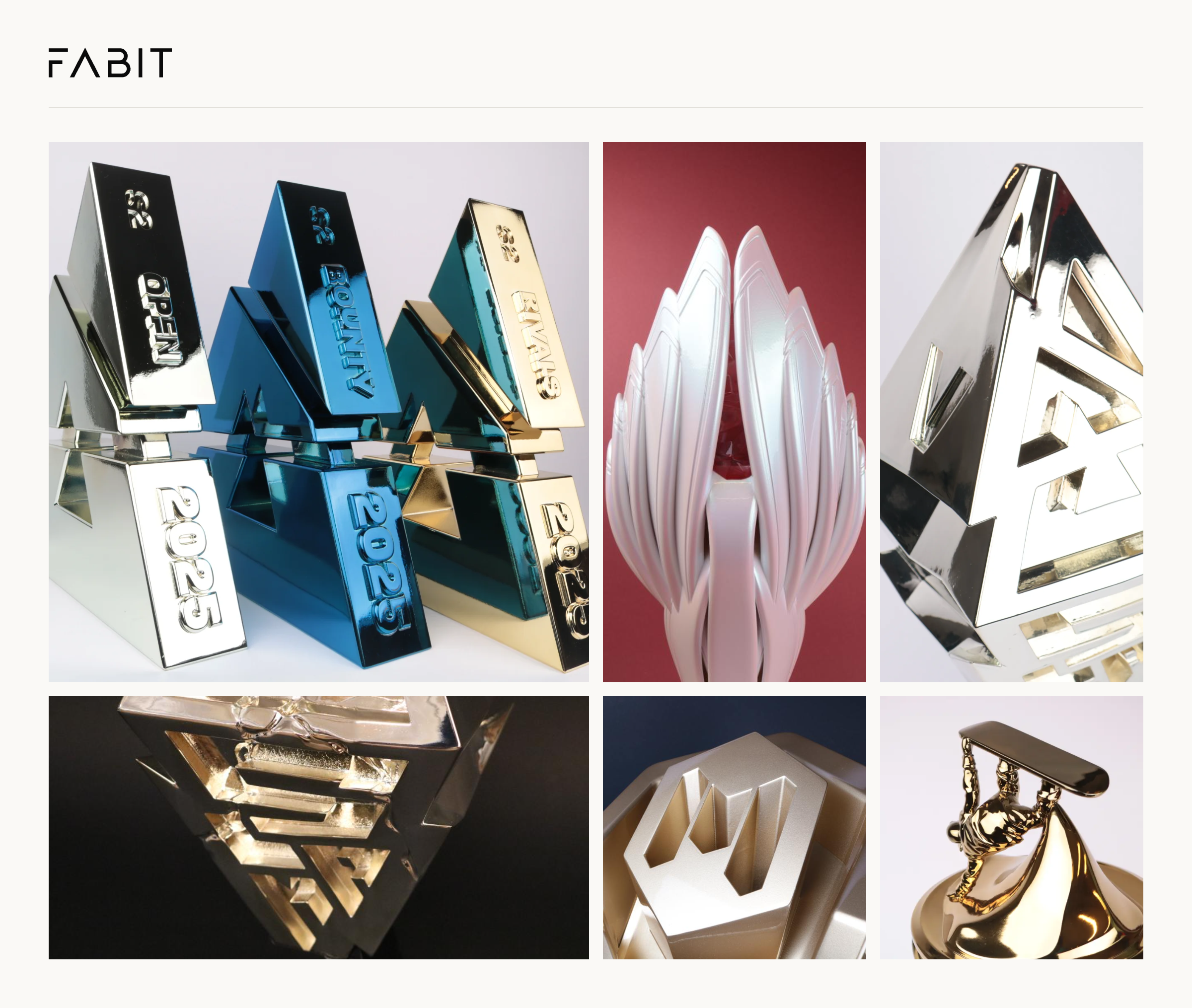
Thermoformed design rewards generous, flowing geometry. Deep draws thin the material at corners, so wall thickness must be planned around the shape. Draft angles help the part release from the mould, just as in moulding. Fine crisp detail is limited compared to injection moulding, because the sheet drapes rather than fills, so sharp text and intricate features are better added later by machining, printing or applied plates.
We factor these realities in at the design stage. When a concept calls for both a sweeping formed surface and crisp detail, we split the work across processes, forming the shell and adding detail through a complementary method. This is where hybrid production earns its keep.
Volume, Cost and Lead Time
Thermoforming occupies a sweet spot of moderate volumes. Its cheaper tooling makes short and medium runs viable, while its per part speed handles larger batches comfortably. Lead times are shorter than injection moulding because the tools are simpler and faster to make.
For clients this means flexibility. A design can be adjusted between production batches with far less penalty than re cutting a steel injection tool. That agility suits recognition programmes that evolve year on year, or event series that refine their look over time.
When Fabit Recommends Thermoforming
We turn to thermoforming for large lightweight shells, transparent protective covers, contoured bases and fitted presentation packaging, especially at moderate volumes where injection tooling cannot be justified. It is less suited to small dense objects with fine detail on all faces, where casting or machining serves better.
Because our Antwerp studio holds the full production spectrum in house, we recommend thermoforming only when it genuinely serves the object. See the range of finished work on our custom trophies service page.
Frequently Asked Questions
How is thermoforming different from vacuum forming?
Vacuum forming is one specific type of thermoforming that uses vacuum to draw the sheet. Thermoforming is the broader family that also includes pressure and mechanical forming.
Can thermoformed parts be crystal clear?
Yes. Acrylic and PETG sheets form into optically clear covers and domes, ideal for protecting a display piece.
Is the tooling expensive?
Far less than injection moulding. Single sided moulds can be made from cheaper materials, which lowers entry cost and speeds delivery.
Can I add fine detail to a formed part?
Fine detail is best added after forming through machining, printed inserts or applied plates, then combined into the finished award.
If your award concept involves large curved surfaces or protective covers, our Antwerp team replies within 24 hours and delivers worldwide. Begin your brief at our design studio and we will advise on the ideal approach.
Related terms