Subtractive manufacturing is the family of processes that create a part by removing material from a solid block, using methods such as milling, turning, drilling, and grinding, until the desired shape remains. It is the mirror image of additive manufacturing, which builds a part up layer by layer. Where 3D printing adds material only where it is needed, subtractive machining starts with more than enough and cuts away the excess. Understanding subtractive manufacturing matters for Fabit because the two approaches are not rivals but partners, and the finest metal awards often draw on both.
How subtractive manufacturing works
Subtractive manufacturing begins with a solid piece of material, often called a billet or blank. A cutting tool, spinning at high speed or engaging a rotating workpiece, removes material precisely according to a programmed path. In milling, the tool moves around a fixed part. In turning, the part rotates against a fixed tool. Drilling bores holes, and grinding refines surfaces to fine tolerances. Modern machines are computer controlled, so a digital design drives the tool through complex sequences with remarkable accuracy, producing parts to tolerances measured in microns.
Because material is cut away rather than built up, subtractive manufacturing generates waste in the form of chips and swarf, and it cannot easily create fully enclosed internal cavities that a tool cannot reach. These are the natural trade offs of a process that shapes by removal.
The strengths of subtractive manufacturing
Subtractive machining is prized for precision and surface quality. It achieves extremely tight tolerances and can produce beautifully smooth, flat, or geometrically exact surfaces that are difficult to match with printing alone. It works with a vast range of solid materials, from metals to plastics to wood, and it is highly repeatable across quantities. For features that demand exactness, a perfectly flat mating face, a precise bore, a crisp chamfered edge, subtractive methods are often the ideal tool.
These strengths make machining a natural complement to additive production, especially in finishing. A part built by powder bed fusion may be machined afterward to bring critical surfaces to a precise finish, marrying the design freedom of printing with the precision of cutting.
Subtractive compared with additive manufacturing
The clearest way to grasp subtractive manufacturing is to contrast it with the additive processes at the heart of Fabit’s work. Additive manufacturing, such as SLM, builds a part only where material is needed, which enables complex geometries, internal lattices, and effortless personalisation, since every part follows a digital file with no tooling. Subtractive manufacturing removes material from a solid, which excels at precision and surface finish but struggles with internal complexity and generates waste. Additive is unmatched for intricate, individualised forms, while subtractive is unmatched for exact surfaces and tolerances. The wisest manufacturing often uses each where it is strongest.
How the two approaches work together
- Print then machine: a complex form is printed, then critical faces are machined to precise dimensions.
- Machined bases: a solid, precisely machined base can complement a printed upper element.
- Finishing cuts: machining refines a mounting surface or an edge that must be exact.
- Hybrid pieces: printed detail and machined precision combine in a single award.
The materials suited to each route are shown on our materials overview, and the interplay of techniques is part of what shapes our custom trophy service.
Why Fabit leads with additive for detailed awards
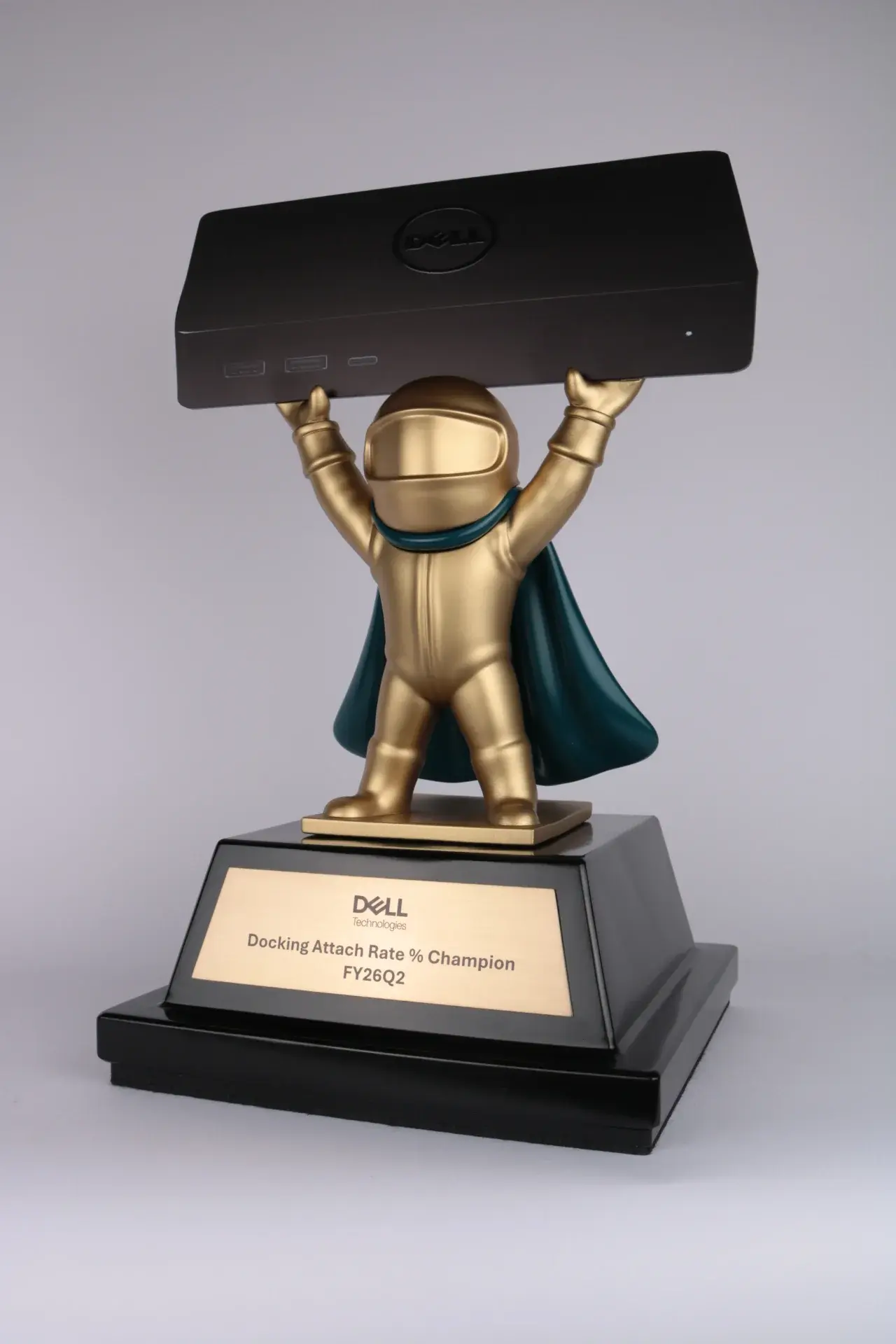
For the intricate, personalised, geometrically rich pieces our clients commission, additive manufacturing is the natural foundation. It renders fine logos and lettering, allows every piece to differ without tooling cost, and creates forms that would be impossible or ruinously expensive to machine from solid. Subtractive methods then enter where precision finishing adds value. This considered combination, guided by our team, is how we achieve results that feel both imaginative and impeccably finished. We are always transparent about which process serves which purpose, because honest guidance is the core of our craft.
The Fabit in house advantage
Because our production is coordinated in house in Antwerp, we can move fluidly between additive and subtractive steps, applying each at the right moment without handing work between disconnected suppliers. That integration protects quality, compresses timelines, and lets us respond to enquiries within twenty four hours while delivering finished pieces worldwide. The result is an award that unites the design freedom of printing with the precision of machining and the warmth of genuine hand finishing.
Starting your project
Whether your award benefits from additive detail, subtractive precision, or a thoughtful blend of both, our team will guide you to the right approach. To begin shaping your concept today, open our online create tool and let the design conversation start.
Frequently asked questions
Is subtractive manufacturing better than 3D printing? Neither is universally better. Subtractive excels at precision and surface finish, while additive excels at complex, personalised forms, so the best result often uses both.
Does Fabit use machining? Yes, where precision finishing adds value, complementing our additive core.
Why does machining create waste? Because it shapes a part by cutting material away from a solid block, leaving chips and swarf behind.
Can printed and machined parts be combined? Absolutely. Hybrid pieces that pair printed detail with machined precision are common in premium award work.
Subtractive manufacturing reminds us that great objects are made by choosing the right tool for each task, and understanding it helps us finish every Fabit award to perfection.
Related terms