Rapid prototyping is the practice of quickly producing a physical model of a design, most often with 3D printing, so that form, fit, detail, and feel can be tested and refined long before committing to final production. It compresses the distance between an idea and a tangible object from weeks to days or even hours. For Fabit, rapid prototyping is an essential part of an advisory, craft led approach. It lets our clients see and hold a proposed award, react to it, and shape it, so that the final piece, made in genuine metal, is exactly right the first time it matters.
What rapid prototyping means
Traditionally, turning a design into a physical sample meant machining, moulding, or hand fabrication, each slow and expensive, which discouraged iteration. Rapid prototyping changed that. By building a model directly from a digital file, additive technologies let a designer produce a sample almost immediately, evaluate it, adjust the file, and print again. This tight loop of design, build, and review is the essence of the discipline. It is less a single technology than a philosophy of fast, physical iteration, and 3D printing is its most powerful enabler.
A prototype might be a rough proof of concept that only tests overall shape, or a highly refined presentation model that closely previews the final object. The level of fidelity is chosen to match the question being asked at each stage.
Why rapid prototyping matters for premium awards
A recognition piece carries meaning, and it is scrutinised closely by the people who commission it and the people who receive it. Renderings on a screen can only convey so much. The weight in the hand, the play of light across a polished facet, the crispness of a logo, the proportion of a base, these reveal themselves fully only in three dimensions. Rapid prototyping lets a client experience these qualities before the final piece is made, so decisions are made with confidence rather than hope.
This matters especially for bespoke commissions where there is no catalogue precedent. When a design is entirely new, the ability to hold an early version and say yes, more like this, or no, softer here, is invaluable. It removes risk from the moment that counts and ensures the finished award truly reflects the client’s intent.
How Fabit uses rapid prototyping
At Fabit, prototyping is woven into the design conversation. A client shares an idea, our team develops it into a digital design, and where useful we produce a model so the concept becomes tangible. Feedback flows back into the design, and the piece is refined until it is right. Only then do we commit to final production in genuine metal, applying the hand finishing that gives every Fabit award its museum quality character. Because our design and production sit together in house in Antwerp, this loop is fast and seamless, with no handoffs to slow it down. It is a defining part of our custom trophy service.
Technologies behind rapid prototyping
- Material jetting: superb surface smoothness and full colour for lifelike presentation models.
- Powder bed fusion: when a prototype needs to be in genuine metal, the same family we use for final awards.
- Resin and filament printing: fast, economical models for early form studies.
- Binder jetting: full colour or sand based models for particular needs.
The material a final award will be made from is chosen from our materials overview, and prototyping helps confirm that choice before production begins.
Rapid prototyping compared with final production
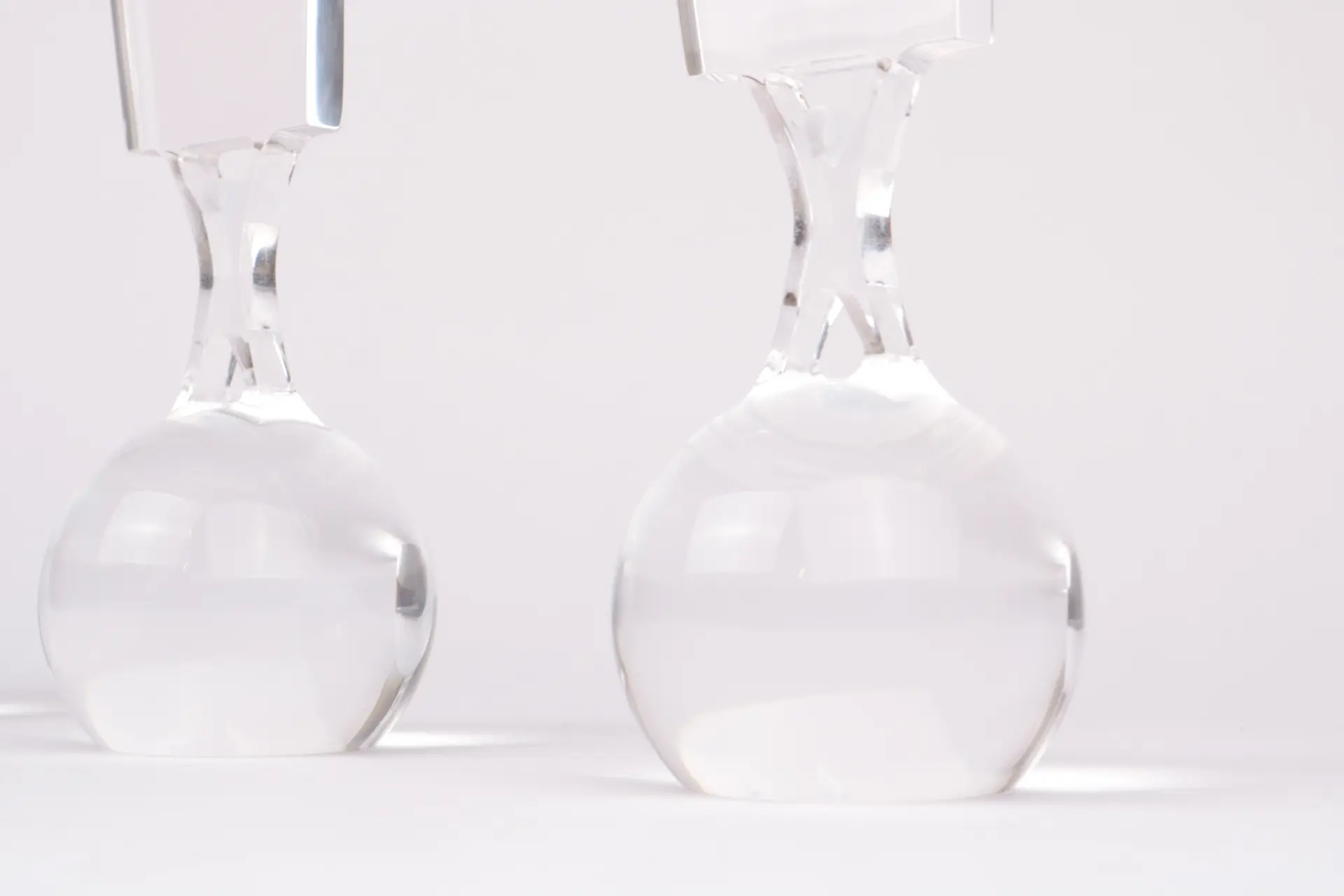
It helps to see prototyping and production as two phases with different goals. Prototyping optimises for speed and learning, so models may use quicker or cheaper methods and are judged by what they teach us. Final production optimises for quality and durability, so a Fabit award is built in dense metal and finished by hand to last for decades. The prototype exists to make the final piece perfect. Confusing the two, treating a quick model as a finished object, would sell the result short, which is why we are always clear about which phase a given piece belongs to.
The value of iteration
The deepest benefit of rapid prototyping is permission to iterate. When making a sample is fast and inexpensive, a design can evolve through several versions rather than being locked in prematurely. Each iteration sharpens proportion, detail, and feel. The result is an award that looks considered because it was, refined through a process that traditional manufacturing could never afford. This is craft accelerated by technology, not replaced by it, and it is exactly how a premium studio should work.
Starting your project
Every memorable award begins as an idea worth exploring in three dimensions. Our team is ready to help you prototype, refine, and perfect your concept before it becomes a finished piece. To begin, open our online create tool and start shaping your design today.
Frequently asked questions
Is a prototype the same as the final award? No. A prototype is a model made to test and refine the design, while the final award is produced in genuine metal and finished to a museum standard.
How fast can a prototype be made? Because we work in house, a model can often be produced within days, and we respond to enquiries within twenty four hours.
Do I need a prototype? Not always, but for bespoke or high value commissions, holding an early model removes risk and ensures the final piece is exactly right.
Can a prototype be in metal? Yes. When it matters, we can prototype in the same metal family used for final awards.
Rapid prototyping turns uncertainty into confidence, and it is one of the quiet reasons a finished Fabit award so consistently feels exactly as it should.
Related terms