Binder jetting is a 3D printing process in which a print head deposits a liquid binding agent onto a bed of powder, gluing particles together layer by layer to form a part that is later cured, de powdered, and usually sintered or infiltrated to reach its final strength. It is one of the most versatile additive technologies, capable of producing metal, sand, and full colour parts, and it plays a distinctive role in the wider landscape of production that informs how Fabit approaches bespoke awards. Understanding binder jetting helps our clients appreciate why we select certain processes for the durability and finish a premium recognition piece deserves.
How binder jetting works
The process starts, like other powder based methods, with a thin layer of powder spread across a build platform. Instead of melting that powder, a print head moves across the bed and jets microscopic droplets of a liquid binder precisely where the part cross section should be. The binder glues the powder grains together. The platform lowers, a fresh layer of powder is spread, and the head prints the next cross section. Crucially, no heat is applied during printing, which is why binder jetting is fast and free of the thermal stress that laser and electron beam processes must manage.
What comes off the platform is called a green part. It is fragile, held together only by binder, and it must go through further steps. These typically include curing to harden the binder, careful removal of loose surrounding powder, and then a densification step. For metal parts that usually means sintering in a furnace, sometimes followed by infiltration with a second metal to fill remaining porosity.
What binder jetting is good at
Binder jetting has several notable strengths. Because it does not melt material, it can print quickly and cover large build areas, making it attractive for higher volumes. It supports a broad range of materials, from metals to sand for casting moulds to gypsum based powders that can be printed in full colour. And since the surrounding powder supports the part during printing, complex geometries often need no dedicated support structures.
Full colour binder jetting is especially interesting for figurative or illustrative pieces, since colour is embedded during printing rather than applied afterward. For certain commemorative or presentation objects, that capability opens creative doors.
The trade offs to understand
Binder jetting also carries limitations that matter for premium awards. Because metal parts start as glued powder and only reach density through sintering, they can shrink during that furnace step, and controlling that shrinkage precisely takes expertise. The as built surface tends to be grainier than a fully melted SLM part, and mechanical properties depend heavily on how well the sintering or infiltration is executed. For a client who wants the crisp lettering, mirror polish, and solid heft of a fully dense metal award, a melting based process such as SLM often delivers a more refined result. We explain these distinctions openly, which is part of our advisory approach on every custom trophy project.
Binder jetting compared with powder bed fusion
Both binder jetting and powder bed fusion, which includes SLM and EBM, build from a powder bed. The essential difference is bonding. Powder bed fusion melts the powder with a laser or electron beam, producing a dense part directly. Binder jetting glues the powder with a liquid agent and relies on a later thermal step to achieve density. That difference cascades into surface finish, strength, dimensional accuracy, and post processing effort, all of which guide our recommendations.
Materials in binder jetting
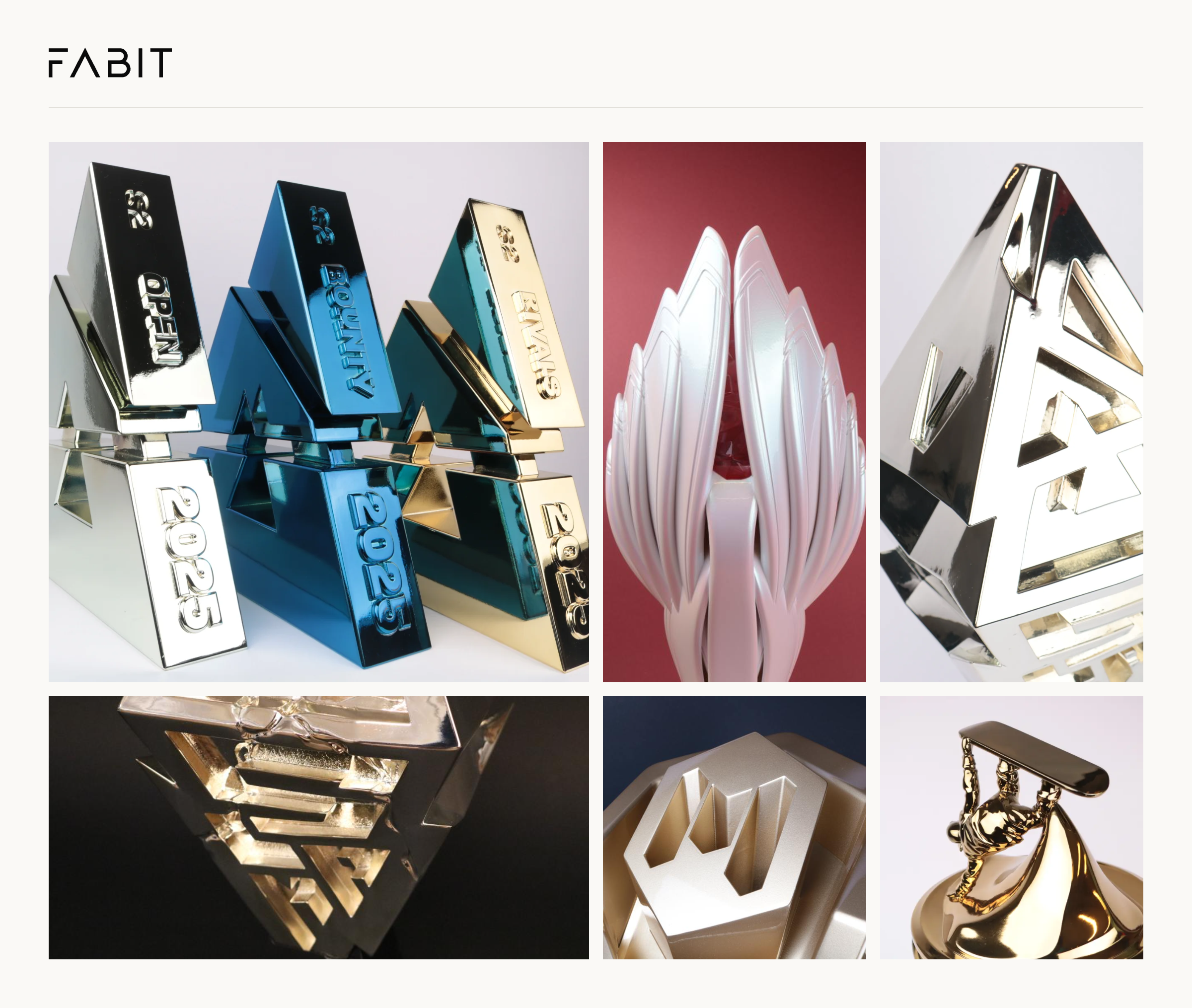
- Metal powders: stainless steel and other alloys, densified by sintering and sometimes infiltrated with bronze.
- Sand: used to print casting moulds and cores, a bridge between additive and traditional casting.
- Gypsum and composites: enable full colour models for visual and presentation pieces.
- Ceramics: possible for specialised applications requiring heat resistance.
Our full palette of finished award materials is set out on the materials overview, where you can see the options that survive the leap from concept to lasting object.
Where binder jetting fits at Fabit
Fabit builds its reputation on genuine craft and museum quality metal, and our core production leans on melting based processes that deliver density and detail in a single thermal step. That said, understanding binder jetting keeps our advice grounded. When a project calls for full colour, rapid volume, or a sand cast route, we know how to weigh those options. Because our workshop is in house in Antwerp, we can guide clients toward the method that truly serves their goal, respond within twenty four hours, and deliver the finished piece worldwide.
From idea to finished award
Whatever process ultimately suits your piece, the journey begins with a concept. Our team helps translate a rough idea into a printable, beautiful object, then applies the hand finishing that gives it soul. To start shaping your idea right now, open our online create tool and let the design conversation begin.
Frequently asked questions
Is a binder jetted metal part as strong as a melted one? It can be strong after proper sintering or infiltration, but a fully melted SLM part is dense from the start, which is why we favour melting for premium metal awards.
Can binder jetting print in colour? Yes. Full colour is one of its distinctive strengths, achieved by depositing coloured binder during printing.
Why does the part shrink? The green part is porous, and sintering fuses the powder and closes those gaps, which reduces overall size. Controlling that shrinkage is a matter of experience.
Does binder jetting need supports? Usually no, because the surrounding loose powder supports the part during printing.
Binder jetting is a fascinating and flexible technology, and knowing exactly where it shines helps us build the right award for every client, every time.
Related terms