Jade glass is a high-clarity optical glass distinguished by a soft emerald-green tint along its polished edges, prized in the awards industry for the sense of depth, prestige, and quiet luxury it lends to custom trophies. The colour is not painted or coated onto the surface. It emerges from the composition of the glass itself and becomes visible where light travels through the thickest sections, most notably the edges and bevels. This is why a well-cut jade glass award reads as green at its borders while remaining almost water-clear across its faces.
What jade glass actually is
Despite the name, jade glass contains no jade and no stone of any kind. The term is a description of appearance rather than material. Traditional clear glass carries a faint green cast caused by trace iron content in the raw silica. In ordinary glazing this is treated as a defect and engineered out to achieve the colourless look of low-iron crystal. In jade glass the effect is embraced and controlled, producing a deliberate, consistent green edge that has become one of the most recognisable signatures in premium recognition pieces.
Because the tint depends on thickness, thicker blanks show a deeper, more saturated green while thin sections appear almost neutral. Skilled makers use this to compositional advantage, orienting facets and bevels so the colour pools exactly where the eye lingers.
It is worth dispelling one common misconception at the outset. The green of jade glass is not a cheaper substitute for a purer material, nor is it an accident of manufacturing. It is a deliberate aesthetic that many buyers actively prefer over water-clear crystal, because it introduces subtle colour and identity without committing to a bold, fully saturated tone. In a recognition programme that spans many years, that restraint tends to age well and rarely looks dated, which is one reason it has remained a fixture of the premium awards market for decades.
How jade glass is made and finished
Most jade glass awards begin as a flat or slab blank that is cut to shape, then ground, bevelled, and polished. The finishing stages are where craftsmanship shows. Firepolishing and progressive mechanical polishing bring the faces to a flawless, glassy finish, while diamond-tooled bevels catch and refract light. The green edge becomes a design feature, framing engraving or artwork held within the body of the piece.
For studios like Fabit, jade glass is treated as a canvas. It can be sandblasted, laser-engraved, subsurface engraved, or paired with printed colour, metal, or wood accents to build a bespoke object rather than a catalogue item.
Why organisations choose jade glass for awards
Jade glass occupies a sweet spot between the pure neutrality of low-iron crystal and the character of coloured art glass. It signals seriousness and permanence without feeling cold. That balance makes it a favourite for corporate milestones, sales achievement programmes, partner recognition, and long-service honours where the piece needs to feel considered and enduring.
- Perceived value: the green edge instantly communicates quality and thoughtful design.
- Versatility: it suits both minimalist and highly sculptural forms.
- Engraving clarity: logos and text sit crisply against the tinted body.
- Photogenic finish: it performs beautifully on stage, on camera, and on a shelf.
- Weight and presence: a solid blank feels substantial in the hand.
Design considerations before you commit
The most important decision is thickness, because it governs how pronounced the green edge will be. A slim, understated award will show only a whisper of colour, while a heavy slab will glow at every border. Shape matters too. Bevelled edges amplify the tint and add sparkle, whereas flat, squared edges keep the look architectural and restrained. Finally, consider how the piece will be decorated. Subsurface engraving floats an image inside the glass, while surface engraving and print sit on the face and interact differently with the colour.
Our advisory team walks clients through these trade-offs early, so the finished award matches the intent of the recognition programme rather than the constraints of a stock mould. You can explore approaches and request guidance through our custom trophies service.
Jade glass compared with clear crystal and coloured glass
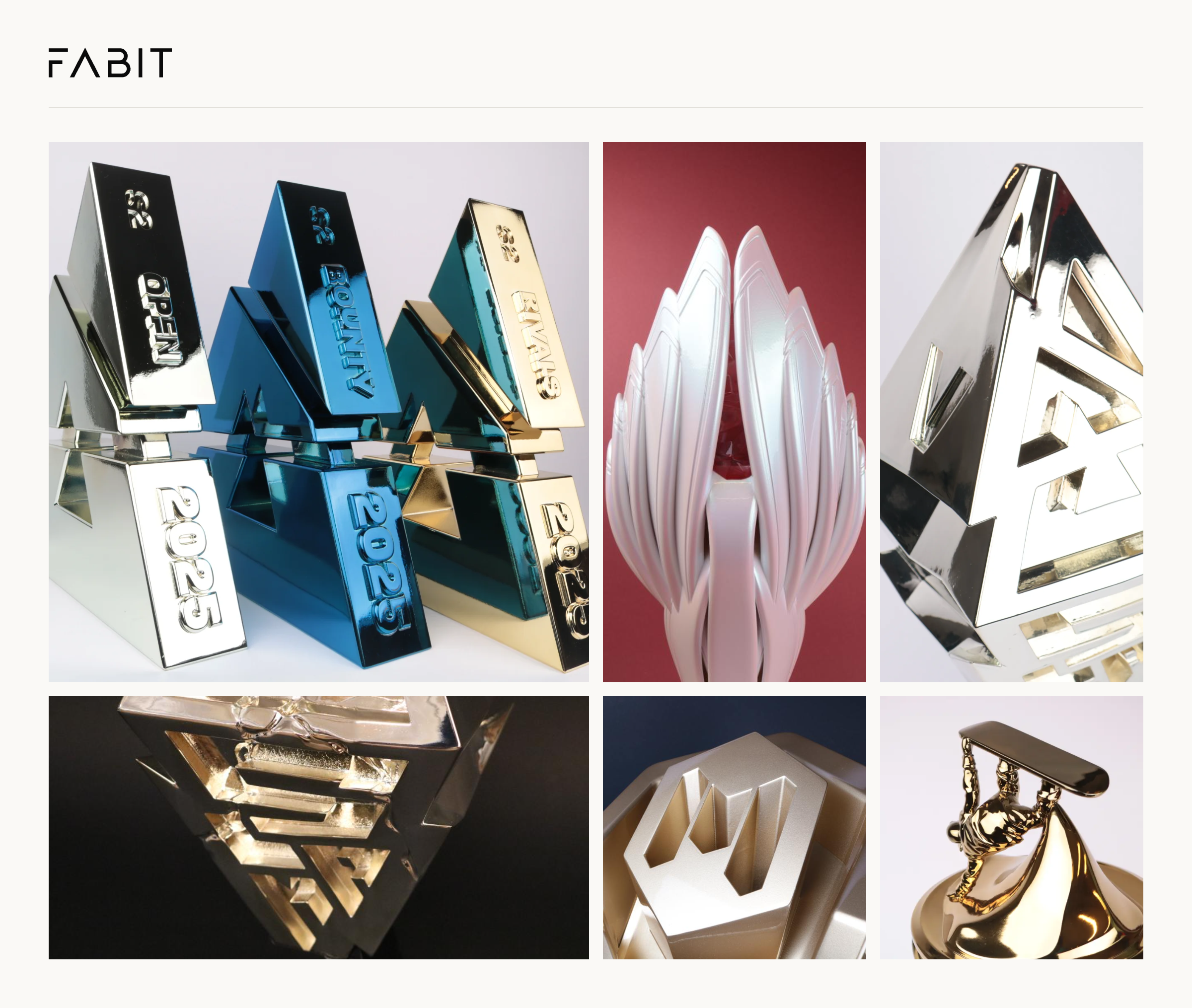
Buyers often weigh jade glass against optically clear crystal and fully coloured art glass. Clear crystal is the most neutral choice and lets engraving and internal detail speak for themselves. Coloured art glass makes a bold statement but can overwhelm branding. Jade glass sits between the two, adding warmth and identity while keeping the piece professional. For many corporate recognition ranges it is the default premium option precisely because it flatters almost any brand palette.
Care, durability, and longevity
Jade glass is durable and holds its finish for decades with minimal care. It should be handled by the body rather than fine edges, cleaned with a soft lint-free cloth and mild glass cleaner, and kept away from hard impacts that can chip bevels. Because the colour is intrinsic to the glass rather than a surface treatment, it will never fade, peel, or discolour with age. This permanence is part of what makes it appropriate for lifetime-achievement and legacy awards.
Specifying jade glass with Fabit
Because Fabit designs and produces bespoke pieces rather than selling from a fixed catalogue, jade glass can be shaped, combined, and decorated to a brief. Clients typically start with a concept or brand reference, and our team returns material options, thickness recommendations, and decoration methods within a fast turnaround. You can begin a project directly in our online design studio or browse the full range of options on our materials overview.
Frequently asked questions
Is jade glass real jade? No. It is optical glass whose green edge comes from its composition. It contains no stone and is fully recyclable as glass.
Why is only the edge green? The tint intensifies with the amount of glass light passes through, so it is most visible at thick edges and bevels while faces appear near-clear.
Can jade glass be engraved with a full-colour logo? Yes. It accepts laser engraving, subsurface engraving, sandblasting, and printed colour, and these can be combined with metal or wood elements.
Is jade glass suitable for large or heavy awards? Yes. Thicker blanks actually enhance the signature colour, making jade glass a strong choice for flagship and headline pieces.
Related terms