Fused glass is glass art created by layering pieces of coloured or clear glass and heating them in a kiln until they melt together into a single solid object, giving award makers unrivalled control over colour, pattern, texture, and depth. Unlike blown or flame-worked glass, which is shaped while molten, fused glass is built up cold and then transformed by heat, making it a uniquely painterly medium for bespoke recognition pieces.
How fusing works
The process begins with sheets, strips, or fragments of compatible glass arranged into a design. This assembly, often called the layup, is placed in a kiln and heated through carefully controlled stages. At lower fusing temperatures the pieces tack together while retaining their individual outlines and texture. At higher temperatures they melt fully into a smooth, unified sheet. The maker chooses the peak temperature and hold time to achieve exactly the surface and depth the design calls for.
After fusing, the glass may be slumped, meaning it is reheated over or into a mould so it drapes into a three-dimensional shape. This two-stage approach, fuse then slump, is what lets a flat coloured composition become a curved, standing award.
Each firing can take many hours from start to finish, because the kiln must be brought up and back down through its temperature stages slowly and deliberately. A single award may require several separate firings, one to fuse the base composition, another to add detail or a second layer, and a final one to slump the finished sheet into form. This patient, multi-stage rhythm is part of why fused glass feels crafted rather than manufactured, and it is also why lead times should be discussed early in a project so that the artistry is never rushed at the expense of quality.
Why fused glass is special for awards
Fused glass is the most expressive glass medium for colour and pattern. Because the artwork is built layer by layer before firing, a designer can embed brand colours, gradients, organic textures, and even trapped bubbles or metal inclusions deep within the piece. No two are ever identical, which makes fused glass ideal when a client wants an award that feels genuinely one of a kind.
- Colour depth: hues sit within the glass, not just on the surface.
- Texture: surfaces can be glossy, matte, rippled, or sculpted.
- Uniqueness: every piece varies, reinforcing exclusivity.
- Brand integration: corporate colours can be woven into the material itself.
- Artistic value: the result reads as an art object, not a stock trophy.
Compatibility and why it matters
The single most important technical point in fusing is compatibility. Different glasses expand and contract at different rates as they heat and cool. If incompatible glasses are fused together, the mismatch creates internal stress that can crack the piece days, weeks, or even years later. Skilled makers work only with tested, compatible glass and anneal every piece properly. This is invisible in the finished object but fundamental to its longevity, and it is one reason bespoke fused glass should come from an experienced studio.
How Fabit uses fused glass
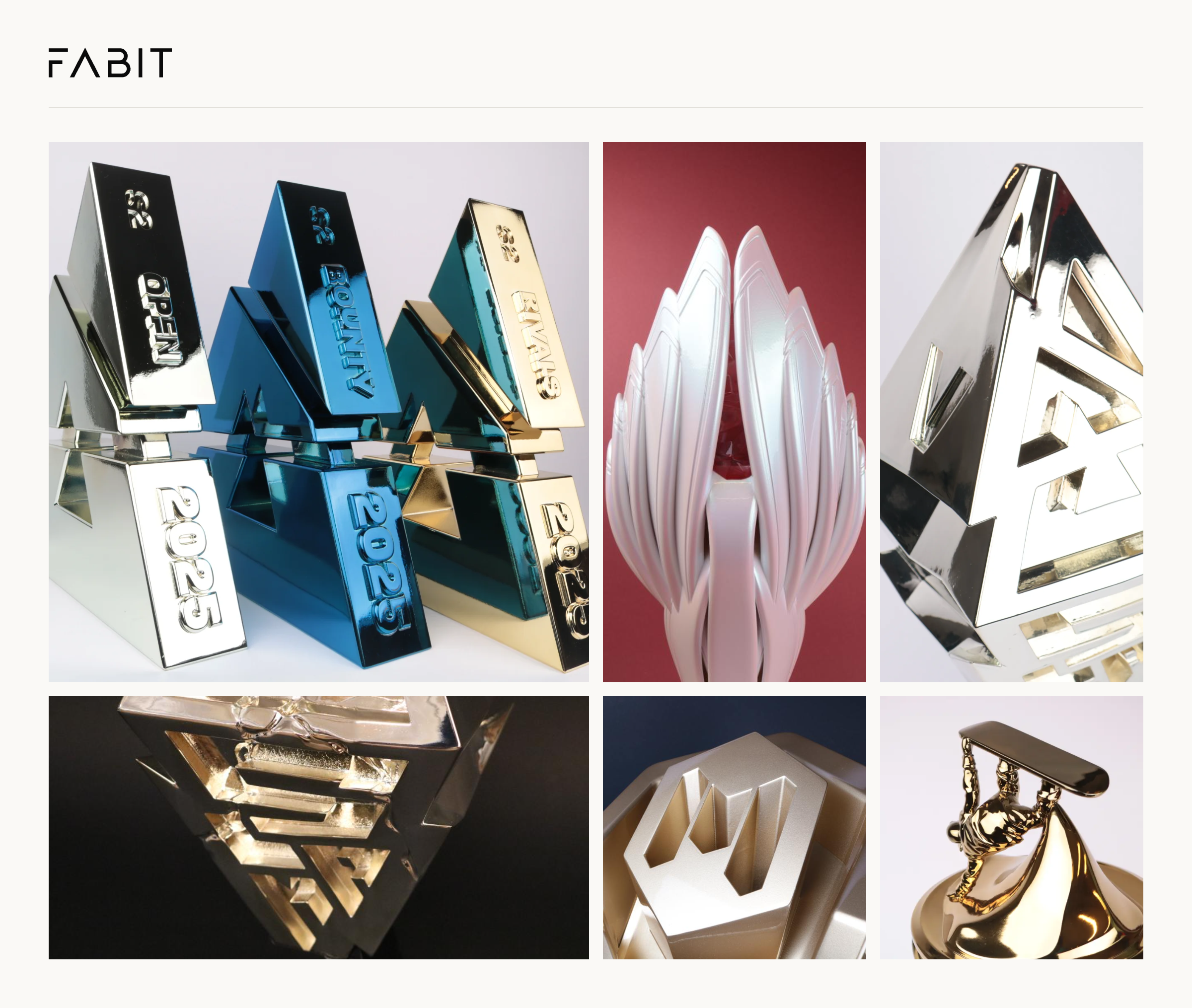
For a bespoke award, fusing lets Fabit translate a brand or a story directly into the material. A design might layer a company’s colours into an abstract composition, capture a landscape in glass for a regional honour, or build texture that echoes an industry. Once fused and slumped, the piece can be finished with engraving, polished edges, a metal or wood base, or printed detail. Explore the possibilities through our custom trophies service.
Design considerations
When planning a fused glass award, think about scale, since larger flat panels can be dramatic but need thoughtful mounting. Consider whether the piece should stand vertically, rest at an angle, or sit in a base, as this affects both the slumping mould and the display. Decide how engraving will interact with the colour, since dense patterns can compete with text. Because the artwork is intrinsic, it is worth investing time in the layup design, and our advisors will guide colour choices that read well under stage and display lighting.
Care and durability
Fused glass is solid and durable, and its colour will never fade because it is part of the glass itself. Clean with a soft cloth and mild glass cleaner, taking care with textured surfaces where dust can gather. Handle by the body and avoid knocking edges. Properly annealed fused glass will last generations, making it well suited to significant honours and heirloom-quality recognition.
Specifying fused glass with Fabit
Because Fabit creates bespoke pieces to a brief, fused glass can be designed around your exact colours, story, and format. Clients typically share brand references or a concept, and our team returns a layup direction, form, and finishing plan quickly. Begin your design in our online design studio or see the full range on our materials overview.
Frequently asked questions
How is fused glass different from blown glass? Fused glass is assembled cold and melted together in a kiln, while blown glass is shaped from a molten gather with breath and tools. Fusing excels at layered colour and pattern.
Can my brand colours be matched? Yes. Coloured glass is available in a wide palette, and layering allows close matching and blending of corporate colours.
Are fused glass awards fragile? No more than other glass. When made with compatible glass and properly annealed, they are durable and long-lasting.
Can fused glass be engraved? Yes, though busy patterns may compete with text, so our advisors help balance artwork and engraving for legibility.
Related terms