CNC turning is a subtractive machining process in which the workpiece rotates at speed while a stationary cutting tool removes material to create precise cylindrical and round parts. For custom awards it is the ideal method for columns, cylinders, discs, tapered forms and any element with rotational symmetry, delivering perfectly true, dimensionally exact parts with a refined machined finish.
CNC turning is the counterpart to milling in our Antwerp studio, and together they cover the full territory of precision machining. Where milling carves flat and sculpted forms, turning masters the round, spinning a solid bar against a cutting tool to produce columns, discs and cylinders of flawless symmetry. For awards built around clean geometric forms, turning brings a precision and finish that few other processes can rival.
How CNC Turning Works
A bar or block of material is clamped in a chuck and rotated at high speed on a machine called a lathe. A cutting tool, guided by computer control, moves along and into the spinning workpiece, shaving away material to create the desired profile. Because the part rotates against a fixed tool, every cut is perfectly concentric, producing true round forms with excellent surface finish.
The digital control means the profile follows the 3D model exactly, and every part comes out identical. This makes CNC turning both precise and repeatable, ideal for producing matching round components across an award series.
The Geometry Turning Excels At
Turning is defined by rotational symmetry. It effortlessly produces cylinders, cones, tapers, grooves, threads, domes and discs, any shape that can be described by a profile revolved around a central axis. For awards this covers a rich vocabulary of forms: elegant columns, turned bases, ring elements, spheres and the crisp round plinths that give a trophy its architecture.
These turned elements frequently combine with flat machined, cast or printed parts to build a complete award. A turned column might rise from a milled base to support a printed sculpture, each element made the way that suits it best. Our 3D printed trophy page shows how these methods work in concert.
Materials for CNC Turning
Turning handles the same solid materials as milling, each bringing its own presence.
- Aluminium: light and easy to turn, superb polished or anodised.
- Brass and bronze: weighty and warm for premium turned columns.
- Stainless steel: durable with a crisp modern turned finish.
- Acrylic: turned into clear cylinders and discs with polished surfaces.
- Hardwoods: for warm natural turned elements with tactile appeal.
Turned surfaces can be polished to a mirror, brushed for a satin look, or left with a fine machined texture. Our materials overview explains how each finish presents.
CNC Turning Versus CNC Milling
The two are complementary halves of precision machining. In turning, the workpiece rotates and the tool stays still, perfect for round symmetrical forms. In milling, the tool rotates and cuts a held workpiece, perfect for flat and complex sculpted shapes. Neither replaces the other, and many awards use both.
We select the right method feature by feature. A round column is turned, a flat engraved plate is milled, and the two are assembled into one refined object. Knowing which process suits which feature is part of engineering an award efficiently and beautifully.
The Quality of a Turned Finish
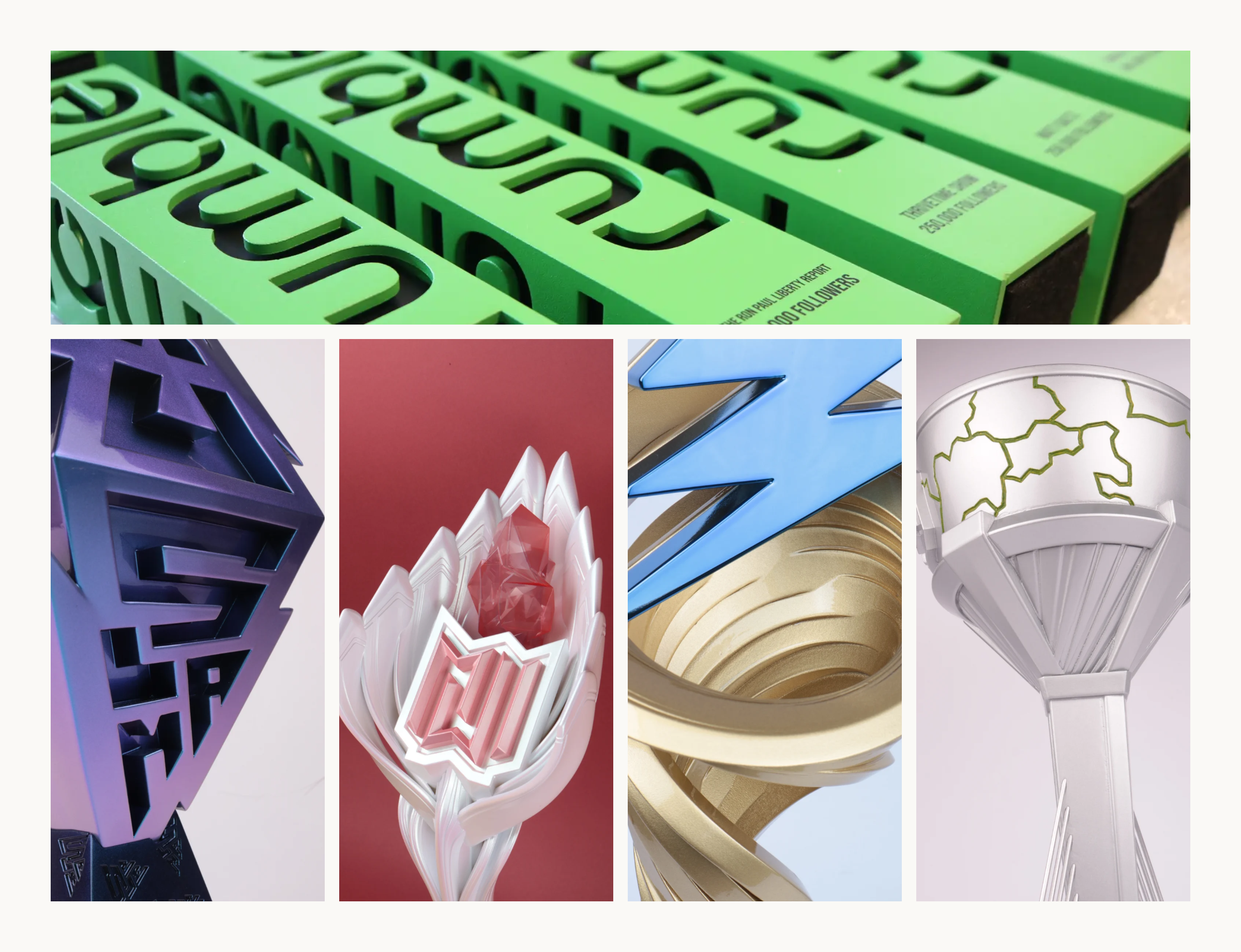
A well turned part has a distinctive quality. Because the cut is continuous and concentric, the surface finish is exceptionally smooth and the geometry perfectly true. Fine circular tool marks can be left as an authentic machined texture, or the part can be polished to a flawless shine. This range lets us tune the exact character an award demands, from industrial honesty to jewel like refinement.
The precision also shows in the fit. Turned components mate together and with other parts to tight tolerances, so an assembled award feels solid and considered, with no play or misalignment. This is the quiet quality that recipients feel even if they cannot name it.
Design Considerations for Turned Parts
Good turned design respects the nature of the process. The part must be describable as a profile around a central axis, so features that break symmetry are added later by milling. Long slender parts can flex under cutting, so proportions are planned carefully. Sharp internal corners carry a small radius from the tool tip. Threads, grooves and knurling are all readily turned when specified.
We design turned elements with these realities in mind, and where an award needs both round and non round features, we combine turning with milling or other processes. This is where our command of the full production spectrum keeps quality high and cost sensible.
When Fabit Recommends CNC Turning
We recommend CNC turning whenever an award features cylindrical, conical or round symmetrical elements, columns, discs, rings, spheres and turned bases, that benefit from precise, true geometry and a refined finish. For flat and sculpted forms we turn to milling, and for organic complexity to 3D printing or casting.
With turning, milling and finishing all in house, we integrate turned parts seamlessly into complete awards. See finished pieces on our custom trophies service page.
Frequently Asked Questions
What shapes is CNC turning best for?
Round symmetrical forms such as columns, cylinders, cones, discs and spheres, any shape defined by a profile around a central axis.
How is turning different from milling?
In turning the workpiece rotates against a fixed tool for round parts. In milling a rotating tool cuts a held workpiece for flat and sculpted shapes.
What materials can you turn?
Aluminium, brass, bronze, stainless steel, acrylic and hardwoods, each offering a different weight, colour and finish.
Can turned parts include threads or grooves?
Yes. Threads, grooves and decorative knurling are readily produced on a lathe when specified.
If your award features columns or round elements, our Antwerp studio responds within 24 hours and ships worldwide. Start your brief at our design studio and we will turn your design with precision.
Related terms