5-axis machining is an advanced form of CNC milling in which the cutting tool can move along five axes simultaneously, three linear directions plus two rotational, allowing it to approach a workpiece from almost any angle. For custom awards it makes possible complex sculptural forms, compound curves and intricate geometry machined from solid material in a single setup, with precision and surface quality that define the highest tier of machined work.
5-axis machining represents the pinnacle of subtractive precision in our Antwerp studio. Where standard three axis milling cuts from above, a five axis machine tilts and rotates to reach every face and curve of a part in one continuous operation. This unlocks sculptural, flowing forms in solid metal and acrylic that would be impossible or impractical any other way, and it sits at the summit of our machining capability for the most ambitious awards.
How 5-Axis Machining Works
A conventional milling machine moves the tool in three linear axes, left to right, front to back, and up and down. A five axis machine adds two rotational axes, tilting and turning either the tool or the workpiece. This means the cutter can reach the part from virtually any direction while it spins, cutting complex three dimensional surfaces in one seamless process.
The whole operation is driven by sophisticated toolpaths generated from the 3D model. The software calculates how to orient the tool through thousands of moves so it carves the intended form precisely while avoiding collisions. The result is a part of remarkable geometric complexity cut with flawless accuracy.
The Single Setup Advantage
One of the greatest strengths of five axis machining is producing complex parts in a single setup. On a three axis machine, cutting all faces of a sculptural part means stopping, unclamping, repositioning and re aligning the workpiece several times, each repositioning introducing potential for tiny errors and misalignment.
Five axis machining reaches every surface without repositioning, so the part is cut in one continuous operation from a single reference. This preserves accuracy across the whole form and produces the seamless, flowing quality that distinguishes truly premium sculptural awards. Fewer setups also mean faster, more reliable production of complex geometry.
The Forms It Makes Possible
Five axis machining excels at exactly the shapes that make an award memorable, sweeping compound curves, twisting sculptural forms, deep contoured surfaces and intricate geometry that flows around the whole object. It brings the freedom of sculpture to the precision and solidity of machined metal, a combination that reads as unmistakably premium.
These machined masterpieces often stand alongside our other processes. A five axis metal centrepiece might pair with a printed detail or a cast element, each contributing its strength. This is our hybrid philosophy at its most ambitious. Our 3D printed trophy page shows how digital design underpins even this level of machining.
Materials for 5-Axis Work
Five axis machining works the same solid materials as standard milling, elevated by the geometric freedom it adds.
- Aluminium: light and machinable, superb for large sculptural forms.
- Brass and bronze: weighty and premium for prestigious sculpted awards.
- Stainless steel: durable with a striking machined finish on complex surfaces.
- Acrylic: machined into flowing clear sculptural forms with polished faces.
- Hardwoods: for warm, organic, sculptural elements.
The complex surfaces are then hand finished, polished or treated to bring out their full quality. Our materials overview explains how each material presents.
5-Axis Versus 3D Printing for Complex Forms
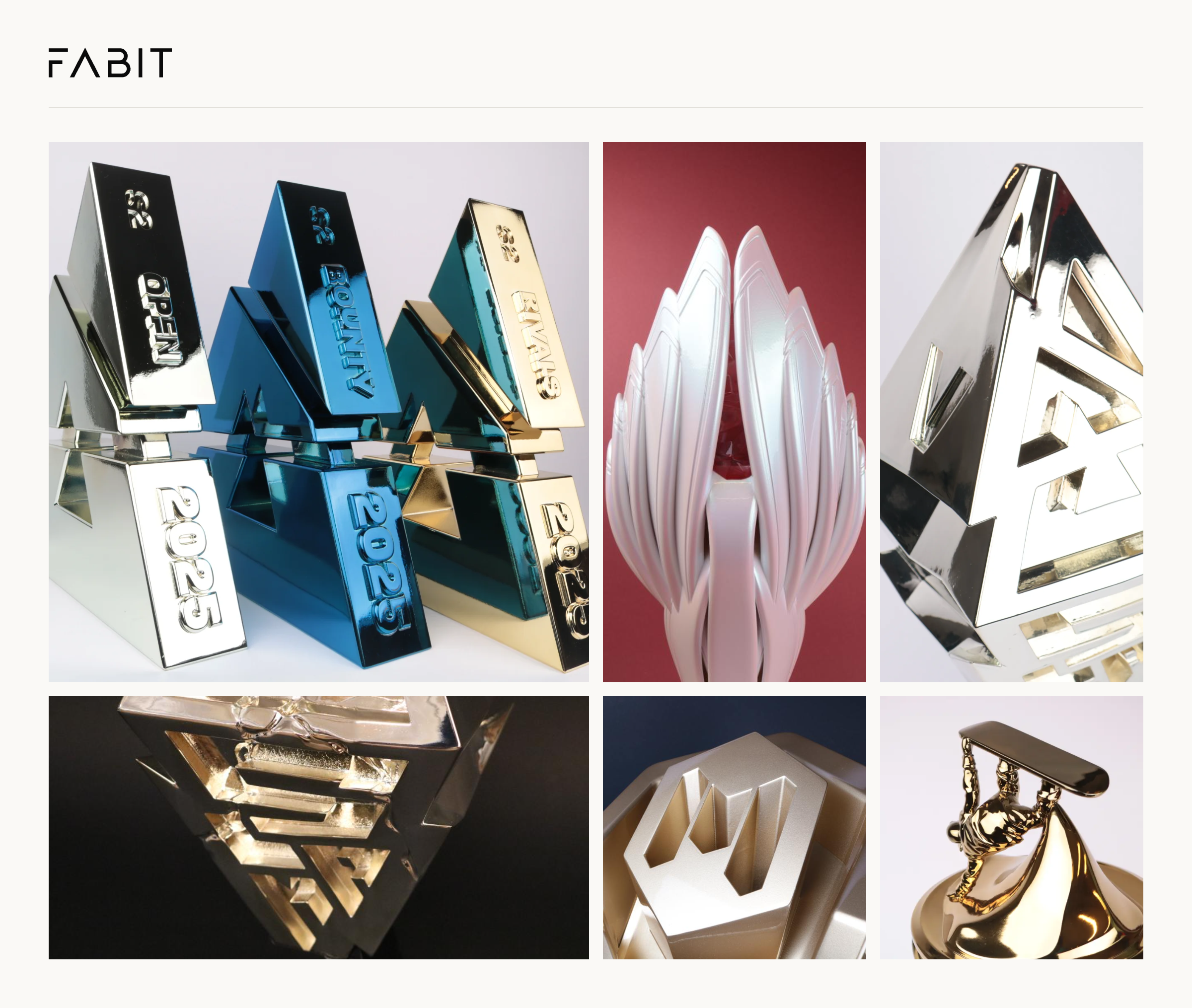
Both handle complex geometry, but differently. 3D printing builds up material and excels at hollow forms, internal features and organic complexity with no tooling, in a wide range of materials. Five axis machining carves from solid stock, delivering the density, precision, surface quality and honest solidity of a part cut from a single block of metal or acrylic.
For a sculptural award, the choice hinges on whether the object should feel like solid machined material or benefit from the geometric freedom of printing. Often we combine them, machining a solid metal core and printing complementary detail. We advise openly on which route serves the design and the budget best.
When Complexity Justifies the Process
Five axis machining is a sophisticated capability, and it is most powerful when the design genuinely calls for it, when compound curves, seamless multi face geometry or true sculptural flow are essential to the concept. For simpler flat or round parts, standard milling or turning is more economical and equally precise.
We are candid about this. Reaching for five axis machining on a part that three axis milling could make well would add cost without benefit. Matching the process to the ambition of the design, rather than to the impressiveness of the machine, is the essence of honest advice, and it is how we protect both quality and value.
When Fabit Recommends 5-Axis Machining
We recommend five axis machining for the most ambitious sculptural awards, those with compound curves, flowing multi face geometry or intricate forms that demand the precision and solidity of machined material cut in a single setup. For simpler geometry we use standard milling or turning, and for organic or hollow forms we consider 3D printing or casting.
With advanced machining and hand finishing in house, we bring the most demanding designs to life under one roof. See finished pieces on our custom trophies service page.
Frequently Asked Questions
What makes 5-axis machining special?
The tool moves along five axes at once, reaching the workpiece from almost any angle, so it cuts complex sculptural forms in a single setup with flawless accuracy.
When is 5-axis worth it over standard milling?
When a design has compound curves or seamless multi face geometry. For simpler flat or round parts, standard milling or turning is more economical.
What materials can be 5-axis machined?
Aluminium, brass, bronze, stainless steel, acrylic and hardwoods, each offering a different weight and finish.
How does it compare with 3D printing?
Machining carves solid stock for density and surface quality, while printing builds up material for organic and hollow forms. We often combine both.
If your award concept is genuinely sculptural, our Antwerp studio responds within 24 hours and ships worldwide. Start your brief at our design studio and we will machine your most ambitious design.
Related terms