Anodised aluminium is aluminium that has undergone an electrochemical process to grow a hard, protective, porous oxide layer on its surface, which can be dyed almost any colour, giving bespoke awards vivid, durable, fade resistant colour combined with light weight and a refined modern finish. For contemporary awards that want colour, precision and a sleek, technical feel, anodised aluminium is unmatched. It is the finish behind the rich colours seen on premium electronics and design objects, and the Fabit studio uses it for modern, design led commissions where colour and clean lines lead the concept.
What anodising actually is
Anodising is not a coating applied on top of the metal but a transformation of the metal’s own surface. Through an electrochemical process, a controlled layer of aluminium oxide is grown from the aluminium itself. This oxide layer is extremely hard, integral to the metal, and porous at a microscopic level. That porosity is the key, because it allows dye to be absorbed deep into the surface before the pores are sealed, locking the colour inside the metal rather than on top of it. This is fundamentally different from paint or plating and is why anodised colour is so durable and fade resistant.
The unique advantage of colour
The headline feature of anodised aluminium is colour. While most award metals are limited to the natural tones of the metal or its plating, anodising opens up a full spectrum, deep blues, rich reds, blacks, bronzes, purples and more, all with a distinctive luminous, slightly translucent quality because the colour sits within the metal and the aluminium’s own sheen shows through. This lets designers integrate brand colours directly into the material of an award, or create bold, contemporary pieces that simply cannot be achieved in brass, silver or chrome. It is a powerful tool for modern, design driven awards, and you can see the range of finishes on our materials overview.
Lightness and its implications
Aluminium is remarkably light, roughly a third the weight of brass or steel. This is both a strength and a consideration. It allows large, ambitious award forms that would be impractically heavy in denser metals, and it makes awards easy to ship worldwide, which matters for our international clients. The trade off is that aluminium does not deliver the reassuring heft that some clients associate with quality in a small piece. For this reason we often pair anodised aluminium with a weighted base, combining its colour and lightness with the substantial feel of a dense foundation. We discuss this balance openly when advising on design.
Durability of anodised finishes
Because the colour and the protective layer are grown into the metal rather than sitting on top, anodised aluminium is exceptionally durable. The oxide layer is very hard and resists scratching, corrosion and wear far better than painted or many plated surfaces. The colour does not chip or peel the way paint can, and quality anodising resists fading even under light exposure. This makes anodised aluminium a genuinely long lasting finish, well suited to awards meant to be handled and displayed for years. This robustness, combined with its colour and lightness, makes it a favourite for our modern custom trophy commissions and for pieces that build on our 3D printed trophy approach.
Finish options with anodised aluminium
Anodising offers rich variety in both colour and texture.
- Colour anodising: a broad spectrum of dyed colours locked into the surface, from vivid to subtle.
- Natural or clear anodising: a protective clear finish that preserves aluminium’s own silvery tone with a refined satin quality.
- Matte or brushed: a soft, non reflective surface that reads as premium and technical, the look of high end electronics.
- Bright or polished: a more reflective base beneath the anodising for a shinier result.
Anodised aluminium compared to other materials
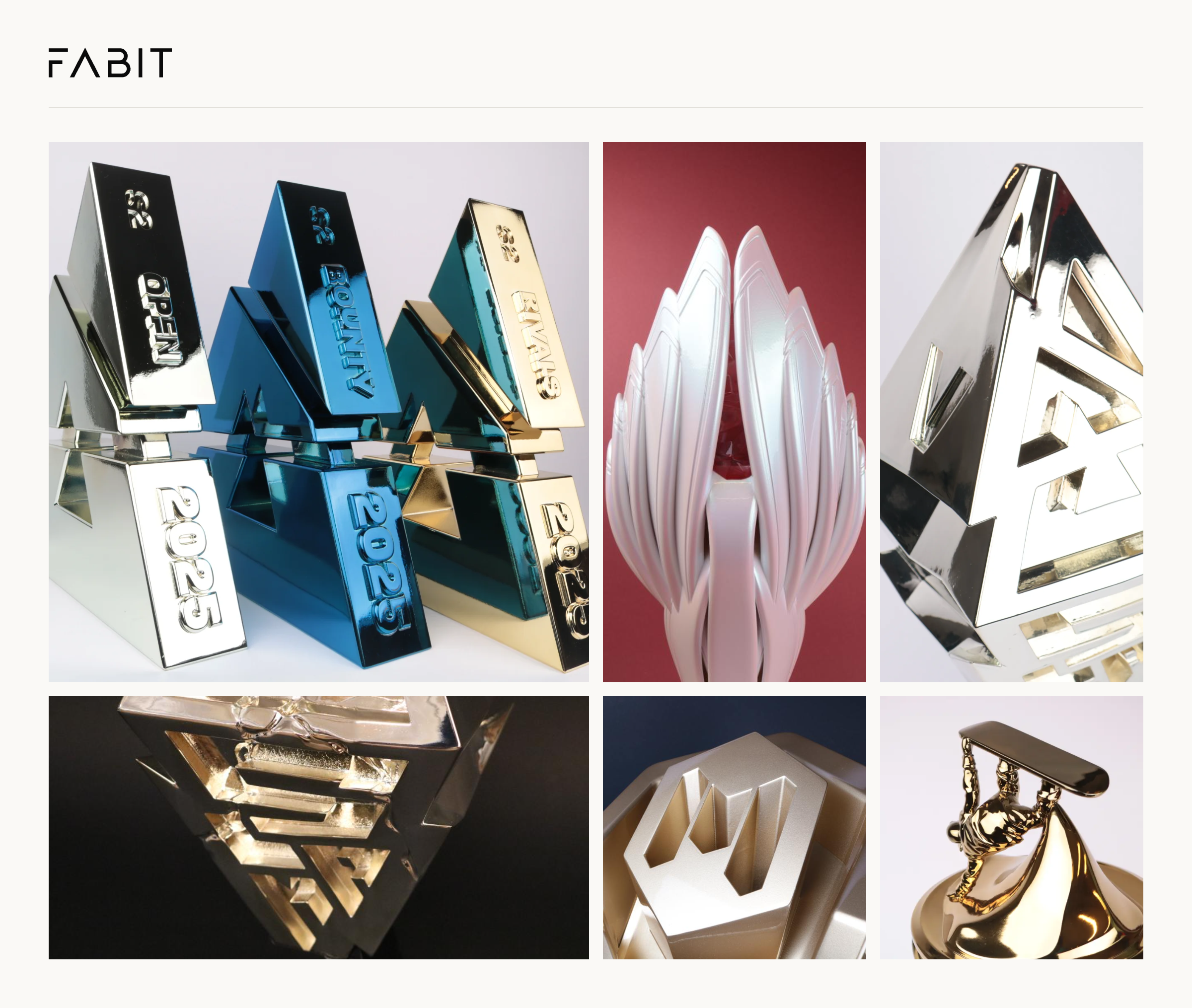
Against the traditional metals, anodised aluminium trades weight and classic warmth for colour, lightness and modern precision. Where brass offers golden warmth and heft, aluminium offers vivid colour and easy handling. Where chrome offers a cool mirror, anodising offers a soft, coloured, matte sophistication. It is not trying to imitate precious metals but to offer something different, a contemporary, colourful, technical aesthetic that suits design, technology and creative sector awards particularly well. Choosing it is a deliberate aesthetic decision rather than a compromise, and we help clients see where it fits their brand and occasion.
Engraving and personalisation
Anodised aluminium is excellent for personalisation. Laser engraving on an anodised surface produces crisp, high contrast marks, because the laser removes the coloured layer to reveal the lighter aluminium beneath, creating clean text and logos without any added material. This makes it ideal for precise names, citations and brand marks. The hardness of the anodised layer means these marks are durable. We plan engraving to work with the colour and finish for the best contrast and legibility on every piece.
Caring for an anodised aluminium award
Anodised aluminium is very low maintenance. The sealed oxide layer does not tarnish or corrode under normal conditions, so care is simply wiping with a soft, damp cloth. The colour will not fade, chip or peel with normal display. Abrasive cleaners should be avoided to protect the surface, but otherwise the finish is robust and forgiving. Its resistance to fingerprints, especially in matte finishes, is a further practical advantage. We include simple care notes with every anodised commission.
When we recommend anodised aluminium
We recommend anodised aluminium when colour is central to the concept, when a light, easily shipped award is wanted, or when a modern, technical, design led aesthetic suits the occasion. It is ideal for technology, design, creative and startup sector awards, for brand colour integration, and for large sculptural forms that would be too heavy in other metals. When traditional warmth, heft or precious metal prestige is the priority, we would steer toward brass, silver or gold instead, but for contemporary colour and precision, anodised aluminium is exceptional.
Frequently asked questions
Is anodised colour durable? Yes. The colour is locked into a hard oxide layer grown into the metal, so it resists fading, chipping and peeling.
Is aluminium too light for an award? It is light, which is often an advantage, and we pair it with a weighted base when more heft is wanted.
Can anodised aluminium be engraved? Yes. Laser engraving produces crisp, high contrast marks by revealing the lighter metal beneath the colour.
Does anodised aluminium tarnish? No. The sealed oxide layer resists tarnish and corrosion, needing only a wipe to stay looking good.
Anodised aluminium brings vivid colour, lightness and durable precision to modern awards. If colour and contemporary design lead your concept, you can begin exploring options in our online design tool, and our Antwerp team will respond within 24 hours to develop the piece with you.
Related terms