
Epoxy resin is a two-part liquid polymer that cures into a hard, glass-clear or richly coloured solid, allowing Fabit to cast custom trophies with embedded objects, layered colour, three-dimensional depth and a flawless, glossy finish. Unlike materials that are cut or machined from a block, epoxy is poured and shaped as a liquid, which opens up creative effects no solid stock can offer.
Looking for a trophy in this material? See our custom resin trophies.
Understanding epoxy resin
Epoxy resin arrives as two components, a resin and a hardener. When combined in precise ratios, a chemical reaction takes place and the mixture gradually cures from a viscous liquid into a rigid, durable solid. That transition from liquid to solid is the heart of its appeal for award making, because during the liquid phase the material can be tinted, layered, poured into moulds and used to suspend objects in mid-air, so to speak, before it locks everything permanently in place.
The cured result is tough, water resistant and capable of a deep, mirror-like gloss. It can be crystal clear like optical glass or loaded with pigment, metallic powder, glitter or dye for effects ranging from subtle translucency to bold, saturated colour.
Why designers reach for epoxy resin
The single biggest reason is creative freedom. Because it starts as a liquid, epoxy can do things other materials cannot. It can capture a company product, a coin, dried flowers or a bespoke insert inside a perfectly clear block. It can be poured in layers to build a sense of depth, with colour fading from one tone to another through the body of the piece. It can flow around complex forms and take on the finest detail of a mould.
For a high-end recognition piece, this means the story of the award can literally be built into the material. A milestone can be represented by an object suspended at the heart of the trophy, visible from every angle yet untouchable, protected forever inside the resin.
Signature epoxy effects
- Embeds: objects and inserts suspended inside a clear block.
- Colour gradients: tones that shift through the depth of the piece.
- Metallic and pearlescent pours: shimmering, liquid-like surfaces.
- River and layered effects: clear channels running through opaque bodies.
- High-gloss doming: a thick, lens-like top coat over printed artwork.
- Combination casting: resin poured around wood, metal or stone.
Epoxy resin versus acrylic
People often confuse epoxy with acrylic, but they behave very differently. Acrylic, or PMMA, is usually supplied as a solid sheet or block that is then cut and polished. Epoxy is cast from liquid, which is why it excels at embeds and layered colour. Acrylic tends to be lighter and offers extremely consistent optical clarity, while epoxy offers unmatched creative flexibility and a heavier, more substantial hand feel. Many studios treat them as rivals, but at Fabit they are complementary. Learn how both sit within our wider materials range.
How Fabit casts epoxy in-house
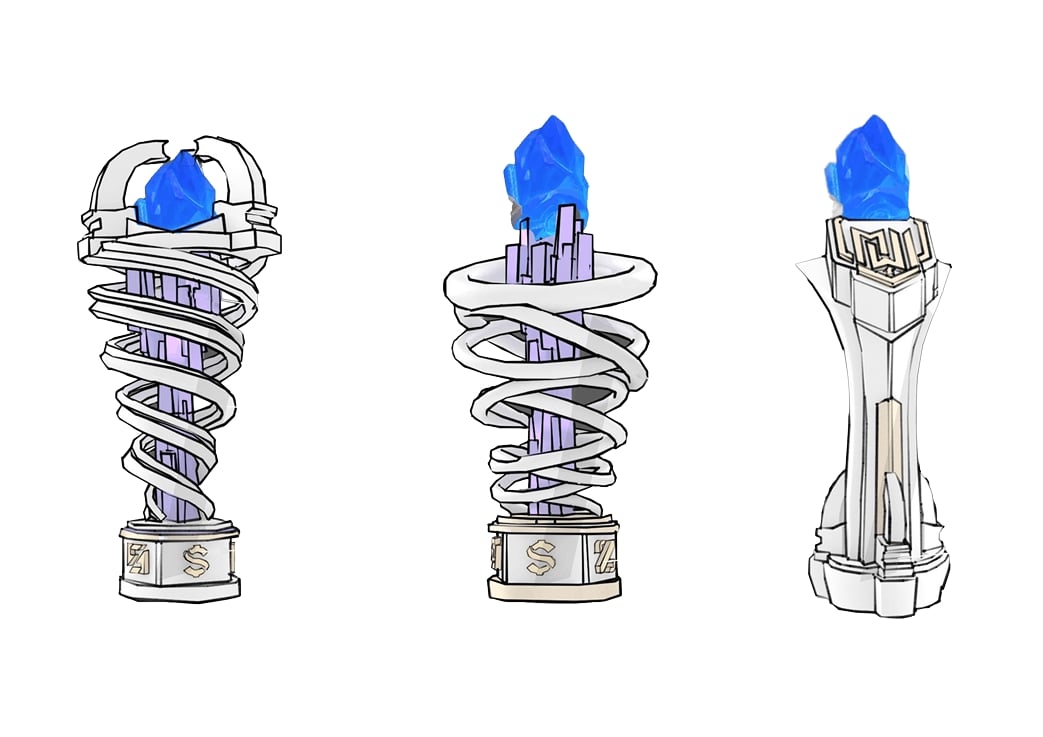
Casting quality epoxy is a craft. Temperature, humidity, mixing ratio and pour speed all affect the final clarity, and trapped air is the enemy of a flawless block. Working entirely in-house in Antwerp lets our makers control every one of those variables, degassing the resin, pouring in measured stages and curing under managed conditions. That discipline is what separates a hobbyist pour from a gallery-grade award. Because epoxy also finishes beautifully alongside additive components, it frequently appears in our 3D printed trophy commissions, where a printed form is encased or accented in clear resin.
Durability and everyday care
Cured epoxy is hard-wearing and resistant to water and most household contact, which makes it a confident choice for a piece meant to be handled and displayed. Over very long periods and under intense ultraviolet light, some resins can amber slightly, so we specify UV-stabilised systems for pieces that will sit in bright environments. Cleaning is simple, requiring only a soft cloth and gentle care to preserve the gloss and avoid scratches.
When epoxy resin is the right call
Choose epoxy when you want to embed something meaningful, create colour that lives inside the object, or achieve effects that a machined block cannot deliver. If you need feather-light pieces for a very large shipment, acrylic may be more practical, and if you want natural stone weight and texture, cast stone or granite will serve better. Our team helps you weigh these trade-offs during the design conversation.
Design possibilities beyond the obvious
The creative reach of epoxy resin extends well past a single clear block with an object inside. Because the material is built up in stages, a designer can compose an award almost like a painting, deciding what sits at the base, what floats in the middle and what catches the eye at the surface. A gradient can carry a brand’s colour from a deep, saturated foundation up to a near-clear crown, drawing the eye upward. Metallic pours can suggest movement and energy, ideal for awards celebrating growth or momentum. Clear channels can run like rivers through an opaque body, and printed artwork can be sealed beneath a thick, lens-like dome that magnifies and protects it. These techniques let the material tell a story rather than simply hold a shape, which is why epoxy so often appears in landmark commissions where the object needs to mean something the moment it is picked up. When we discuss your brief, we translate the achievement being honoured into these physical effects, so the finished piece feels inevitable rather than decorated, and every layer earns its place in the composition.
Can you put a logo or object inside epoxy resin?
Yes. Embedding is one of epoxy’s greatest strengths. We can suspend logos, products, coins or bespoke inserts inside a clear block so they appear to float, permanently protected.
Is epoxy resin heavy?
Epoxy has a satisfying, substantial weight, heavier than acrylic of the same size. For very large pieces we advise on proportions so the award feels premium without becoming impractical to ship or display.
Does epoxy resin scratch easily?
Cured epoxy is hard and resistant to everyday contact, though like any glossy surface it can mark under abrasion. A soft cloth keeps it looking its best.
Can epoxy be coloured to match our brand?
Absolutely. We tint resin with pigments, dyes and metallic powders to match brand colours and can create gradients and layered effects across the body of the piece.
Have an idea that calls for embedded meaning? Begin in our online studio and expect a reply within twenty-four hours.
Related terms