PMMA, short for polymethyl methacrylate, is a transparent thermoplastic commonly known as acrylic that Fabit uses to create crystal-clear, lightweight custom trophies and awards with the optical brilliance of glass and none of its fragility. It is one of the most versatile materials in the premium recognition space, prized for the way it captures and bends light, holds a mirror-smooth polish and accepts precise engraving, printing and shaping.
A quick definition of PMMA
PMMA is a synthetic polymer engineered from methyl methacrylate monomers. In everyday language it is called acrylic, and you may also recognise trade names such as Plexiglas, Perspex and Lucite. For award makers, PMMA sits at a rare intersection of clarity, workability and durability. It transmits more than ninety percent of visible light, which gives finished pieces a luminous, almost liquid quality that photographs beautifully and reads as unmistakably premium on a shelf, a stage or a boardroom wall.
Because it is a thermoplastic, PMMA can be heated, formed, cut and polished with a high degree of control. That controllability is precisely what a studio like Fabit relies on when translating a client concept into a physical object that has to feel considered from every angle.
Why PMMA suits high-end custom trophies
The first reason is visual. A well finished PMMA award has depth. Light enters the surface, travels through the body and reflects internally, producing highlights and gradients that a flat, opaque material simply cannot match. For a milestone recognition piece, that sense of light and movement carries emotional weight.
The second reason is practical. PMMA is roughly half the weight of glass and far more resistant to shattering, which matters enormously when awards travel. Fabit ships worldwide, and a piece that arrives in Singapore or São Paulo needs to survive the journey without losing its presentation-day perfection. Acrylic gives us that resilience while keeping the refined optics clients expect.
Key properties at a glance
- Optical clarity: transmits over ninety percent of light, rivalling optical glass.
- Weight: about half the density of glass, easing shipping and handling.
- Impact resistance: significantly tougher than glass, reducing breakage in transit.
- Workability: laser cuts, CNC machines, thermoforms and polishes cleanly.
- Finish range: from mirror-clear to frosted, tinted or edge-lit.
- UV behaviour: premium cast grades resist yellowing far better than budget extruded sheet.
Cast versus extruded PMMA
Not all acrylic is equal, and the distinction matters for anyone commissioning a lasting award. Cast PMMA is produced by pouring the material between glass moulds, yielding a purer, more stable sheet with superior optical quality, cleaner laser edges and better long-term resistance to yellowing. Extruded PMMA is cheaper and more uniform in thickness but softer and more prone to marking. For recognition pieces meant to be kept for decades, Fabit works with cast grades so the trophy still looks pristine long after the event.
Finishing and personalisation options
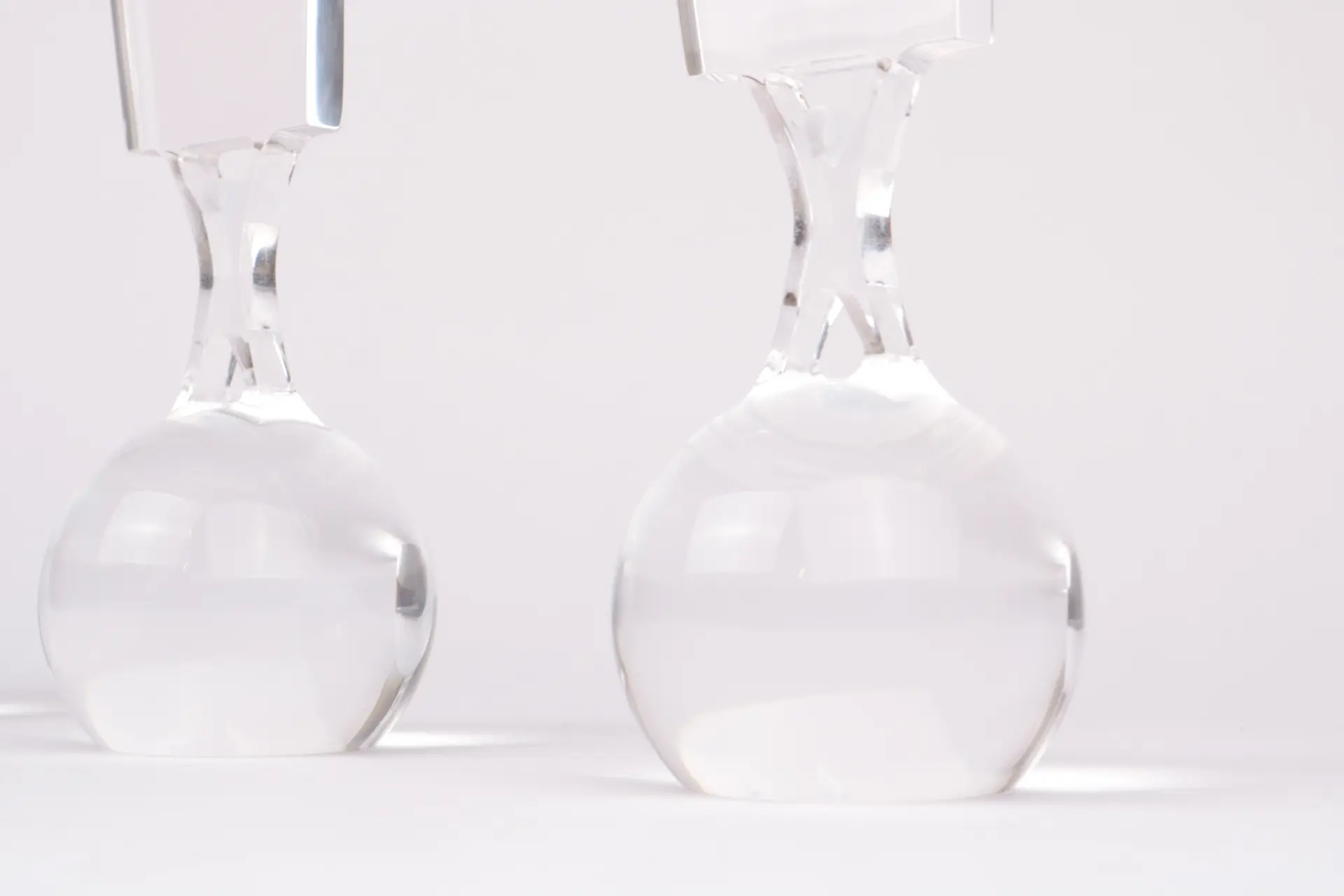
PMMA is a designer’s material because it welcomes so many finishing techniques. Edges can be flame or diamond polished to a glass-like shine, or deliberately left frosted for a softer, matte read. The surface accepts high-resolution UV printing for full-colour logos and artwork, laser engraving for crisp text and marques, and sub-surface engraving for imagery that appears to float inside the block. Tints can be introduced for brand colours, and the material pairs elegantly with metal, wood and stone accents. Explore how these techniques come together on our custom trophies service page.
How Fabit works with PMMA in-house
Everything happens under one roof in Antwerp. That in-house control means a designer, a maker and a finisher can stand at the same bench and judge a polish or a tint against the actual concept, not a spec sheet. We start from your brief and a sketch, prototype quickly, and refine the piece until the light behaves the way the design intends. Because acrylic can also be paired with printed or additive components, PMMA frequently appears alongside our 3D printed trophy work, combining the clarity of the block with sculptural forms that would be impossible to machine alone.
Caring for a PMMA award
Acrylic is easy to live with. Dust it with a soft, lint-free cloth and clean it with a little water or a dedicated plastic cleaner. Avoid ammonia-based glass sprays and abrasive materials, which can dull the surface over time. Kept away from prolonged harsh sunlight, a quality cast PMMA piece will hold its clarity for many years, which is exactly what a meaningful recognition object should do.
Is PMMA the right choice for your project?
PMMA is ideal when you want light, clarity and a contemporary, architectural feel, or when a piece must travel far and take some handling. If your vision leans towards natural weight and texture, a stone such as onyx or granite from our materials range may serve better, and many of the most striking Fabit commissions combine acrylic with those materials for contrast.
Where PMMA fits within a Fabit commission
Because acrylic is so adaptable, it rarely works alone in our most memorable pieces. A block of PMMA can serve as a luminous stage for a printed emblem, a floating layer above a metal marque, or a clean contemporary body that contrasts with the warmth of wood or the weight of stone. Its ability to be tinted to a precise brand colour means the material itself can carry a company’s identity, not merely display a logo applied to it. We often specify acrylic when a client wants a modern, architectural read, when the design depends on light and reflection, or when a large run of awards must arrive across several continents in identical, pristine condition. The material’s forgiving nature during shipping, combined with its gallery-grade optics on the day, is precisely why so many recognition programmes return to it year after year. During the design conversation we will show you how thickness, tint and finish change the character of the piece, so the acrylic you approve behaves exactly as intended once it is in the recipient’s hands.
Is PMMA the same as glass?
No. PMMA is a lightweight acrylic polymer that mimics the clarity of glass while being tougher and far less likely to shatter, which makes it better suited to awards that ship internationally.
Will PMMA turn yellow over time?
Budget extruded acrylic can yellow, but the premium cast grades Fabit uses are formulated to resist UV discolouration, keeping pieces clear for many years under normal display conditions.
Can you print full colour on PMMA?
Yes. We use high-resolution UV printing for full-colour logos and artwork, and can combine it with engraving and tinting for a layered, premium result.
How thick can a PMMA award be?
Acrylic can be cast or bonded into substantial blocks, so thickness is rarely a constraint. We advise the ideal proportions during design so the piece feels solid without becoming unwieldy.
Ready to see your concept in acrylic? Start a project through our online design studio and our team will respond within twenty-four hours.
Related terms