CO2 laser engraving uses a beam generated by a carbon dioxide gas tube to vaporise or ablate the surface of organic and coated materials such as wood, acrylic, glass, leather and paper, producing detailed, permanent marks without physical contact. Where fiber lasers excel on bare metal, CO2 lasers are the tool of choice for the warmer, more natural materials that give many premium awards their character. At Fabit, CO2 engraving lets us bring crisp detail to a walnut base, frost a message onto glass or cut a name into acrylic with edges you could not achieve by hand.
How CO2 laser engraving works
The laser tube is filled with a mixture rich in carbon dioxide. An electrical discharge excites the gas, and the resulting beam sits at a wavelength of around 10,600 nanometres, in the far infrared. This long wavelength is readily absorbed by non-metallic materials, which is precisely why CO2 systems handle wood, plastics and glass so well while struggling with reflective bare metals. Focused through a lens, the beam heats a tiny area so quickly that material either burns away, melts or fractures at the surface, depending on what it meets.
On wood, the beam chars and removes fibres to leave a recessed, slightly darkened mark. On acrylic, it melts a smooth, frosted channel that catches light beautifully. On glass, it micro fractures the surface into a fine white frost. Each material has its own signature response, and understanding those responses is central to producing awards that look deliberate rather than merely burned. The same is true of the machine settings behind each mark. Power, speed and the number of passes all interact with the material to determine whether a wooden mark reads as a pale scorch or a deep, dark relief, and whether an acrylic engraving frosts softly or melts into a glassy channel. A workshop that treats these settings as a craft, tuning them to each species of wood or grade of acrylic, produces results that look consciously designed rather than accidental. That tuning is exactly the kind of judgement that separates a considered piece from a generic one, and it is why we test settings on offcuts of the actual material before committing to a finished award.
Materials that suit CO2 engraving
The strength of CO2 engraving is its breadth across non-metals. These are the same natural and cast materials we detail on our materials overview, where the choice of substrate shapes both the look and the feel of the finished piece.
- Wood: walnut, oak, bamboo and birch ply engrave with a warm, tactile recess.
- Acrylic: cast acrylic frosts cleanly and can be engraved on the reverse for a floating effect.
- Glass and crystal: surface engraving produces an elegant etched appearance.
- Leather: the beam darkens and debosses without cutting through.
- Coated metals: only when a laserable coating is present, such as painted or powder coated surfaces.
Why CO2 engraving matters for premium awards
Natural materials carry a sense of substance and warmth that metal and plastic cannot fully replicate. A CO2 engraved wooden trophy feels grounded and considered, while a frosted glass award reads as classic and understated. The technique preserves that character because it works with the material rather than covering it. There is no ink layer, no adhesive and no risk of a printed graphic peeling away. For clients who want an award that ages gracefully, an engraved organic surface delivers exactly that.
Design considerations
Because CO2 engraving is monochromatic in effect, contrast comes from the material response rather than colour. Dark wood gives a subtle tonal mark, so bold, well spaced artwork reads best. Fine gradients can be reproduced through dithering, but line based logos and clean typography almost always look sharper. We review each file before production and will flag any element likely to lose definition. When a concept is still forming, our design studio helps clients see how a mark will sit on a chosen material before anything is committed.
CO2 versus fiber and mechanical methods
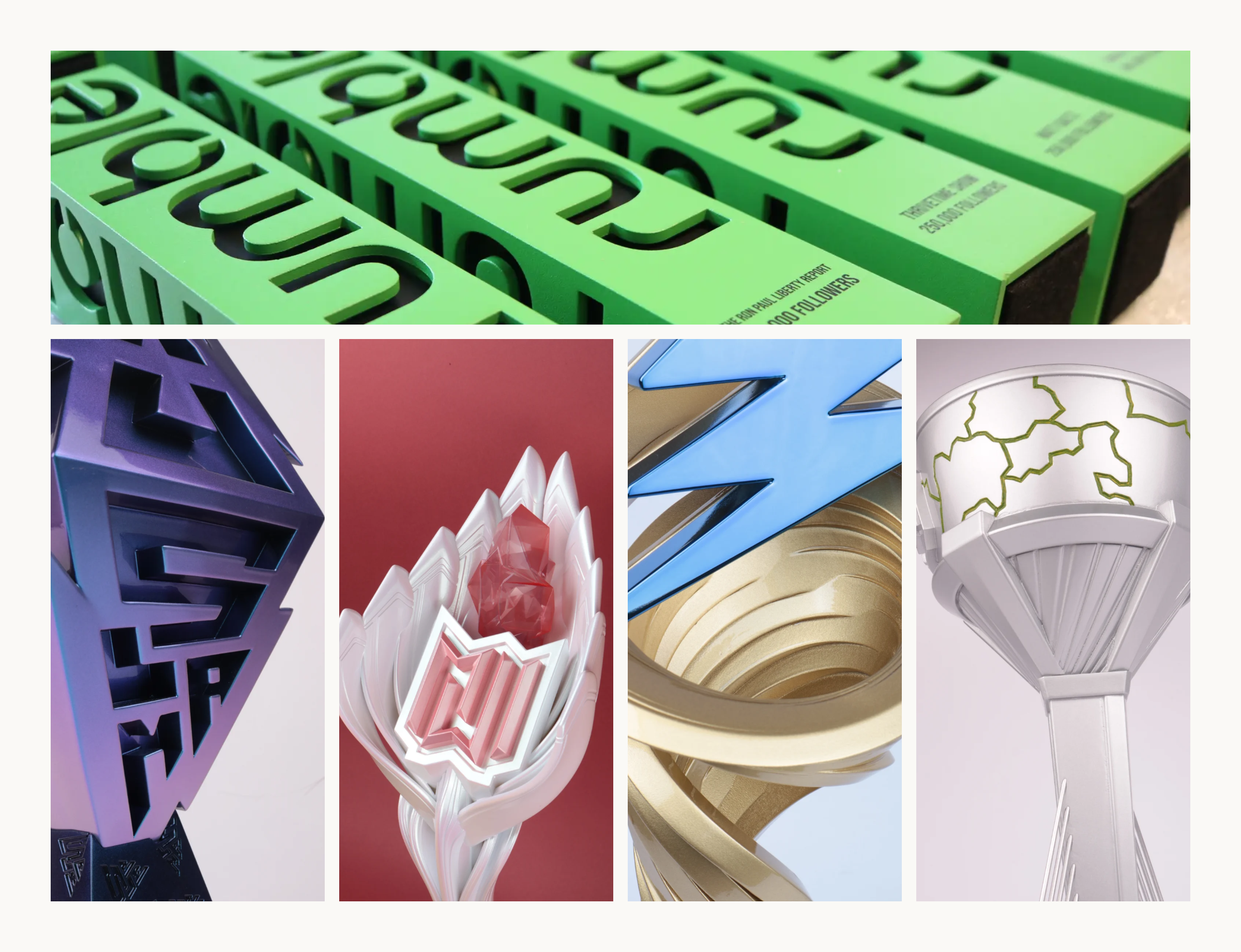
The simplest way to think about it is material. Fiber lasers own bare metal, CO2 lasers own organics and coatings. Against mechanical engraving, CO2 offers finer detail, halftone imagery and no tool wear, though it cannot cut deep into solid metal. Many of our finest pieces combine a CO2 engraved wooden or acrylic body with metal elements marked by fiber laser, an approach you can explore across our custom trophies service.
Finishing and quality control
Engraved wood is cleaned to lift away char residue, which sharpens the mark and removes any smoky film. Acrylic edges are inspected for smoothness, since a stuttering beam leaves visible ripples. Glass is checked for even frosting and the absence of chips at the mark boundary. This attention to the post-engraving stage is what separates a refined award from a rushed one, and it is standard practice in our workshop.
Lead times and personalisation
CO2 engraving is quick once artwork is prepared, so the material and any assembly usually govern the schedule. Individual names and dates can be added late, which suits events where winners are confirmed shortly before the ceremony. Our in-house production and 24-hour response mean we can accommodate short notice personalisation on organic materials that would be difficult to source and mark elsewhere at speed.
Frequently asked questions
Can CO2 lasers engrave metal? Only coated metal, where the beam removes a laserable layer. For bare metal we use fiber laser engraving instead.
Does engraved wood need sealing? Not necessarily. The mark is stable, though a light finish can deepen contrast and protect the surface, which we can advise on per project.
Is glass engraving fragile? No. Surface frosting is shallow and does not weaken the piece under normal handling and display.
Can you engrave the back of acrylic? Yes. Reverse engraving creates a floating, three dimensional look that is very popular for modern awards.
CO2 laser engraving gives us the freedom to work across the warm, natural and translucent materials that define a large part of the premium award world, always with the crispness and permanence that a considered piece deserves.
Related terms