Lead crystal contains lead oxide, which gives it extra weight, brilliance and a soft sparkle, while lead-free crystal (including optical crystal) achieves comparable clarity through a modern, lead-free formula that is safer to handle and more environmentally responsible. For almost all custom awards today, lead-free is the smarter choice, and it is what Fabit recommends by default.
This is one of the most common material questions we field in our Antwerp studio, and it deserves an honest answer rather than a sales pitch for whichever we happen to stock. Below is the genuine comparison we walk clients through.
What lead crystal is
Traditional lead crystal is glass with lead oxide added, historically between around 10 and 24 percent, and “full lead crystal” at the higher end. The lead does three things: it increases the refractive index, so the material sparkles more; it adds weight, so the piece feels dense and luxurious; and it softens the glass slightly, making it easier to cut intricate facets by hand. For centuries this made lead crystal the pinnacle of glassmaking, and it is still associated with heritage luxury goods.
What lead-free crystal is
Lead-free crystal replaces lead oxide with other metal oxides such as zinc, barium or potassium to boost brilliance and clarity without lead. The best-known grade in the awards world is optical crystal, often called K9. Modern lead-free formulas have closed most of the gap in appearance: to the eye, a well-made lead-free optical crystal award looks every bit as brilliant and clear as lead crystal, and in the case of optical crystal it is often clearer because it avoids any colour cast.
The honest comparison
- Brilliance: Lead crystal has a very slight edge in prismatic sparkle at high lead content, but the difference is marginal and rarely noticeable in a display award.
- Clarity: Top lead-free optical crystal is exceptionally clear, often with less tint than cheaper lead glass.
- Weight: Lead crystal is heavier at the same size. Some clients like that heft; for shipping, lead-free is easier and cheaper to send worldwide.
- Safety and environment: Lead-free wins clearly. No lead means simpler handling, fewer regulatory concerns, and a better story for a corporate gift.
- Cost: They are broadly comparable, though very high lead content and hand-cutting can push lead crystal higher.
- Durability: Both can chip or shatter if dropped; neither is impact resistant like Lucite.
Why lead-free has become the default
Three forces have shifted the industry toward lead-free. First, regulation and procurement: many corporate buyers now avoid lead in gifts and merchandise as a matter of policy. Second, sustainability expectations, especially for pieces that carry a company’s name and values. Third, the sheer quality of modern optical crystal, which removed the main reason to insist on lead in the first place. For a recognition award that represents your brand, handing someone a lead-free piece is simply the more considered choice.
When lead crystal still makes sense
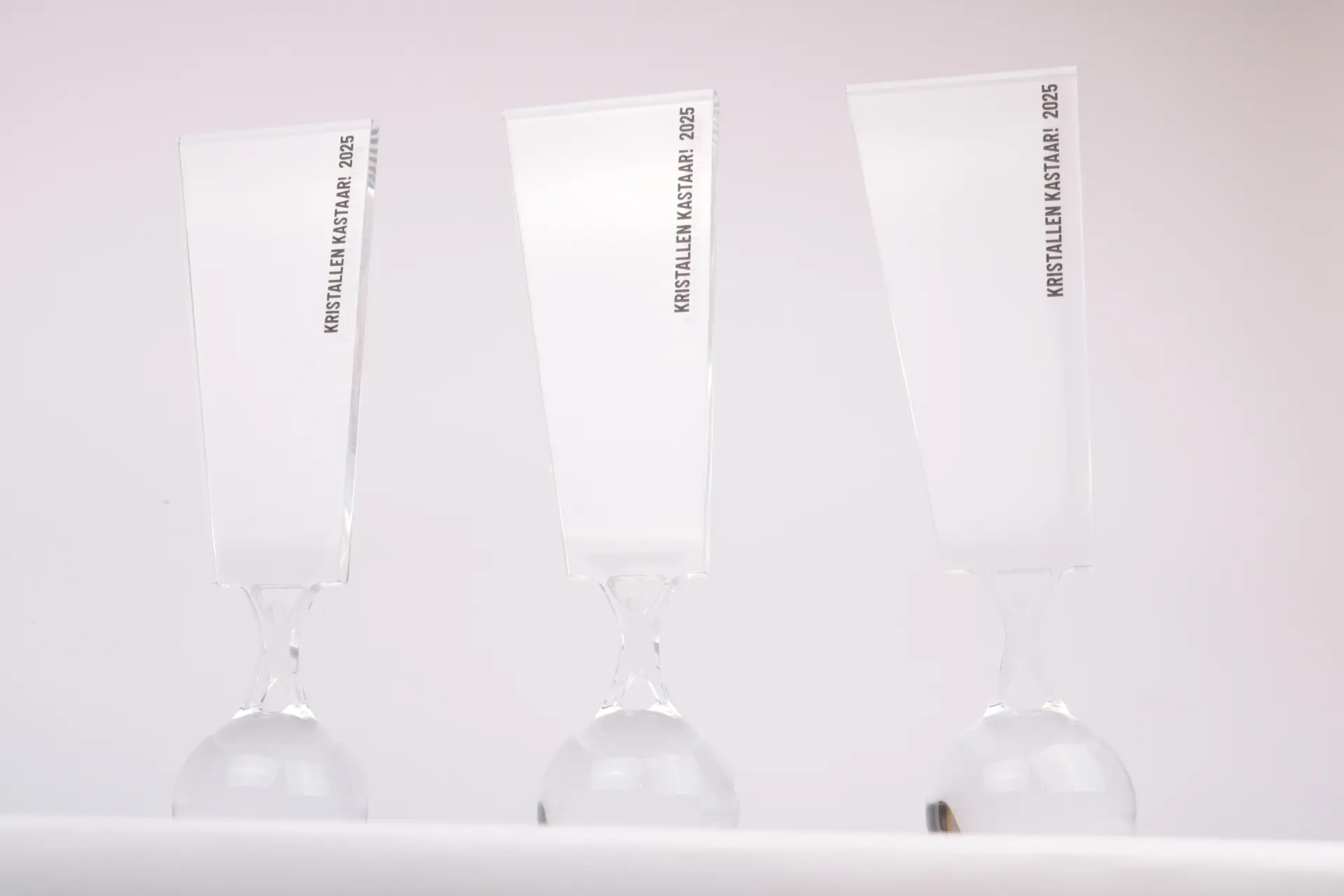
We will not pretend lead crystal has no place. If a client specifically wants heritage lead crystal for its provenance, its extra weight, or to match an existing collection, it remains a legitimate and beautiful material. Certain intricate, hand-cut decorative pieces also benefit from the softer, more workable nature of high-lead glass. The key is that this should be a deliberate choice for a reason, not a default.
How this fits into a real award brief
In practice, when clients come to us describing “crystal”, they almost always end up with lead-free optical crystal, and they are delighted with it. Our role is advisory: we look at who receives the award, where it will be displayed, whether it ships internationally, and what the organisation’s values are, then we recommend accordingly. Because we design and finish everything in house in Antwerp and combine crystal with our own 3D printing and metalwork, the material is only one decision inside a fully custom piece. To understand the broader glass-versus-crystal landscape, our guide to glass versus crystal awards is a useful companion, and you can explore full custom options through our custom trophy service.
Our recommendation in one line
For the vast majority of custom awards: choose lead-free optical crystal. You keep the prestige look, gain the safety and sustainability benefits, and make worldwide shipping easier. Reserve lead crystal for the specific cases where heritage or a particular hand-cut aesthetic genuinely calls for it.
FAQ
Can people tell the difference by looking? Rarely. Side by side, an expert might spot a fractional difference in sparkle or weight; a recipient at an awards ceremony will not.
Is lead crystal dangerous to display? A solid display award is not a health hazard sitting on a shelf. The concerns are mainly about manufacturing, regulation and sustainability rather than touching a trophy.
Which is better for engraving? Both engrave well. Lead-free optical crystal is excellent for sub-surface 3D laser engraving, which is one of the most striking finishes we offer.
Which does Fabit recommend? Lead-free optical crystal in almost every case. Tell us your brief and we will confirm the right choice within 24 hours, or start designing at create.fabit3d.com.
Related terms