FDM printing, short for Fused Deposition Modelling, is an additive manufacturing process that builds a three dimensional object one thin layer at a time by melting a thermoplastic filament and depositing it along a precise, computer guided path. At Fabit we treat FDM as one of several tools in a broader craft toolkit, chosen deliberately when its strengths align with the design intent of a custom trophy or award rather than applied by default.
How FDM printing works
An FDM printer draws a solid filament, most commonly a polymer such as PLA, PETG or ABS, from a spool into a heated nozzle. The nozzle raises the material just past its melting point and extrudes it as a fine molten bead. A motion system moves the nozzle across the build plate in the horizontal plane while the plate steps downward, or the nozzle steps upward, after each layer is complete. The freshly deposited bead fuses to the layer beneath it and cools into a rigid form. Repeated hundreds or thousands of times, these layers accumulate into a finished part that faithfully reproduces the digital model.
The process is governed entirely by a digital file. A designer prepares a 3D model, and preparation software translates that model into machine instructions. Every movement, temperature and speed is defined in advance, which is what gives FDM its remarkable repeatability. Once a design is dialled in, we can produce it again months later with the same fidelity, an advantage that matters enormously for annual award programmes and recurring recognition series.
Why FDM matters for custom trophies
Recognition pieces live or die on their emotional resonance. A trophy is not merely an object; it is a physical record of achievement that the recipient will keep for years. FDM printing lets us realise geometries that traditional fabrication cannot easily achieve, including internal channels, organic curves, lattice interiors and interlocking assemblies. That geometric freedom means the form can follow the story of the award rather than the limitations of a mould or a milling cutter.
FDM is also exceptionally well suited to iteration. Because there is no tooling to commission, we can move from a sketch to a physical prototype quickly, refine it, and repeat. This rapid loop lets clients hold a real object early in the process and respond to it, which almost always produces a stronger final result than approving renders alone.
Materials and finishes
The filament chosen shapes both the character and the durability of the finished piece. Rigid engineering polymers deliver structural confidence for larger sculptural forms, while specialist filaments introduce metallic sheens, matte textures or subtle translucency. You can explore the full range of substrates we work with on our materials overview, where each option is described in terms of look, feel and suitability.
An FDM part rarely leaves the printer as a finished trophy. The layered surface is the starting point for a considered finishing programme, which may include smoothing, priming, hand painting, metallic coating or combining the printed element with machined bases and cast components. This blend of digital precision and human craft is central to how Fabit works.
Strengths and honest limitations
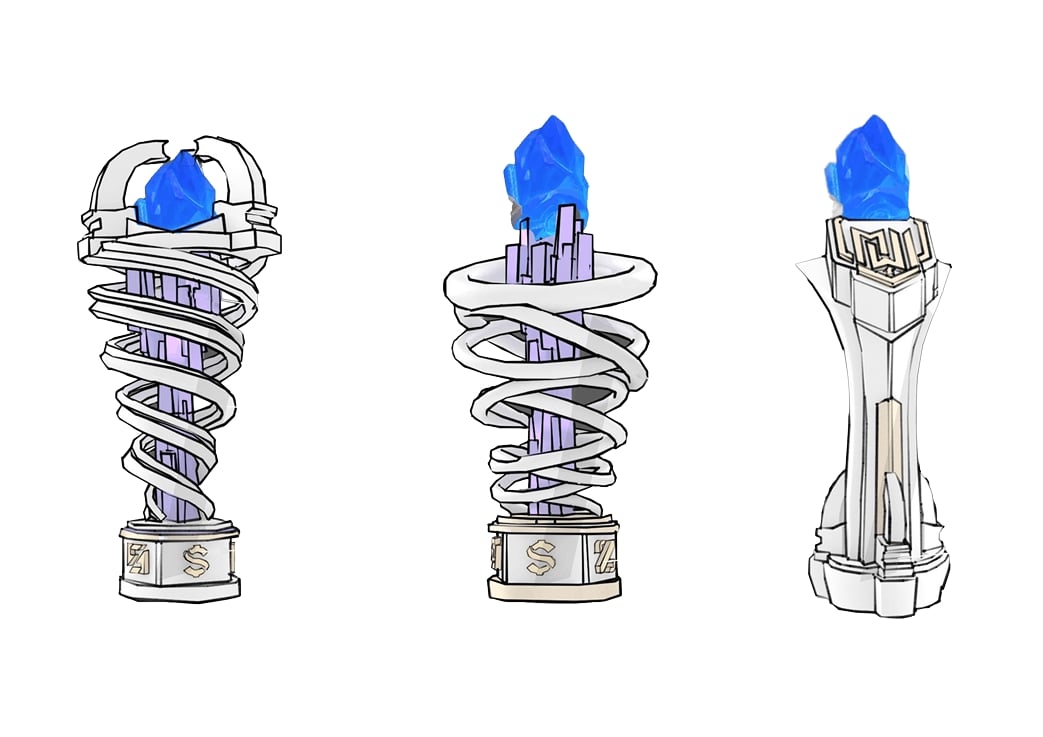
Every process has a natural home. FDM excels at speed, cost efficiency for larger volumes, and the ability to produce robust, lightweight structures. It is our workhorse for prototyping and for many production runs.
- Design freedom: complex internal and external geometry without dedicated tooling.
- Repeatability: identical parts across a series or across years.
- Material range: from tough engineering polymers to decorative composite filaments.
- Speed of iteration: physical prototypes in a fraction of traditional timelines.
- Scalability: practical for both single showpieces and larger recognition programmes.
The honest limitation of FDM is surface resolution. Because the part is built from visible beads, the raw finish shows fine horizontal lines. For the ultra smooth, jewel like surfaces some awards demand, we may instead select DLP printing or a casting route, or we invest additional finishing labour to bring an FDM part to a premium standard. Choosing the right process for each piece is exactly the advisory role our team plays.
Where FDM sits in the Fabit workflow
We rarely rely on a single technology from concept to delivery. A typical award might begin as an FDM prototype for form validation, move to a refined print for the hero geometry, and then incorporate cast or machined elements for weight and prestige. Understanding how FDM interacts with other techniques, and when to hand off between them, is what allows us to promise both creative ambition and dependable execution. You can see finished examples of this integrated approach on our 3D printed trophy page.
Getting started with an FDM based project
Most projects begin with a conversation about the achievement being honoured, the audience, the setting and the desired impression. From there we advise on whether FDM, an alternative print method or a hybrid path best serves the brief. If you already have a concept or artwork, our design studio is the fastest way to share it and receive guidance.
Because our printing is carried out entirely in house rather than outsourced, we retain complete control over quality, timing and the countless small decisions that shape a premium result. Nothing is handed to an anonymous third party and hoped for. That control is also what lets us commit to responding to every enquiry within 24 hours and to serving clients worldwide, since the expertise, the machines and the finishing bench all sit under one roof. Whether your award will be presented in Antwerp or shipped to a ceremony on another continent, the same team stands behind every layer.
Frequently asked questions
Is FDM printing strong enough for large trophies? Yes. With the right polymer and an appropriate internal structure, FDM parts are impressively strong and light, which is often preferable to solid material for sizeable pieces that must be handled and shipped worldwide.
Will the layer lines be visible on my finished award? Not in a finished Fabit piece. Raw FDM parts show layer texture, but our finishing programme addresses this to the standard each design requires, from subtly textured to fully smooth.
How quickly can you produce an FDM prototype? Turnaround depends on size and complexity, but the absence of tooling makes FDM one of the fastest routes to a physical sample. We respond to every enquiry within 24 hours to scope timelines precisely.
Can FDM be combined with other materials? Absolutely. We routinely pair printed elements with machined bases, cast details and applied finishes, drawing on the full spread of options in our custom trophies service.
Related terms