Digital sculpting is the process of shaping a 3D form as if it were virtual clay, pushing, pulling, smoothing and carving detail directly on screen, which makes it the ideal method for the organic, expressive and richly detailed elements of a bespoke award. Where precise surfaces call for mathematical tools, anything that needs to feel alive, a figure, a texture, a flowing emblem, is where digital sculpting earns its place in high end trophy design.
What digital sculpting is
Digital sculpting treats a 3D model like a lump of clay that never dries out. Using a pressure sensitive pen or careful mouse work, the artist adds material, removes it, smooths ridges and carves fine detail. The software holds millions of tiny points, which means the artist can work down to pores, folds and edges that would be almost impossible to define with equations. It is the most intuitive and human of the digital design methods, closest in spirit to working by hand.
This intuitiveness is exactly why it suits awards that carry emotion. A trophy celebrating human achievement often benefits from a form that feels crafted rather than calculated, and sculpting is how that quality is achieved in a digital workflow.
Why bespoke awards need a sculptor’s touch
Not every trophy is a clean geometric object. Many of the most memorable awards feature a figure in motion, a stylised animal, a symbolic object or an intricate surface texture. These forms resist the tidy logic of surfaces and parameters. They need the sensitivity of an artist deciding, moment to moment, where a muscle should tense or a fold should fall. Digital sculpting gives the studio that freedom while keeping everything in a format that can move smoothly toward production as a 3D printed trophy.
Sculpting and the mesh beneath it
A sculpted model is, technically, a very dense mesh, a web of countless tiny triangles. During sculpting the artist works with enormous detail, but that raw sculpt is usually too heavy and disorganised to manufacture directly. The craft therefore includes a second stage where the sculpt is cleaned, its topology tidied and its detail preserved onto a more efficient form. Understanding this relationship between the expressive sculpt and the disciplined mesh is central to producing awards that are both beautiful and buildable.
Where sculpting fits in the design process
A typical bespoke award might begin with sketches and a parametric or NURBS body that establishes proportion and stance. Digital sculpting then adds the soul: the detail on a figure, the texture on a surface, the character of an emblem. This division of labour plays to the strengths of each method, precise tools for precise parts, sculpting for expressive ones. The results are combined into a single coherent piece, so the viewer sees only a unified object, never the seams of the process.
The kinds of detail sculpting makes possible
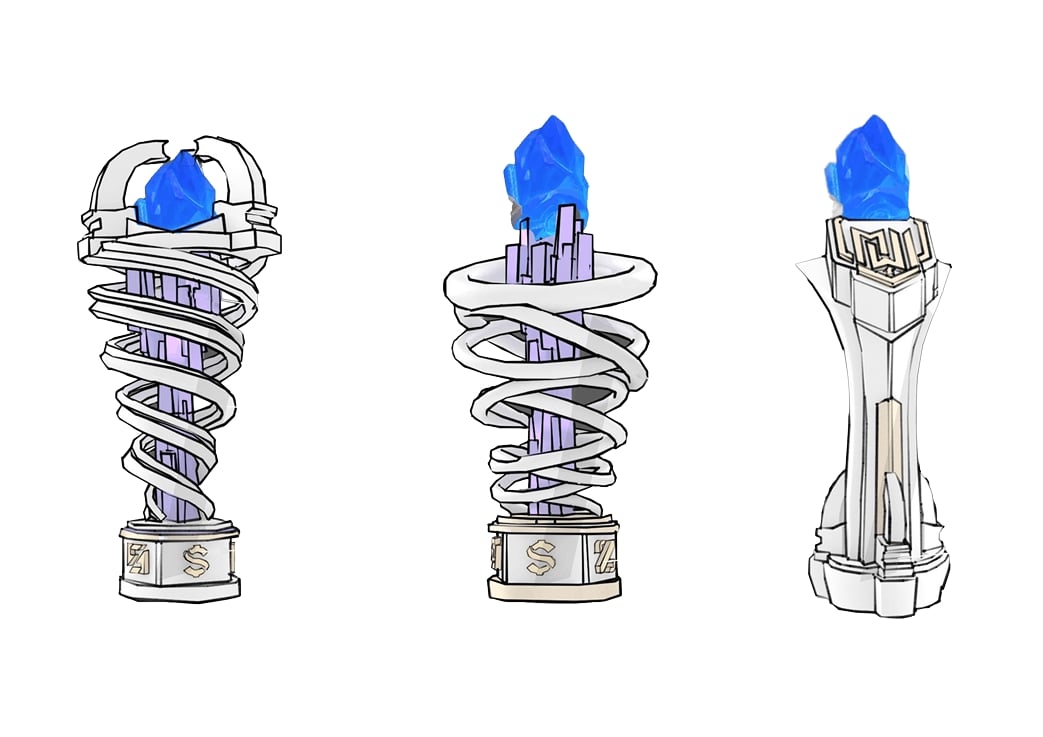
- Figurative elements, such as a stylised person, hand or animal capturing the spirit of an achievement.
- Organic textures, from natural surfaces to fabric folds, that reward close inspection.
- Relief and engraving, raised or recessed detail integrated smoothly into the form.
- Custom emblems, three dimensional interpretations of a logo or symbol rather than a flat stamp.
- Hand crafted character, subtle asymmetries and marks that make a piece feel made rather than manufactured.
Sculpting from reality: scanning as a starting point
Sometimes the most meaningful award references something real: a building, a product, a person’s likeness. Here digital sculpting often begins from a 3D scan, which captures a real object as a dense mesh. The artist then refines, stylises and integrates that captured form into the award. Sculpting is what turns raw scan data into something composed and intentional, rather than a literal, lifeless copy.
Balancing detail with material and finish
Fine sculpted detail is only worth creating if the chosen material and process can hold it. A crisp, high resolution finish will reveal delicate texture that a softer, more diffuse material would swallow. Part of the studio’s craft is sculpting to the right level of detail for the intended material, so the effort invested in the model survives all the way to the object in the recipient’s hands. Over sculpting for a material that cannot show it is wasted work; sculpting too coarsely for a fine finish leaves quality on the table.
Why sculpting supports a premium, advisory service
Because sculpting is so direct, it invites collaboration. A client can respond to a sculpted concept in plain human terms, more powerful here, softer there, and the artist can answer those notes intuitively. This makes the process feel like a genuine partnership rather than a technical transaction. Clients exploring ideas through the custom trophy service benefit from a team that can take an emotional brief and shape it, quite literally, into form.
Frequently asked questions
Is digital sculpting the same as 3D modelling? It is one branch of it. Sculpting is the clay like, organic approach, best for expressive detail, alongside surface and parametric methods used for precise forms.
Can you sculpt a likeness of a real person or object? Yes, often starting from a 3D scan or reference images, then refining and stylising the form for the award.
Will fine detail survive production? When the sculpt is matched to a suitable material and finish, yes. The studio sculpts to the level of detail the chosen process can faithfully reproduce.
Does sculpting take longer than other methods? Expressive detail takes care, but an experienced artist works efficiently, and sculpting is reserved for the parts of an award that truly benefit from it.
Digital sculpting is where a bespoke award gains its warmth and character. It is the human hand inside the digital process, the tool that turns a well proportioned object into a piece that feels considered, crafted and worthy of the moment it celebrates.
Related terms