A cup lid is the removable or fixed crowning element that sits on top of a trophy cup, closing the vessel and finishing the silhouette, and it is often topped by a decorative finial such as a figure, a flame, a star, or a bespoke symbol tied to the occasion. In the language of fine award making, the lid is far more than a cap. It defines the proportion of the piece, carries the visual weight that draws the eye upward, and frequently holds the emblem that makes a trophy unmistakably yours.
The role of the cup lid in a trophy
When you look at a classic loving cup, your eye travels from the base, up the stem, across the bowl, and finally rests at the top. The cup lid is the resolution of that journey. Without it, a cup can read as unfinished or open. With it, the piece gains a sense of ceremony and permanence. A well proportioned lid balances the mass of the bowl below it, so the trophy feels stable and considered rather than top heavy or squat.
At Fabit, we treat the lid as the point where craftsmanship becomes storytelling. This is where a sporting body might place a miniature athlete, where a corporate award might carry a sculpted logo, and where a commemorative cup might hold a symbol drawn from the recipient’s own history. The lid is small in surface area yet large in meaning.
Fixed versus removable lids
There are two broad approaches to a cup lid, and the right choice depends on how the award will be used and displayed.
A fixed lid is permanently joined to the bowl. This creates a single, sculptural object that reads as one continuous form. Fixed lids suit awards that are meant purely for display, where structural integrity and a seamless silhouette matter more than access to the interior.
A removable lid lifts away to reveal the inside of the cup. Historically this echoes the loving cup tradition, where a shared vessel could be filled and passed. Today a removable lid offers practical benefits, since the interior can hold a rolled certificate, a dedication card, or a small personal keepsake. It also allows the recipient to interact with the award, which deepens the emotional connection.
Materials and finishes we work with
The material of a cup lid shapes both its look and its feel in the hand. Traditional cups favour polished metals with a mirror bright finish, while contemporary designs increasingly explore resin, acrylic, and precision printed components that would be impossible to cast by hand. Fabit combines old and new, pairing a hand finished metallic surface with a 3D printed finial when a client wants a shape that no mould could produce. You can review the full range on our materials overview.
- Polished metal: timeless, reflective, and formal, ideal for heritage style trophies.
- Brushed or satin metal: softer and more modern, reducing glare under stage lighting.
- Resin and composite: lightweight, colour rich, and perfect for intricate finials.
- Precision printed elements: for logos, mascots, and organic forms with fine detail.
- Mixed media: a metal lid with a printed or cast crown for a distinctive signature.
Designing a custom finial
The finial is the ornament that tops the lid, and it is where most personalisation happens. A finial can be a literal figure, such as a footballer, a musician, or a scientist, or it can be abstract, such as an upward spiral suggesting growth. Because Fabit designs and produces in house, we can model a finial from a photograph, a brand mark, or a rough sketch, then refine it until the proportions sit correctly on the lid. This is the same bespoke process that runs through our custom trophy service, where every element is drawn to suit a single client.
Proportion and balance
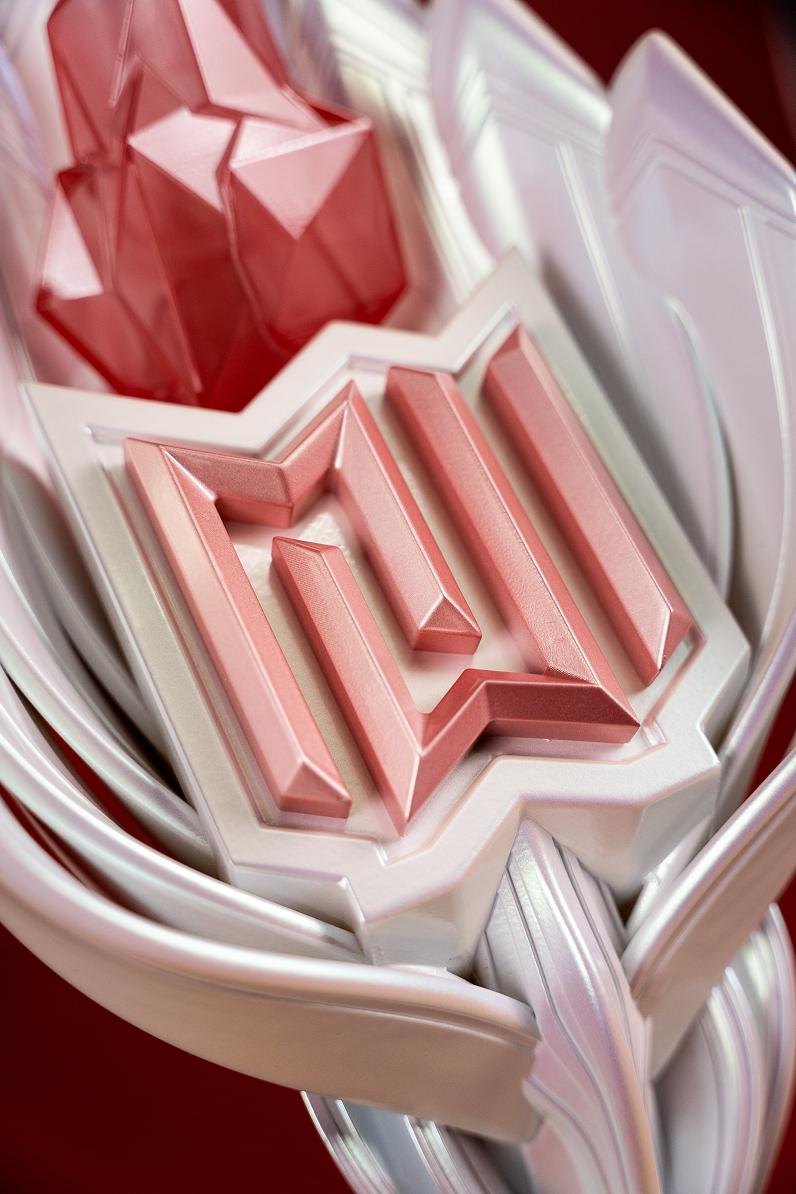
Getting a lid right is a question of ratio. A lid that is too tall makes a cup look precarious, while one that is too flat can look apologetic. Our designers work to classical proportions as a starting point, then adjust to the personality of the award. A playful youth sports trophy might carry a taller, more expressive finial, whereas a senior industry award tends toward restraint and a lower, more architectural crown. The goal is always harmony between the bowl, the lid, and the finial so the finished piece feels inevitable.
When to choose a cup with a lid
A lidded cup carries a particular tone. It reads as traditional, prestigious, and ceremonial, which makes it well suited to championships, long service recognition, and legacy awards that will be handed down or displayed for years. If your event calls for something more contemporary or graphic, you might instead consider a 3D printed trophy with a sculptural form rather than a classic cup. Both routes can be equally premium, and the choice comes down to the story you want the object to tell.
How Fabit crafts your cup lid
Every Fabit cup lid begins with a conversation about the occasion, the recipient, and the setting where the award will live. From there our studio develops a digital model, shares a visual for approval, and moves into production using the material best suited to the design. Because our craft is in house and based in Antwerp, we maintain tight control over quality and detail, and we respond to enquiries within 24 hours. We deliver worldwide, so a lidded cup finished in Belgium can be presented on any stage in the world.
Frequently asked questions
Is a cup lid always removable? No. Lids can be fixed for a seamless sculptural look or removable for access to the interior. We advise on the best option for your use.
Can the finial carry our logo? Yes. We can model a logo or emblem as a three dimensional finial so your brand becomes the crowning feature of the trophy.
Do lidded cups cost more than open cups? A lid adds material and design work, so it can add to the cost, though the difference depends on size, material, and the complexity of the finial. We quote transparently.
Can you match an existing set of trophies? Often yes. Share images or samples and we will replicate the proportions and finish so a new lidded cup sits naturally alongside your existing awards.
Ready to explore a lidded cup for your next event? Start a bespoke design with Fabit and receive a considered response within 24 hours.
Related terms