Vectorising a logo means converting it from a pixel-based image into a mathematically defined vector graphic, so that it can be scaled to any size and reproduced with perfectly crisp edges. This conversion is one of the most important preparatory steps in turning a brand mark into a physical award. At Fabit, our Antwerp studio works from clean vector artwork wherever possible, because the quality of the source logo directly determines the sharpness of the engraved, relief, or printed result on a custom award.
Vector versus raster: the core difference
A raster image, such as a JPG or PNG, is made of a fixed grid of coloured pixels. It looks fine at its intended size, but enlarge it and the pixels become visible, producing blurry, jagged edges. A vector image, by contrast, is defined by mathematical paths, points, lines, and curves, rather than pixels. Because it is described by geometry rather than a fixed grid, it can be scaled infinitely, from a business card to a building, with edges that stay perfectly sharp at every size.
This distinction is fundamental for manufacturing. A machine that engraves or cuts a logo needs to follow clean paths, not guess at the boundaries between blurry pixels. Vector artwork gives it precise lines to follow, which is why it produces such clean results.
Why vector matters for awards
When a logo goes onto an award, whether engraved, cut, printed, or sculpted as relief, the crispness of the final piece depends heavily on the source artwork. A high-quality vector logo reproduces cleanly at any size the award requires. A low-resolution raster image, dragged from a website or a slide deck, produces soft or ragged results that undermine the premium feel of the piece. For a brand’s mark to look authoritative on a trophy, it needs to be sharp, and that starts with vector data.
This is why one of the first things we check when a client sends a logo is what format it is in. Where we receive only a raster image, we can often vectorise it, redrawing it as clean paths so it is production-ready. You can see the crispness this enables across our custom trophies.
How vectorising works
Vectorising is the process of recreating a raster image as vector paths. Sometimes this is semi-automatic, using software that traces the shapes, but for a quality result it usually needs a designer’s hand to clean up the paths, correct curves, and ensure the geometry is true to the original brand. Simple, bold logos vectorise easily; complex ones with gradients, fine detail, or photographic elements take more skill and judgement. The aim is a faithful, clean, scalable version of the mark.
Common file formats
Vector files typically come as formats such as SVG, EPS, AI, or PDF, while raster files are JPG, PNG, GIF, or TIFF. If your brand has a proper logo package from a designer, it almost certainly includes vector versions, and those are ideal to send us. If all you have is a raster image, do not worry: we assess whether it can be vectorised cleanly and advise on the best route. The clean vector then feeds naturally into our design and, where relevant, our material and production choices.
How Fabit prepares your logo
Our process starts with reviewing the artwork you provide. If it is already clean vector, we can proceed directly. If not, we vectorise it, redrawing the mark so its edges are crisp and its proportions correct. Because we design and manufacture in-house, this prepared artwork flows straight into the award design, whether it becomes an engraved line, a cut shape, or a sculpted bas-relief. The result is a logo that looks intentional and sharp rather than approximate.
What clean vector artwork enables
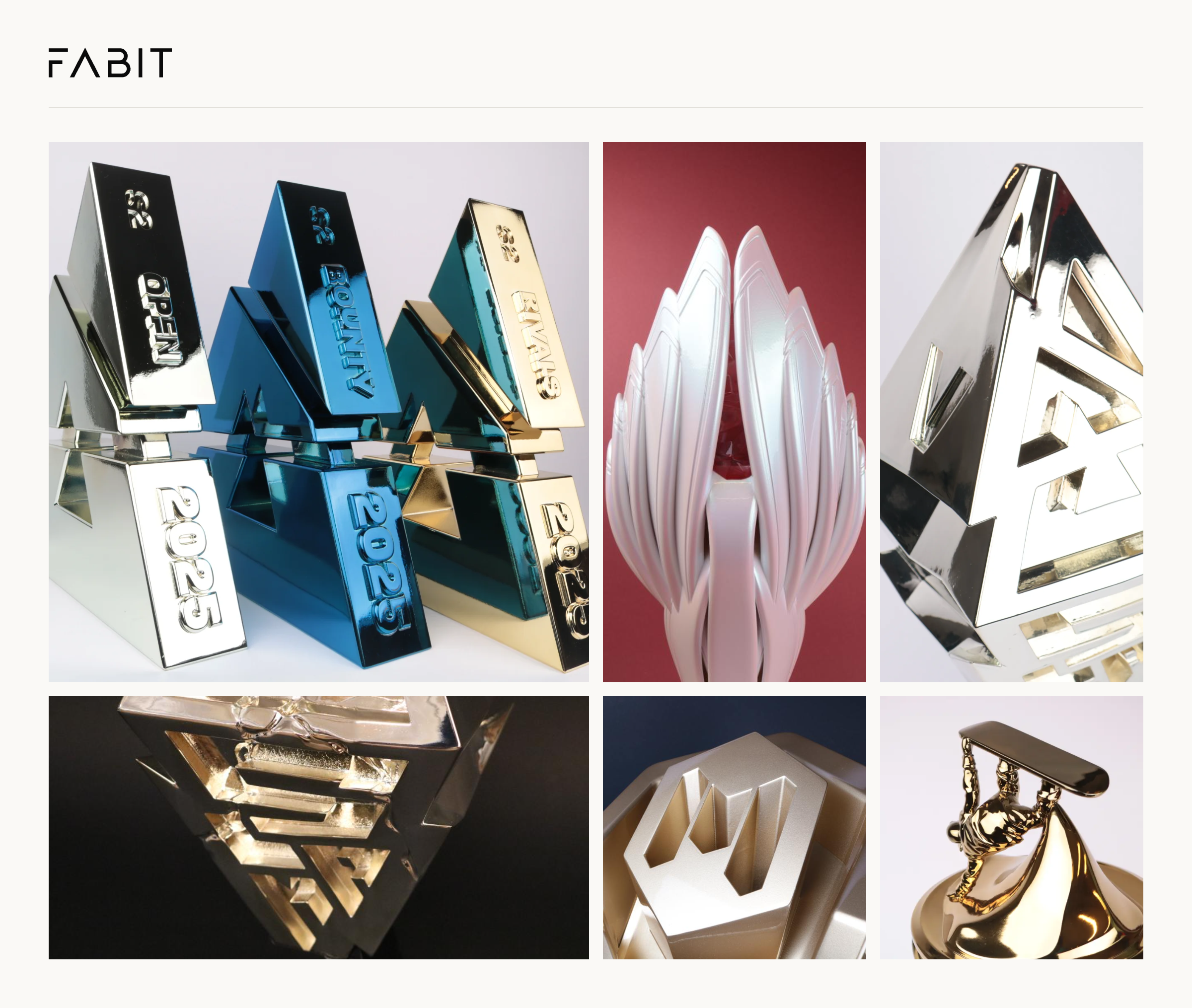
- Crisp reproduction at any size the award requires
- Clean toolpaths for engraving, cutting, and machining
- Faithful translation of a logo into sculpted relief
- Consistent results across a series of differently sized awards
- A reusable, scalable master for future orders
- A premium finish that reflects well on the brand being honoured
What to send us
If you have vector versions of your logo, send those. If you only have a raster image, send the highest-resolution version you have, and we will assess it. Either way, our Antwerp studio handles the preparation. If you want to experiment with placement and concept first, our tool at create.fabit3d.com is a useful starting point, and we respond to every enquiry within 24 hours.
Why the first ten minutes decide the final finish
It is easy to underestimate how much the quality of the source artwork governs the quality of the finished award. A logo is reproduced faithfully only if the data it starts from is clean, and no amount of skilled production can rescue a mark that was blurry and ragged at the outset. This is why the very first thing we do with a new brief is examine the artwork, and why we would always rather spend time preparing a proper vector than rush an inferior image into production. It is an advisory habit born of experience: the pieces that disappoint are almost always the ones where artwork was treated as an afterthought, and the pieces that delight are the ones where it was got right before anything else began.
Vector artwork as a lasting asset
Once we have prepared a clean vector version of your mark for an award, that artwork becomes a reusable asset. It can drive this year’s trophies and next year’s, scale from a lapel-sized detail to a large presentation piece, and adapt across the different elements of a recognition programme without ever degrading. For clients running ongoing awards, this is a quiet but real benefit: the investment in getting the logo right once pays off across every future commission, and because we retain the prepared files, reordering is fast and perfectly consistent.
Frequently asked questions
What if I only have a logo from our website? Send it anyway. Web logos are usually raster and low resolution, but we can often vectorise them into clean, production-ready artwork. We will tell you honestly if the source is too poor to use well.
Can you vectorise a complex or detailed logo? Usually yes, though very intricate or photographic marks take more work and sometimes need simplifying for physical reproduction. We advise on what will read well on an award.
Will vectorising change how my logo looks? Done properly, it faithfully recreates the mark with sharper edges. We match the original closely and confirm with you before production.
Is there a charge for vectorising? It depends on the complexity of the artwork. Simple marks are quick; involved ones take design time. We are transparent about this when we quote.
Related terms