UV mapping is the process of unwrapping a 3D model’s surface into a flat layout so that images, textures, and colours can be applied to it accurately. In bespoke award making, UV mapping is what allows a logo, a finish, or a decorative pattern to sit perfectly on a curved trophy surface without stretching or distortion.
The idea behind UV mapping
Imagine peeling the label off a bottle and laying it flat. UV mapping does the same thing in reverse for a 3D model. It takes the curved, three-dimensional surface of a trophy and flattens it into a two-dimensional layout, so that a designer can paint or place artwork on that flat version and have it wrap back onto the object correctly.
The letters U and V simply refer to the two axes of this flat texture space, used instead of X and Y because those are already taken by the 3D world. The result of a good UV map is that when a logo is applied, it lands exactly where it should on the finished award, at the right size and without warping.
Why UV mapping matters for awards
A trophy is often the physical embodiment of an organisation’s identity. The logo must be crisp, correctly proportioned, and cleanly placed. Colours must sit where they belong. If the UV map is poor, artwork stretches across curves, seams appear in awkward places, and detail smears. Good UV mapping is therefore essential to a professional result.
When we finish a 3D printed trophy with colour or a client emblem, the UV map is what guarantees fidelity. A logo that looks perfect in the brand guidelines will look perfect on the curved surface of the award, because the mapping has been prepared to carry it faithfully.
What a good UV map achieves
The value of careful UV work shows up directly in the quality of the finished piece.
- Undistorted logos: brand marks reproduce at correct proportions on curved surfaces.
- Clean seams: the unavoidable joins in a wrap are hidden in discreet locations.
- Even texture: patterns and finishes apply uniformly across the whole piece.
- Sharp detail: texture resolution is used efficiently where detail matters most.
- Consistent colour: hues land precisely where the design intends.
Seams and how we hide them
Any time a curved surface is unwrapped, it must be cut somewhere, just as a globe cannot be flattened into a map without splitting it. These cuts are called seams, and where they fall is a deliberate design choice. A skilled approach places seams in inconspicuous areas, such as the back or underside of a trophy, so they never disrupt the visible faces.
Careless UV mapping leaves seams running through prominent surfaces or across a logo, which instantly cheapens the result. Thoughtful placement is one of the quiet marks of craftsmanship, and it is something we plan deliberately for each award rather than accepting whatever the software suggests by default.
UV mapping and logo placement
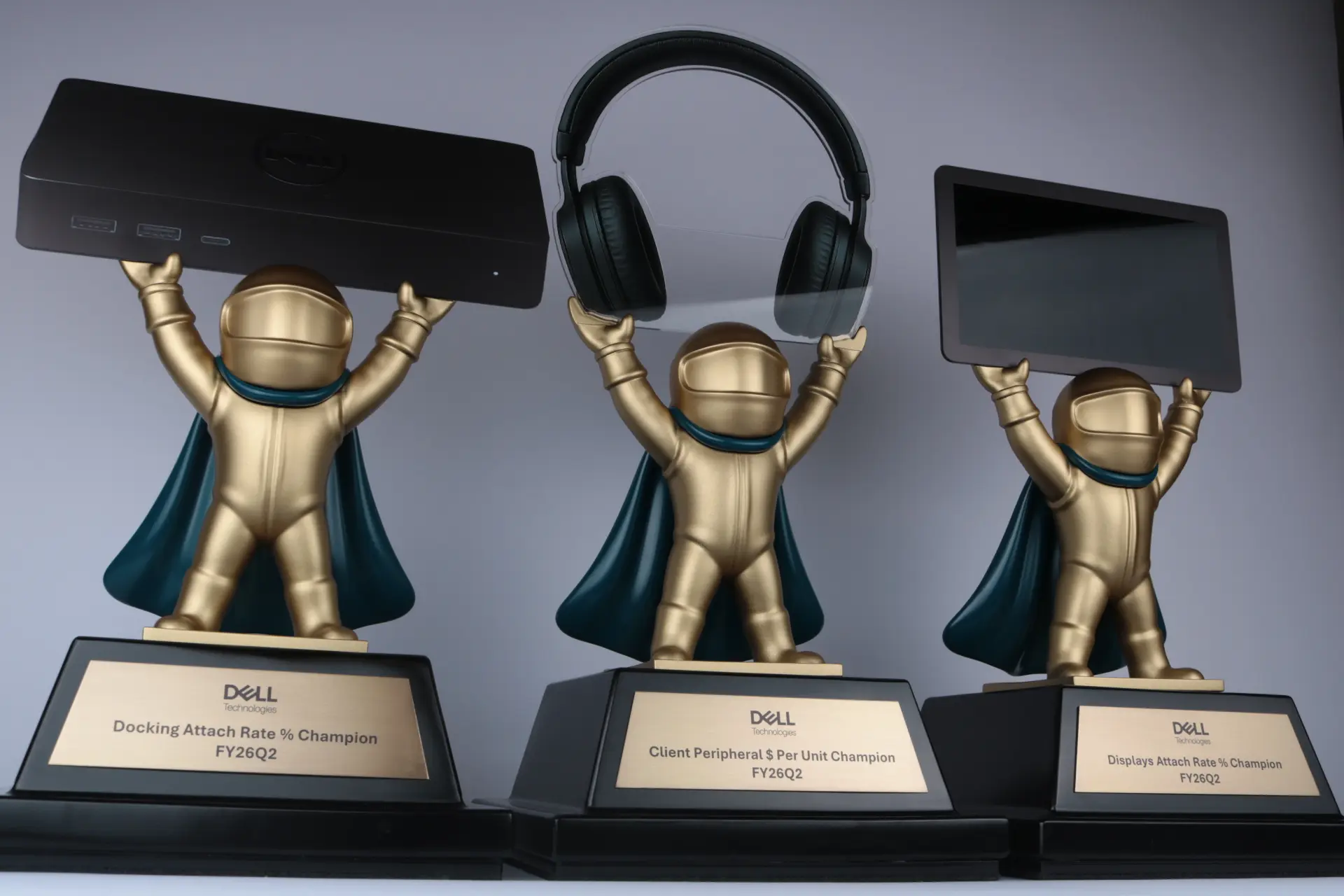
Placing a client’s logo is one of the most sensitive tasks in award design, and UV mapping is the tool that makes it precise. Because the flattened layout corresponds exactly to the 3D surface, we can position the logo on the flat map and know precisely where it will appear on the object. This lets us align it to a curve, centre it on a panel, or wrap it around a form with confidence.
Clients who bring artwork through our online design tool benefit from this precision even if they never see the UV layout itself. Behind the scenes, the mapping ensures their mark arrives on the finished award exactly as intended, sharp and correctly proportioned.
Texture resolution and efficiency
A good UV map also uses texture space wisely. The flat layout has a limited area, and the more of it a feature occupies, the more detail it can carry. By allocating generous space to important elements, such as a logo or a focal decoration, and less to plain areas, we ensure the detail that matters is rendered at the highest possible fidelity.
This efficiency is especially important for pieces that will be photographed or viewed closely. It means the crisp elements stay crisp and no resolution is wasted on surfaces that do not need it. It is a technical discipline in service of a visible result.
How UV mapping fits the wider process
UV mapping follows naturally from clean geometry. A well-retopologised model with sensible polygon flow is far easier to unwrap cleanly, which is why these steps connect. Once the UV map is prepared, textures and finishes can be applied with confidence, and the model is ready for realistic rendering or for production with colour and detail intact.
Our custom trophies service treats UV mapping as an integral part of delivering a finished, branded award rather than a raw shape. Combined with the right choice from our materials range, it ensures the surface carries its finish beautifully.
Frequently asked questions
Do I need to understand UV mapping to order a trophy? No. It is a behind-the-scenes step. You provide the logo or artwork, and we handle the mapping so it applies perfectly.
Why do some printed logos look stretched? Usually because of poor UV mapping. Careful unwrapping prevents this distortion entirely.
Can you place my logo exactly where I want it? Yes. UV mapping gives us precise control over position, size, and alignment on the award’s surface.
Does UV mapping apply to single-colour trophies? It is most important where colour, texture, or logos are involved, but clean UVs help with any surface finishing work.
UV mapping is the invisible groundwork that lets a bespoke award carry its identity flawlessly. It is how a logo lands crisp and true on a curving surface, how seams stay hidden, and how a finish sits evenly across the whole piece. We treat it as an essential part of the craft. If you want your award to carry your brand perfectly, our team responds within 24 hours to begin.
Related terms