Two-tone plating is a finishing technique that applies two different metal colours to a single object, using masking to control exactly where each finish appears. On awards, two-tone plating creates striking contrast, such as gold against silver or bright against dark, that highlights a logo, frames a name plate or gives a piece a sophisticated designed appearance.
The short answer
A single metal colour can look elegant, but combining two invites the eye to move, creates hierarchy, and lets a design emphasise what matters most. Two-tone plating is how we achieve that on a metal award. By selectively masking areas during the plating process, we can lay down one finish, protect it, then apply a second, so the finished piece carries both tones with a crisp boundary between them. It is a hallmark of considered, premium award design.
How two-tone plating works
Electroplating deposits a thin layer of metal onto a conductive surface using an electric current in a plating bath. To create two tones, the process is done in stages. First the whole piece is plated in the base colour. Then the areas meant to keep that colour are carefully masked with a resist that blocks further plating. The piece goes back into a second bath for the contrasting finish, which deposits only on the exposed areas. Once the masking is removed, the two finishes meet along the masked boundary. Precision in the masking is everything, and it is where hand skill and experience show.
Popular two-tone combinations
- Gold and silver: the classic pairing, warm against cool, timeless and versatile.
- Gold and black: dramatic and modern, with gilded detail leaping off a dark ground.
- Rose gold and polished nickel: a contemporary, fashion led combination.
- Bright and satin of the same metal: subtle tonal contrast created by finish rather than colour.
Why two-tone plating suits premium awards
Contrast is a designer’s most powerful tool, and two-tone plating puts it in physical form. A gold logo on a silver body draws the eye straight to the brand. A bright bevelled edge around a dark satin face frames the piece like a picture. Two tones also add perceived value, signalling that thought and craft went into the finish rather than a single dip in one bath. For flagship awards where the object should feel special in the hand, this layered approach pays off. See how we deploy it within our custom trophy service.
Design considerations
Two-tone designs work best when the boundary between tones follows a clear line in the design, such as the edge of a logo, a raised band, or a bevelled facet. Because the effect depends on masking, simple, well defined divisions produce the cleanest results. Raised and recessed detail can also be exploited: plating the raised areas in one tone and letting a darker finish sit in the recesses creates depth with striking economy. Our materials guide explains how the base metal affects which plating combinations are possible.
Combining plating with texture and marking
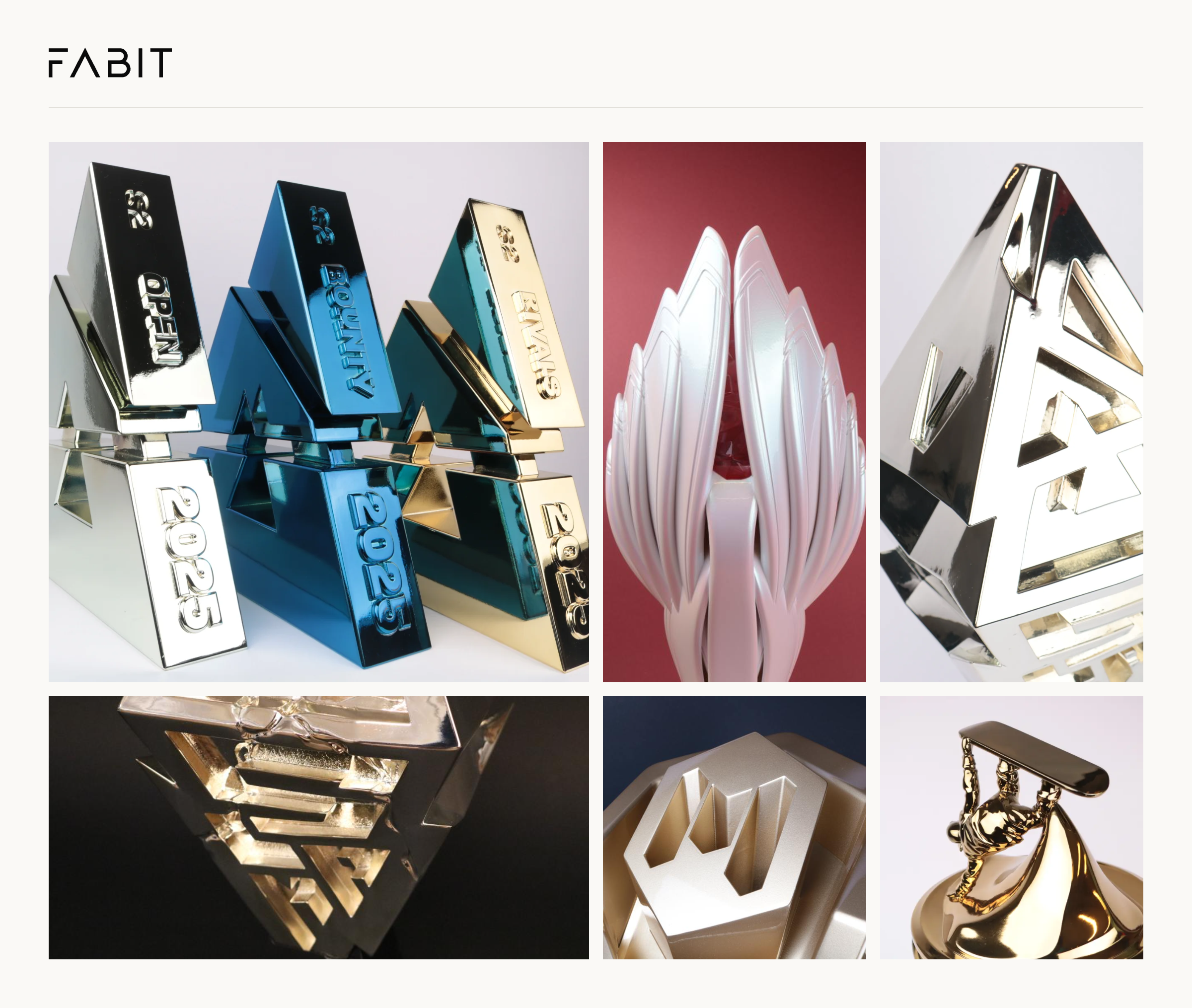
Two-tone plating rarely works alone. It pairs naturally with shot blasting, where one tone is matte and the other polished, doubling the contrast through both colour and texture. It sits beautifully alongside laser annealed text, which can mark either tone crisply. And it can frame a cloisonne enamel emblem with contrasting metal outlines. This layering of techniques is where in house control matters, because each stage has to be sequenced correctly. On 3D printed and finished forms, two-tone plating can turn a single printed shape into a piece that looks assembled from multiple precious metals.
Consistency and durability
Plating is a controlled, repeatable process, so a two-tone finish can be reproduced across a full run of awards with matching boundaries and tones. Quality plating is also durable, resisting tarnish and wear when the piece is displayed and occasionally handled. As with all plated finishes, the coating is thin, so abrasive cleaning should be avoided. A soft cloth keeps both tones bright, and the contrast stays as sharp as the day the piece was made.
Achieving contrast without two baths
It is worth noting that a two-tone look can sometimes be achieved through finish rather than colour, for instance by polishing some areas of a single plated surface and leaving others matte. This gives tonal contrast within one metal colour and can be a cost effective route to a layered appearance. We help clients decide when true two colour plating is worth it and when a single plate with selective polishing achieves the same visual goal.
How Fabit approaches two-tone plating
All plating and masking is controlled in house in Antwerp, which is what allows us to guarantee crisp boundaries and matched tones across an entire award series and to inspect every piece before worldwide dispatch. We advise on combinations that suit your brand and design, and we answer specification questions within 24 hours. To develop a two-tone award, start a brief in our design studio and share your logo and colour direction.
Frequently asked questions
How are the two tones kept separate? Areas are masked with a resist between plating stages, so each finish deposits only where intended, meeting along a clean boundary.
Can any two metal colours be combined? Most common finishes pair well. We advise on combinations that plate reliably on your chosen base metal.
Is two-tone plating durable? Yes, when handled sensibly. Avoid abrasive cleaners, which can wear any thin plated layer over time.
Can two tones be created without two colours? Yes. Selective polishing of a single plated surface gives tonal contrast through finish rather than colour.
Related terms