A team award is a formal recognition honor given to a group of people whose combined effort produced an outcome that no individual could have achieved alone. It celebrates collaboration itself, the difficult and often underappreciated work of aligning many people toward a single goal. In organizations that depend on cross-functional cooperation, a team award is how leadership makes clear that results matter, but so does the way those results are achieved together.
What a team award recognizes
Individual awards can unintentionally teach people that personal glory is what the company values. A team award corrects this by rewarding shared success. It typically honors groups that delivered a major project, hit a demanding collective target, solved a cross-departmental problem, or demonstrated an exceptional standard of collaboration under pressure.
The best team awards recognize not just the outcome but the quality of the collaboration. A team that achieved its goal while supporting one another, sharing credit, and lifting the standard of everyone involved deserves particular recognition, because that behavior is exactly what most organizations struggle to cultivate.
Why team recognition is strategically important
Modern work is overwhelmingly collaborative, yet most recognition systems remain stubbornly individual. This mismatch can quietly erode teamwork, because people optimize for what gets rewarded. A team award realigns incentives. It tells employees that helping a colleague, sharing information, and prioritizing the collective result are behaviors the company sees and values.
There is also a bonding effect. Shared recognition creates shared memory. A team that stands together to receive an award, and that later sees a single trophy displayed in their shared space, carries a sense of common identity that outlasts the project itself. That identity makes the next collaboration easier.
The challenge of recognizing groups fairly
Team awards raise a practical question that individual awards do not. How do you honor a group when contributions were uneven, and how do you handle the physical object when there are many recipients? Thoughtful programs address this directly. One common approach is a single, substantial centerpiece trophy that lives in the team’s shared space, paired with smaller individual keepsakes so each member has something personal to take home.
Defining team boundaries also requires care. Was the success the work of the core project team, or did it depend on supporting functions? Being generous but clear about who is included prevents the resentment that can follow when contributors feel overlooked.
Designing an award for a group
A team award has a design brief that differs from an individual honor. Because it is often displayed in a shared space rather than on a personal desk, it can be larger and more architectural. Because it represents many people, its design can literally embody the idea of parts coming together.
At Fabit, we often design team awards around the theme of unity in multiplicity. Our corporate awards service can create pieces built from multiple elements that combine into a single form, or centerpiece trophies accompanied by matched individual pieces. The design becomes a physical metaphor for the collaboration it honors, which makes it far more meaningful than a generic shared plaque.
Design directions that suit team awards
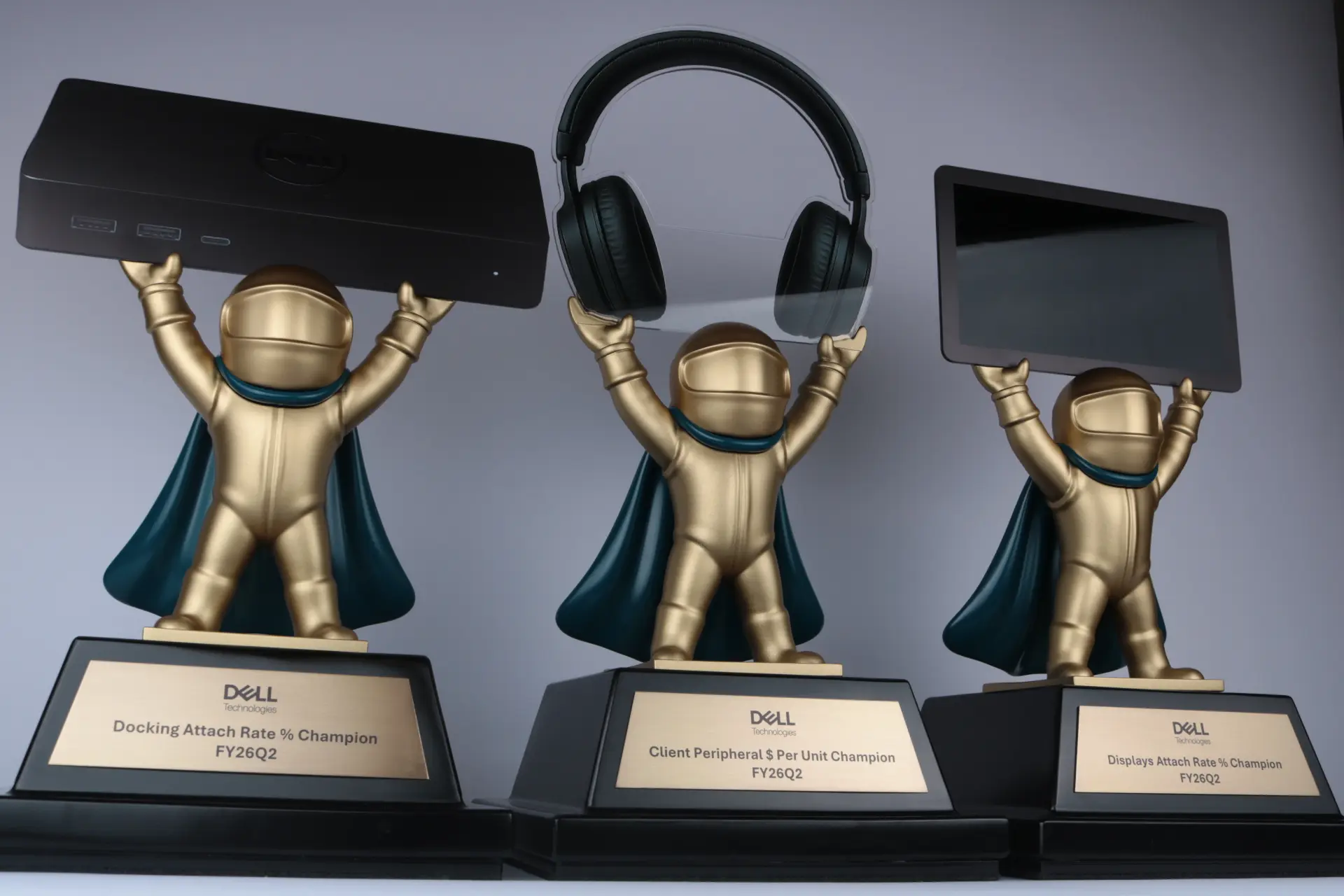
When developing a team award concept, several directions tend to work especially well.
- Modular or interlocking forms that visually represent individual contributions joining into a whole.
- A larger centerpiece for shared display, paired with smaller matched keepsakes for each member.
- Space to record every team member’s name, so no contributor is anonymized.
- Materials with presence and scale, since the piece often lives in a communal area.
- Design cues that reference the specific project or goal the team achieved.
These choices ensure the award feels like a genuine tribute to collaboration rather than a token gesture.
The presentation moment
Team awards create a rare opportunity for a powerful shared moment. Bringing an entire team on stage together, naming each contributor, and handing over a single beautiful object creates a memory that binds the group. Whenever possible, invite leaders to speak specifically about how the team worked, not just what it delivered. This reinforces the collaborative behaviors the award is meant to encourage.
Fitting team awards into your recognition strategy
Team awards are most effective as one element of a balanced recognition strategy that also honors individuals for innovation, quality, and service. Many organizations coordinate these honors through a central recognition platform and connect them to a wider total rewards approach, ensuring collective and individual achievement are both celebrated in proportion.
To see how other organizations have designed awards that honor collaboration, explore our case studies, and browse our recognition trophies for inspiration on the forms a team award can take.
Frequently asked questions
How do we handle a physical award for many people?
A common approach is a single substantial centerpiece trophy for the team’s shared space, paired with smaller individual keepsakes so each member has something personal to keep.
How do we decide who counts as part of the team?
Define team boundaries clearly and generously in advance. Being explicit about who is included prevents the resentment that can arise when supporting contributors feel overlooked.
Should team awards replace individual awards?
No. They should complement them. A balanced program honors both collective and individual achievement, so people are rewarded for collaborating and for excelling in their own roles.
What makes a team award design effective?
Designs that visually represent parts coming together, such as modular or interlocking forms, work especially well because the object becomes a physical metaphor for the collaboration it celebrates.
Related terms
- innovation award
- quality award
- recognition platform
- corporate hall of fame
- points-based recognition
- volunteer award