A plinth is the solid base or pedestal on which an award, sculpture or object sits, giving it stability, height and a defined surface for inscription. In award design the plinth is quietly essential. It is the foundation that makes a trophy feel grounded and important, the platform that lifts a sculptural form to the right viewing height, and very often the place where the winner’s name and achievement are recorded. At Fabit, we design the plinth with the same care as the piece it carries, because a great award is only as convincing as the base beneath it.
Where the word plinth comes from
Plinth is an architectural term, borrowed from the base of a column or the lowest part of a building’s structure. That heritage tells you exactly what it does: it bears weight, defines a footprint and signals permanence. When you place an object on a plinth, you are borrowing centuries of visual language that says this thing matters and is meant to last. For an award, that association is priceless, and it is one reason we take base design so seriously in our Antwerp studio.
What a plinth does for an award
A well-designed plinth performs several jobs at once. It provides the mass and low centre of gravity that keep a trophy stable on a shelf or desk for decades. It raises a sculptural element to a height where the eye can appreciate it. It creates a clear, dignified surface for engraving or a plaque. And it visually separates the award from whatever surface it sits on, framing it as an object of importance rather than an ornament.
Get the plinth wrong and even a beautiful top-piece looks unfinished or unstable. Get it right and the whole award gains gravity, in both senses of the word. This balance of engineering and aesthetics is exactly the kind of detail our event trophies service is built around.
Materials for a considered plinth
The base is where weight and character are established, so material choice is central. We regularly work with the following.
- Solid metals including machined aluminium, brass and steel for a dense, premium feel and precise edges.
- Natural stone and marble for timeless weight and a surface that ages gracefully.
- Sustainably sourced hardwoods that bring warmth and can be laser-engraved with great subtlety.
- Cast and layered acrylics that allow colour, transparency and embedded elements.
- Concrete and composite bases for an architectural, contemporary statement.
The plinth as the home of the inscription
For many awards, the plinth is where the meaning lives. The sculptural top may be the visual signature, but the base is where the recipient’s name, the category, the year and sometimes a line of citation are recorded. This is why we think about engraving surfaces from the very start of a design: the typography, the placement and the depth of the inscription all have to be planned so the finished text feels integral rather than added as an afterthought.
You can see how inscription and base work together across the commissions in our case studies, where the plinth often carries the story of the achievement it celebrates.
Proportion, weight and the feel in the hand
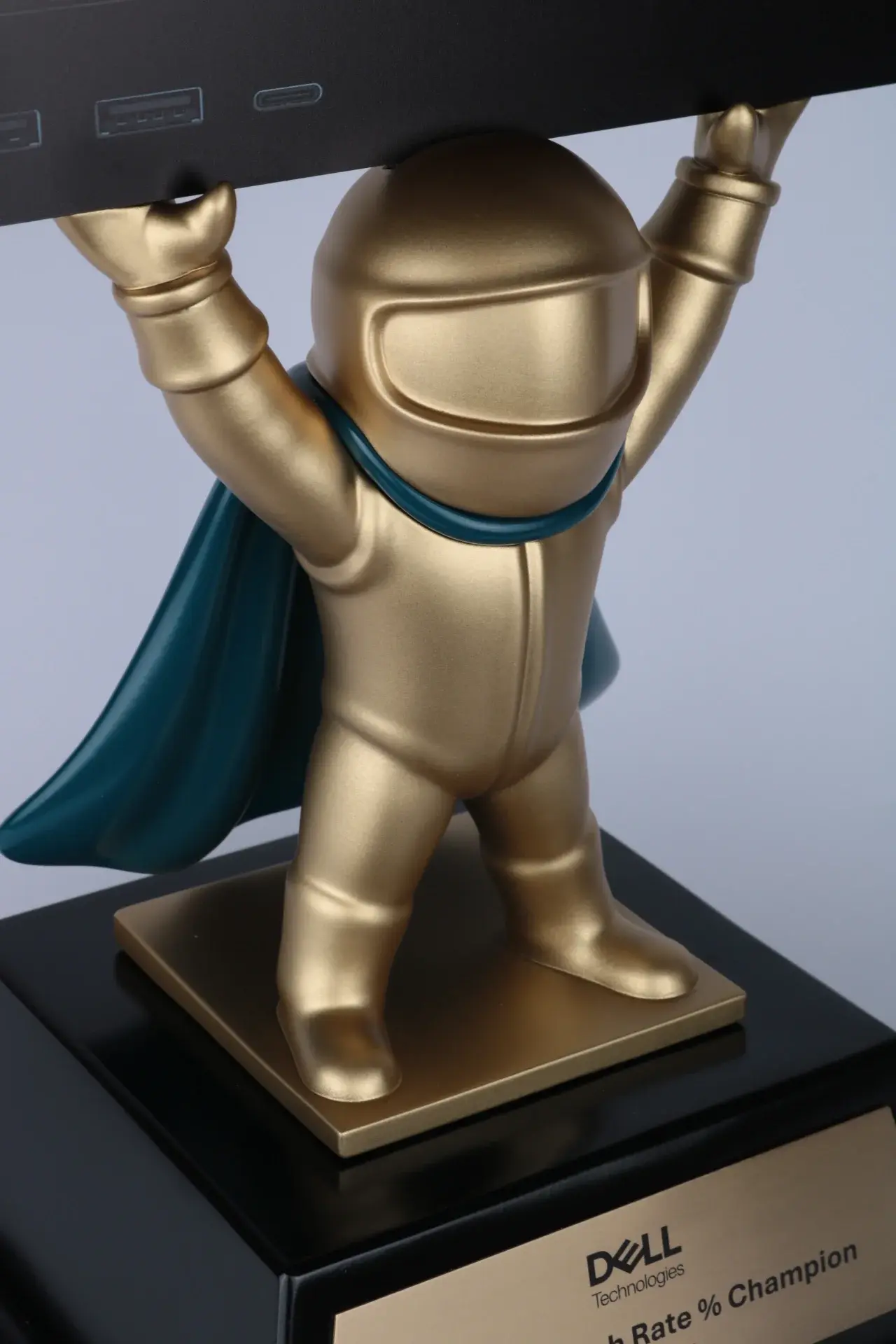
A plinth is felt as much as seen. When a laureate lifts an award, the weight and balance of the base determine whether the piece feels premium or flimsy. Too light and the object feels disposable. Too heavy and it becomes awkward to hold aloft on a podium. We calibrate this deliberately, tuning the mass of the plinth to the moment the award will be presented and carried.
Proportion matters just as much. The ratio between base and top-piece is one of the most important decisions in award design. A base that is too small looks precarious, while one that is too large overwhelms the sculpture it should support. We resolve these proportions through modelling and prototyping before anything is produced at scale.
There is a psychological dimension to weight as well. Research into how people perceive value consistently shows that heavier objects are judged more important and more expensive, a bias designers have understood intuitively for centuries. A plinth is the most efficient place to add that reassuring mass, because it sits low and does not compromise the visual lightness of the sculptural top. By concentrating weight in the base, we let a piece feel both substantial in the hand and elegant to the eye, a combination that pure top-heavy designs struggle to achieve.
The plinth as visual punctuation
Beyond its structural and symbolic roles, the plinth acts as visual punctuation, a moment of calm that lets the sculptural element above it breathe. A busy, ornate top-piece is balanced by a clean, quiet base, while a minimal sculpture can be lifted by a base with more character. This interplay is one of the most satisfying aspects of award design, and getting it right is what separates a piece that feels professionally resolved from one that feels improvised. We treat the plinth as a full partner in the composition, never as an afterthought bolted on to hold a shape upright.
Designing a plinth to match your identity
The plinth is a natural place to carry brand identity in a restrained, tasteful way. A subtle debossed logo, a signature colour in the material, a distinctive edge profile: these details let an award belong unmistakably to your organisation or event without shouting. For clients who want to explore this themselves, our create studio is a good starting point for testing base forms and proportions before we refine them into a finished specification.
Fabit’s Antwerp craft, delivered worldwide
Every plinth we make is designed and produced with the same discipline from our base in Antwerp. We ship worldwide and respond to every enquiry within 24 hours, so whether you are staging a ceremony in Belgium or on the other side of the world, the foundation of your award is engineered, not improvised. We see the plinth as a promise of permanence, and permanence is exactly what a meaningful award should offer.
If you are ready to explore ideas, our recognition trophies collection shows how base and sculpture come together in finished pieces.
Frequently asked questions
What is the difference between a plinth and a base? They overlap heavily. Base is the general term for whatever an object stands on, while plinth carries a more architectural, deliberate connotation of a designed pedestal. In award language we tend to use plinth when the base is a considered design element in its own right.
Can the plinth be engraved? Yes, and it is often the ideal surface for the recipient’s name, category and year. We plan engraving placement and typography from the start of the design.
How heavy should a plinth be? Heavy enough to feel premium and stable, but balanced for lifting on a podium. We tune weight to the specific presentation moment.
Can you match a plinth to our brand? Certainly. Material, colour, edge profile and subtle branding can all be tailored, and we respond to enquiries within 24 hours to get started.
Related terms