
Peer-to-peer recognition is the practice of employees acknowledging one another’s contributions directly, rather than waiting for praise to travel down through management. It turns appreciation into a shared, everyday behaviour, and when that appreciation is anchored to a well made physical object, it stops being a fleeting comment in a channel and becomes something a colleague keeps on their desk for years.
What peer-to-peer recognition actually means
In a traditional recognition model, the flow of praise is vertical. A manager notices strong work, a manager decides it is worthy, and a manager delivers the acknowledgement. Peer-to-peer recognition flattens that flow. It gives every colleague permission to say, publicly and credibly, that someone helped them, unblocked them, or simply raised the standard of the work around them. Because the praise comes from the people closest to the effort, it carries a specific weight that top down recognition cannot replicate.
The concept sits at the heart of modern corporate recognition because it scales. A leadership team can only observe a fraction of what happens inside a company. Colleagues see everything. When you build a culture where they are trusted to nominate and celebrate each other, you multiply the number of moments that get noticed, and you distribute the emotional labour of appreciation across the whole organisation instead of concentrating it in a few managers.
Why peer recognition outperforms top-down praise
Research into workplace motivation consistently shows that recognition from someone who understands the work is more meaningful than recognition from someone who is several layers removed from it. A peer knows how hard the problem was. A peer knows that the late Friday fix saved the launch. That contextual understanding is what makes the acknowledgement land.
There is also a trust dimension. Praise from a manager can be read, fairly or not, as strategic. Praise from a colleague who gains nothing by giving it reads as genuine. That authenticity is the reason peer programmes tend to produce higher engagement scores than incentive schemes built purely on management discretion.
The role of the physical award
Digital recognition is easy to give and easy to forget. A message in a team channel is meaningful for an afternoon and then it is buried under the next hundred messages. This is precisely where a tangible object changes the equation. A designed award converts a moment of praise into a permanent artefact. Every time the recipient sees it, the recognition is renewed.
At Fabit we design peer recognition pieces to feel personal rather than generic. A machined block of aluminium, a laser detailed panel, or a sculptural form in cast resin communicates that the company took the acknowledgement seriously enough to invest in it. That investment is the message. You can explore how these objects are made on our corporate awards service page, where the emphasis is on materials, finish, and the small details that make a peer award something people genuinely want to keep.
How to structure a peer recognition programme
A well run programme balances freedom with just enough structure to keep the recognition credible. The most effective versions share a few common traits.
- Clear criteria: Colleagues understand what kinds of behaviour the programme celebrates, so nominations stay meaningful rather than becoming a popularity contest.
- Low friction nomination: Recognising someone should take a minute, not a form with ten fields. The easier it is, the more often it happens.
- Visible moments: Recognition works best when it is witnessed, whether in a team meeting, an all hands, or a shared feed.
- A meaningful reward: Points and digital badges have their place, but a physical award for standout contributions signals a different tier of appreciation.
- Consistency: A programme that runs every month builds a habit. One that appears once and vanishes teaches people not to trust it.
Designing a peer award that people value
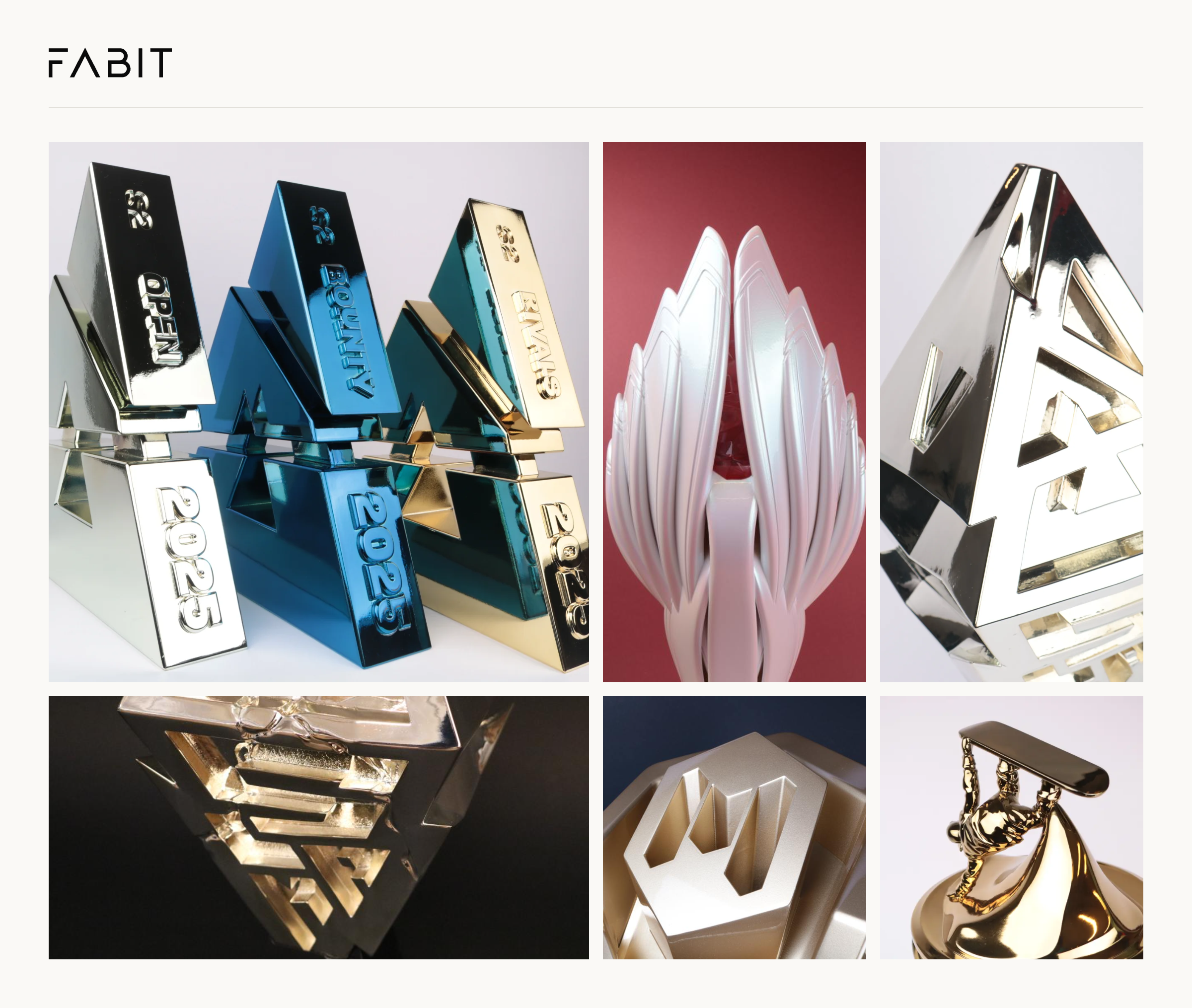
The design of the object matters more than most organisations expect. A peer award should feel distinct from a manager’s award and distinct from an anniversary gift. It should carry a sense of the culture that produced it. Some companies choose a recurring form that becomes instantly recognisable inside the business, so that a shelf lined with them tells a story of contribution over time.
We often advise clients to think of a peer recognition piece as a small monument to a specific act. That framing changes the brief. Instead of asking for a trophy, you begin asking what the object should say and how it should feel in the hand. If you want to see finished examples across industries, our case studies show how different companies have translated their values into physical form.
Peer recognition at scale
For larger organisations, the challenge is keeping quality high as volume grows. A programme that hands out hundreds of awards a year still needs each one to feel considered. This is a manufacturing and logistics question as much as a design one. Our production model is built for exactly this, with worldwide delivery and a twenty four hour response time so that recognition never stalls because of geography or a slow supplier. If you prefer to browse ready to adapt options, the recognition trophies shop is a practical starting point.
Common mistakes to avoid
The two failures we see most often are inconsistency and genericness. Inconsistency erodes trust, because a programme that appears and disappears teaches people it does not matter. Genericness undermines the emotional payload, because a mass produced plaque with a swapped nameplate signals that the recognition was an afterthought. The fix for both is the same. Commit to a rhythm, and invest in an object that is worth keeping.
Frequently asked questions
How is peer-to-peer recognition different from a values award? A values award is usually given by leadership against a defined company value. Peer recognition comes horizontally from colleagues and celebrates a broader range of everyday contributions.
Should every peer nomination result in a physical award? No. Most programmes use lightweight digital recognition for frequent moments and reserve a designed physical award for standout contributions, which keeps the object special.
Can we design a peer award that matches our brand? Yes. Every piece we produce is built to your specification, from material and finish to form and engraving. You can start a concept through our design tool.
How quickly can awards be produced and shipped? We respond within twenty four hours and ship worldwide, which is why we are trusted for high volume programmes such as a President’s Club run of two hundred and sixty pieces.
Related terms