An in-game leader, often abbreviated as IGL, is the player who directs a team’s strategy and decision making during live play, calling tactics, coordinating positioning, and making split-second decisions under pressure. The role is part strategist and part conductor, and it frequently decides matches even when the IGL’s own statistics look modest.
For anyone building a recognition programme, the in-game leader poses an interesting question. This is a player whose contribution rarely shows up on a scoreboard, yet whose influence is decisive. A thoughtful awards programme finds ways to honour that kind of value, not just raw output, and the physical trophy is one of the most meaningful ways to do it.
What the in-game leader actually does
The IGL owns the live decision layer of a match. While a coach prepares strategy between games, the in-game leader executes and adapts it in real time. That includes calling engagements, managing resources such as economy or map objectives, reading the opponent, and keeping the team composed during high-pressure rounds. In many titles the IGL sacrifices personal performance to enable teammates, which is precisely why their impact is easy to undervalue in numbers alone.
Understanding this role changes how you think about recognition. If awards only follow visible statistics, the player most responsible for a win can be the one least celebrated. A well-designed programme corrects that imbalance.
Why the IGL deserves dedicated recognition
Leadership on the server is a distinct skill, and honouring it separately sends a clear message about what an organisation or league values. A leadership award, a captain’s piece, or a role-specific detail on a team trophy all acknowledge that the person calling the shots carried a burden the scoreboard cannot show. This is where recognition becomes a statement of culture rather than a formality.
Designing an award that signals leadership
How do you make a trophy read as a leadership honour rather than a generic MVP piece? Through deliberate design choices. A captain’s award can carry a distinct silhouette, a role designation engraved alongside the handle, or a material accent that sets it apart from teammate pieces while still belonging to the same family. At Fabit we work through these signals during the brief so the finished object communicates exactly what it is meant to. This design conversation is central to our esports trophies service.
Engraving role and identity together
An in-game leader’s award often pairs the player’s handle with their role, and sometimes with a short achievement line. Accuracy here is non-negotiable, because handles carry specific capitalisation and characters. We treat this data carefully and confirm it before engraving, so the finished piece honours the player without error. For international rosters, that includes correct diacritics and formatting.
The IGL within a full recognition family
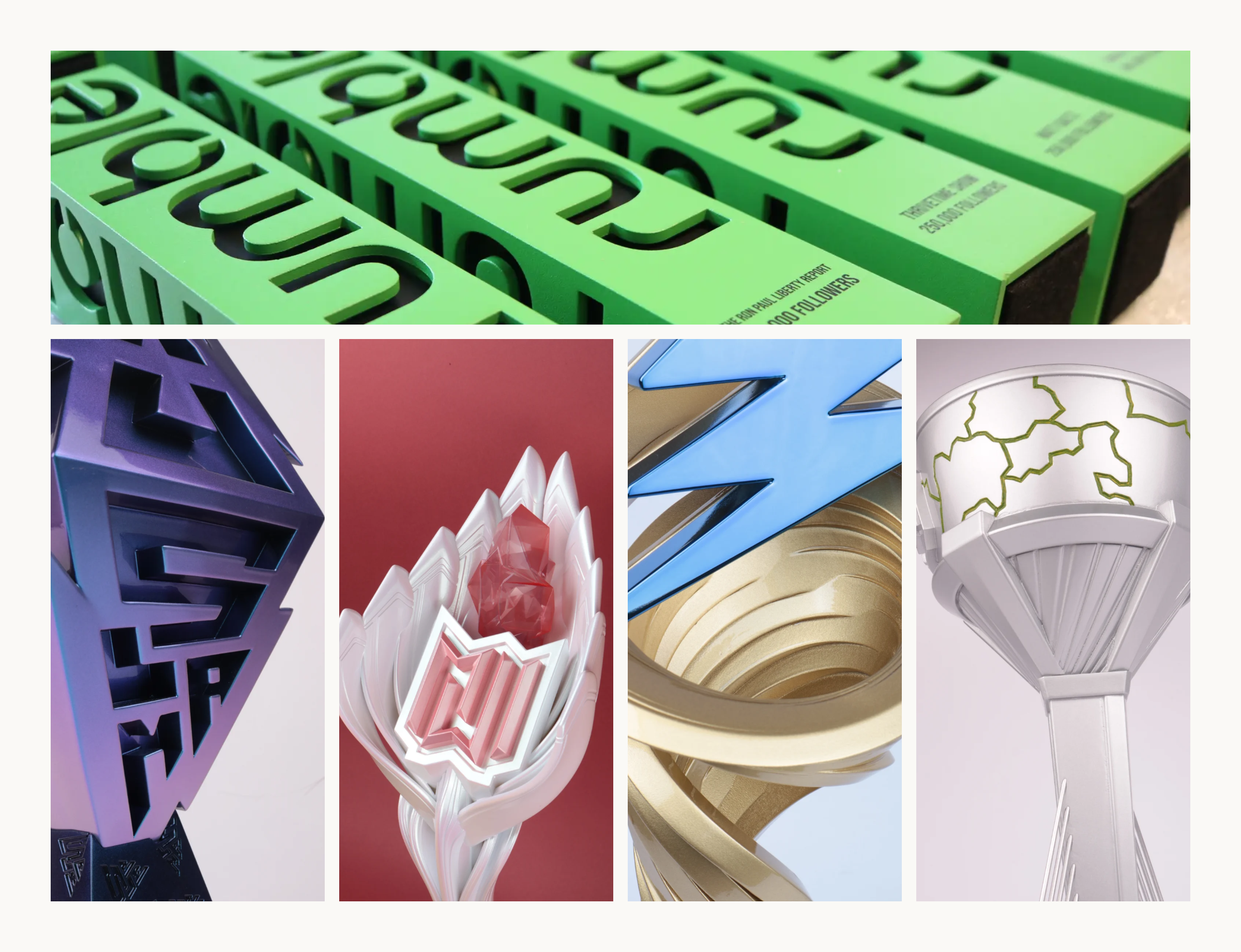
A leadership award works best as part of a coherent programme rather than a lone gesture. When the champion trophy, the individual player pieces, and the captain’s award all share a design DNA, the leadership piece reads as a meaningful distinction within a family rather than an odd exception. Planning the family together keeps everything consistent and usually reduces cost.
- Team championship piece: the flagship the whole roster lifts together.
- Player awards: personalised pieces for each roster member.
- Leadership award: a distinct piece or detail recognising the in-game leader.
- Role engraving: consistent formatting of handles and positions across the set.
- Milestone honours: pieces marking seasons captained or titles won under leadership.
The captain and the main-stage moment
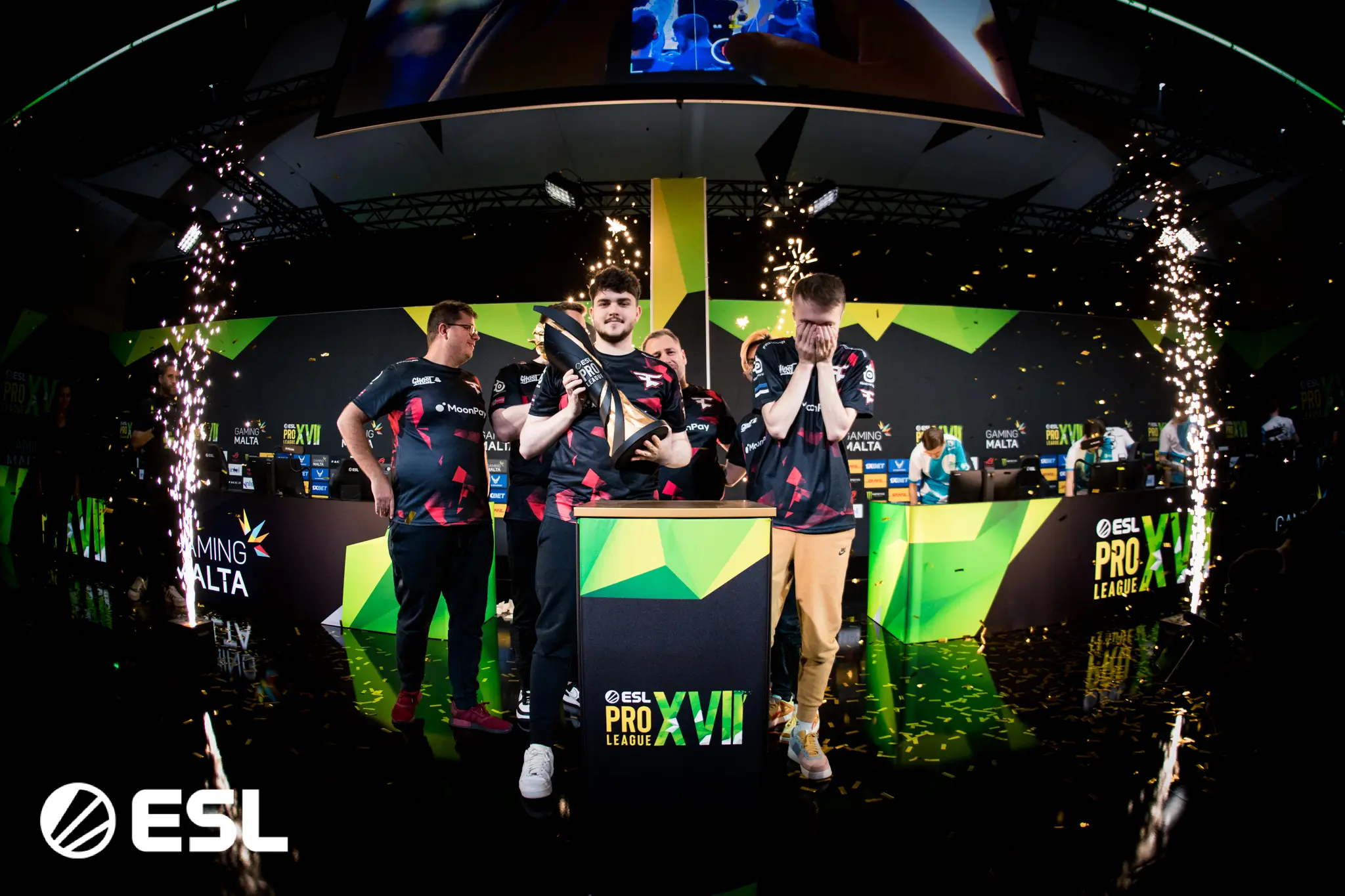
It is often the in-game leader who lifts the trophy first on the main stage, as the on-server voice of the team. That places a practical demand on the piece. It has to look commanding on camera and be liftable in a single celebratory motion. Oversized presentation trophies are built for exactly this moment, and our XL esports trophies balance visual mass against liftable weight so the captain’s lift lands as intended.
Ordering and turnaround for leadership awards
Whether you need a single captain’s piece or a full leadership series across several teams, Fabit produces from Antwerp, ships worldwide, and commits to a 24 hour response window. That responsiveness matters when a leadership honour is added late to a programme or when role designations need last-minute confirmation. You can open a brief for a leadership award through our design portal.
Frequently asked questions
What does an in-game leader do that a coach does not? A coach prepares strategy between games, while the in-game leader executes and adapts it live during play, making real-time calls under pressure.
Why give the in-game leader a separate award? Because their impact often does not appear in scoreboard statistics, a dedicated award recognises leadership and decision making that a standard MVP piece might overlook.
How can a trophy visually signal leadership? Through a distinct silhouette, a role designation engraved with the handle, or a material accent that sets the piece apart while keeping it within the team’s design family.
Can a leadership award match the rest of a team’s pieces? Yes. Fabit designs the champion trophy, player awards, and leadership piece as one family so they share a consistent design language.
The in-game leader is often the reason a trophy gets lifted at all, and a considered award makes that contribution visible. To design a leadership piece that fits your recognition family, start on our esports and gaming page.
Related terms