A franchise league is a closed, invitation-based competitive structure in which a fixed set of organisations buy or are granted permanent slots, removing the promotion and relegation that defines open circuits. Because the teams are locked in for the long term, the league behaves like a stable business ecosystem, and its trophies become recurring brand assets rather than one-off props.
For anyone commissioning silverware, this distinction matters more than it first appears. When you design an award for a franchise league, you are not designing for a single broadcast. You are designing an object that will reappear season after season, sit in the same permanent partners’ cabinets, and carry a visual identity that has to survive rebrands, sponsor rotations, and years of camera time. That is a fundamentally different brief from a knockout tournament, and it rewards a manufacturer who thinks in decades rather than deadlines.
What separates a franchise league from an open circuit
In an open circuit, teams rise and fall through qualifiers, and the roster of participants can change dramatically from one split to the next. A franchise league does the opposite. Ownership groups commit capital, sign multi-year agreements, and in return receive revenue sharing, stable scheduling, and a protected competitive tier. Riot’s franchised regional leagues and the franchised eras of several publisher-run circuits are the clearest examples of this model in action.
The commercial logic is straightforward. Predictable participation lets broadcasters, sponsors, and venues plan far ahead. It also lets the trophy programme mature. When the same organisations return every season, the league can build ritual around its silverware, and the physical award becomes shorthand for the entire competition.
Why the franchise model changes the trophy brief
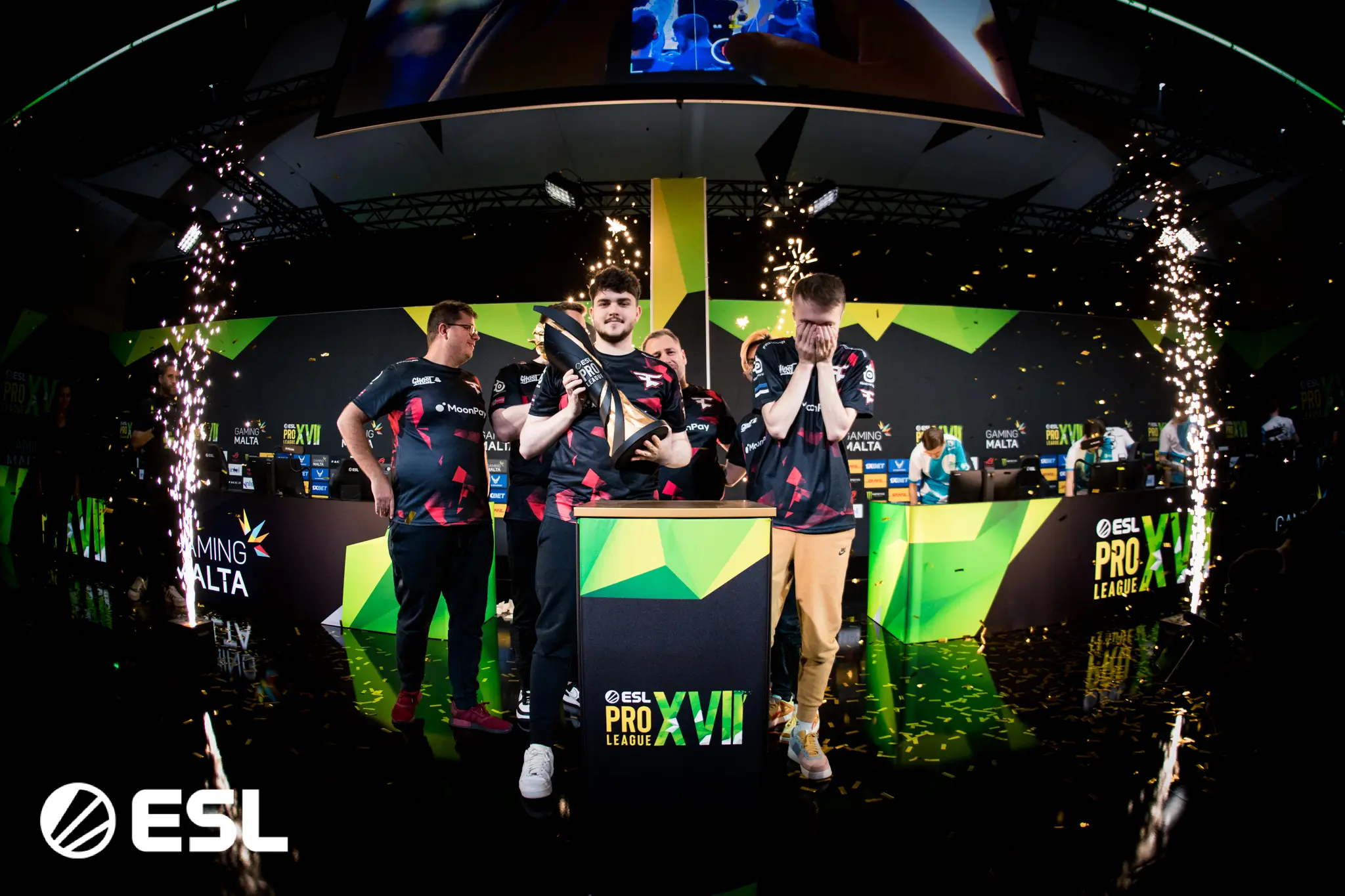
An open tournament trophy can afford to be spectacular and disposable. A franchise league trophy cannot. It has to age gracefully, photograph consistently across many finals, and hold up to repeated handling by players who lift it above their heads on confetti-soaked stages. That pushes the specification toward premium materials, serious structural engineering, and finishes that resist scratching and yellowing.
There is also a branding consideration. Because the league identity is permanent, the trophy usually anchors the visual language of the whole property. Every colourway, every engraved surface, and every sponsor placement has to reconcile with a brand book that is meant to outlast individual seasons.
Designing for permanence, not novelty
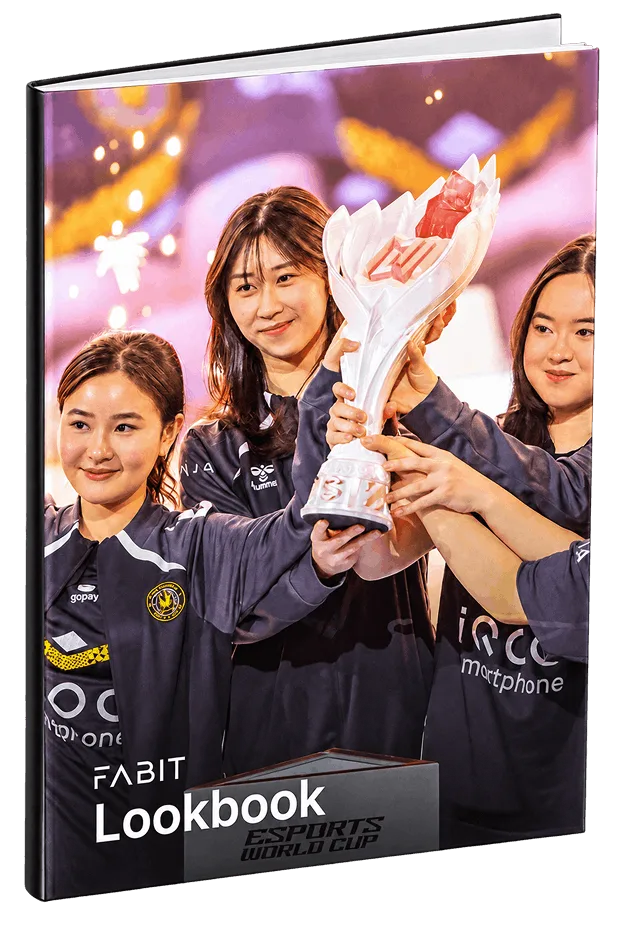
Permanence is a discipline. At Fabit we treat a franchise league award as a system rather than a single object. That means agreeing a master design that can be reissued faithfully, documenting every tolerance and finish, and archiving tooling so a trophy produced three seasons from now matches the original to the eye. Clients who commission through our esports trophies service receive that continuity as standard, because the same records that govern the first production run govern every one after it.
Permanence also affects material choice. Anodised aluminium, solid metals, optically clear resins, and machined components all behave differently over years of display. We steer franchise clients toward substrates that hold colour and edge definition, and away from anything that looks impressive on day one but degrades under studio lighting.
Scale, weight, and the main-stage moment
Franchise finals are broadcast spectacles, and a trophy that reads well at arena scale is not the same as one that reads well on a shelf. Oversized presentation pieces have become a signature of the top leagues, which is why our XL esports trophies exist as a dedicated category. Getting the balance right between visual mass and liftable weight is an engineering problem, and it is one of the first conversations we have with a league.
Sponsors, tiers, and modular recognition

Franchise ecosystems rarely stop at a single champion’s cup. They generate season MVPs, all-pro selections, most improved awards, and partner recognition pieces. A coherent programme treats these as a family, sharing a design DNA while signalling hierarchy through size, material, and detail. Designing that family up front is far cheaper and more consistent than commissioning each piece in isolation.
- Champion award: the flagship, engineered for main-stage lifting and long-term display.
- Individual honours: MVP and all-pro pieces that echo the champion award at a personal scale.
- Milestone markers: pieces recognising seasons played, titles won, or records set within the ecosystem.
- Partner recognition: awards that thank sponsors and venues while respecting the league brand.
- Legacy editions: anniversary or retirement pieces that celebrate the ecosystem’s history.
Logistics for a global, permanent property
Franchise leagues operate across regions and time zones, and their production partners have to keep pace. Fabit ships worldwide and commits to a 24 hour response window, which matters when a season calendar leaves no slack. From our Antwerp studio we coordinate multi-piece programmes, staged deliveries, and the reissues that a permanent ecosystem inevitably needs. You can start scoping a full programme through our design portal before a single sample is cut.
Common pitfalls when commissioning for a franchise league
The most frequent mistake is treating the first trophy as a standalone project. Without documented tooling and material specifications, season two becomes a guessing game. The second pitfall is under-specifying weight and balance, which turns the celebratory lift into an awkward moment on camera. The third is ignoring the award family, so individual honours end up looking disconnected from the champion piece. Each of these is avoidable with early planning and a manufacturer who thinks in systems.
Frequently asked questions
How is a franchise league different from a promotion and relegation system? A franchise league has permanent members who cannot be relegated, whereas a promotion and relegation system continually swaps teams between tiers based on results.
Why does the franchise model favour premium trophies? Because the same teams and league identity return every season, the trophy is a recurring brand asset, so it justifies better materials, engineering, and long-term production support.
Can a champion trophy be reproduced identically in future seasons? Yes, when tooling and specifications are archived. Fabit documents every production run so reissues match the original faithfully.
Should a franchise league commission individual awards at the same time? Ideally yes. Designing the champion piece and individual honours together keeps the whole recognition family visually coherent and usually reduces cost.
A franchise league is, in the end, a promise of continuity, and its silverware should make that promise tangible. If your ecosystem is built to last, your trophies should be built to match. Explore how Fabit approaches this on our esports and gaming page.
Related terms