An employee recognition program is a structured system a company uses to acknowledge and reward employees for their contributions, behaviors, and milestones, in order to reinforce the values and results the organization cares about. It can range from informal peer shout-outs to formal, tiered programs with defined criteria and physical awards. The purpose is consistent across all of them: to make people feel seen, to reinforce the behaviors that drive the business, and to build a culture where good work is noticed rather than assumed.
Fabit supports the physical and ceremonial side of these programs. From our Antwerp studio we design and manufacture the custom awards that turn abstract recognition into something tangible, delivering worldwide to companies who want their programs to feel as considered as the work they celebrate.
Why recognition programs exist
People do more of what gets noticed. That single behavioral truth is the foundation of every recognition program. When a company consistently and visibly rewards the right behaviors, it shapes its own culture over time. Recognition also addresses one of the most common and costly workplace problems: employees leaving because they feel undervalued. Study after study links recognition to engagement, and engagement to retention and productivity. A program formalizes recognition so it does not depend on whether an individual manager happens to remember to say thank you.
Crucially, a program creates fairness and consistency. Without structure, recognition tends to favor the loudest or most visible employees. A well-designed program defines criteria, so the quiet high-performer in a back-office role has the same chance of being honored as the extroverted salesperson.
The main types of recognition
Most effective programs blend several forms of recognition rather than relying on a single mechanism.
- Milestone recognition: service awards for tenure anniversaries and retirement.
- Performance recognition: President’s Club, sales incentives, and top-performer awards.
- Spot recognition: immediate acknowledgment of a specific standout action or behavior.
- Peer-to-peer recognition: systems that let colleagues nominate and celebrate each other.
- Values-based recognition: awards tied explicitly to living the company’s stated values.
The strongest cultures layer these together, so an employee might receive spontaneous spot recognition through the year, a formal performance award at an annual event, and a milestone piece at their five year anniversary. Each reinforces the others.
Where physical awards fit
Digital recognition, points platforms, and public shout-outs all have their place, and they scale beautifully for frequent, low-stakes acknowledgment. But for significant moments, a physical award does something no digital badge can. It occupies space in the real world, it lasts, and it carries the psychological weight of an object made deliberately for one person. A trophy on a desk keeps recognizing its owner every single day, long after a Slack message has scrolled out of view.
This is why the milestone and top-tier layers of a program benefit most from custom physical awards. A points balance rewards; a beautifully made custom trophy honors. The distinction matters when the achievement is genuinely significant.
What makes a program actually work
A recognition program succeeds or fails on a few design principles. It must be timely, so recognition arrives close to the achievement rather than months later. It must be specific, so the recipient understands exactly what they are being recognized for. It must be sincere, avoiding the hollow feeling of box-ticking. And it must be consistent, applied fairly across teams and roles. When any of these break down, the program can backfire, breeding cynicism rather than motivation.
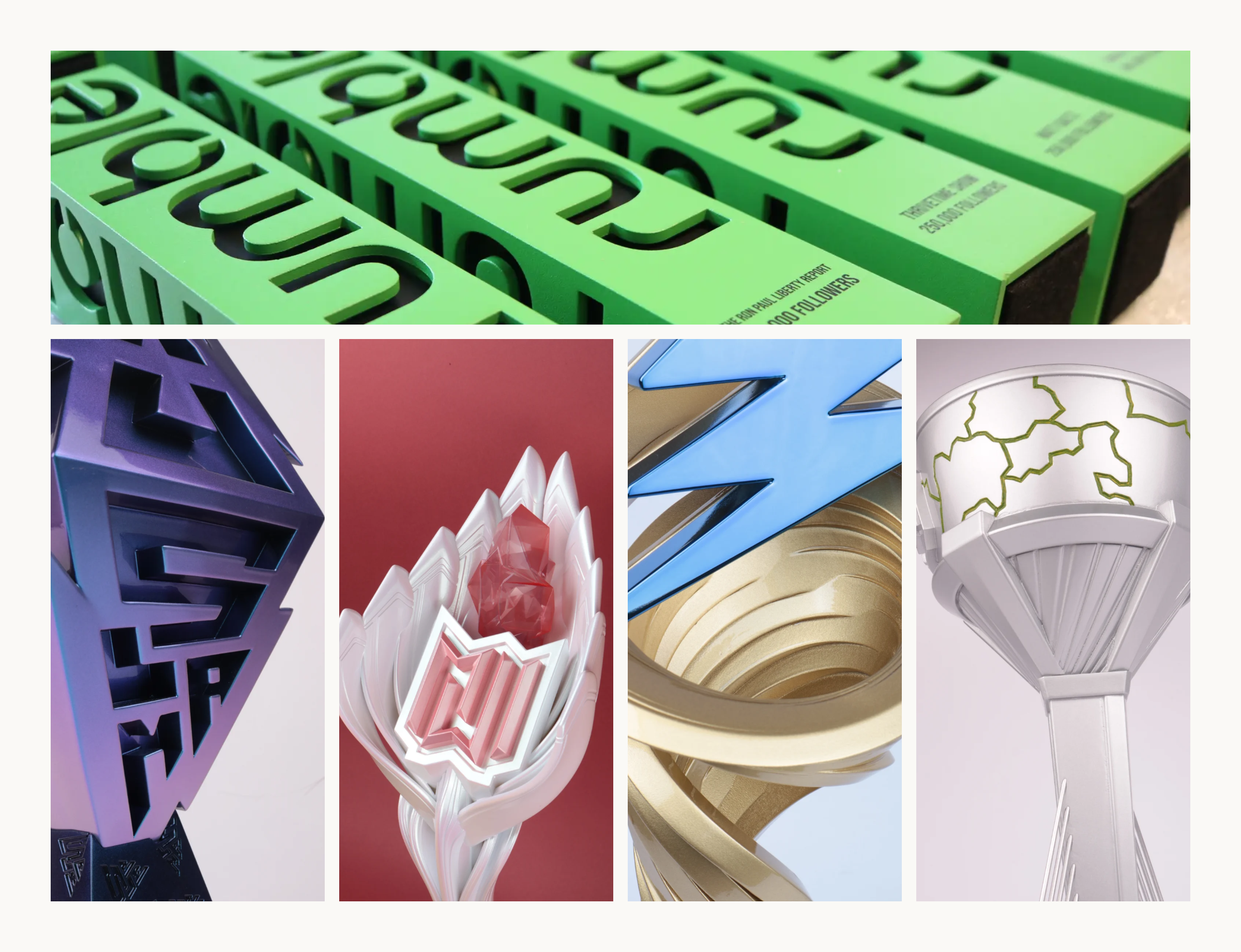
The physical component supports each of these. A specific, personalized award reinforces specificity. A high-quality piece reinforces sincerity. And a coherent family of awards across the program reinforces consistency. Fabit helps companies design these families so that every tier feels intentional, and teams can begin planning through our design platform.
Common pitfalls
The most damaging mistake is inconsistency, where recognition depends on individual manager whim and some teams celebrate lavishly while others never do. The second is generic execution, where awards feel like cheap afterthoughts that undermine the sentiment. The third is over-frequency at the top tier, which erodes the scarcity that makes premier awards meaningful. The fourth is neglecting the presentation moment, handing over an award without the words and audience that give it emotional weight. Each of these can turn a well-intentioned program into a source of quiet resentment.
Building recognition that reflects your brand
A recognition program is also an expression of company identity. The awards employees receive say something about how the organization sees quality, care, and its own people. A company that hands out flimsy, generic pieces communicates a different set of values than one whose awards are considered and premium. This is why we approach recognition as an advisory partnership, helping companies align the look, materials, and tone of their awards with their brand and culture. You can see how this plays out across industries in our case studies.
The most successful programs also evolve. As a company grows, its recognition needs change, new milestones become relevant, and the awards themselves may need to scale in volume or refresh in design. Treating the program as a living system rather than a fixed purchase keeps it aligned with the culture it is meant to reinforce. A recognition partner who understands this, and who can deliver consistent quality as the program grows, becomes a genuine asset. It is why so many companies move from ad hoc, catalog-based recognition to a coherent, designed program that grows alongside them and continues to feel intentional at every stage.
Frequently asked questions
How often should we recognize employees? Frequent, low-stakes recognition works well throughout the year, reserved alongside larger formal awards for milestones and top performance. The key is timeliness and sincerity rather than volume.
Do physical awards really outperform digital recognition? They serve different purposes. Digital recognition scales for frequent acknowledgment; physical awards carry lasting emotional weight for significant moments. The best programs use both.
Can Fabit design awards for an entire program? Yes. We design coherent families of awards across recognition tiers, from spot awards to top-performer trophies, all from our Antwerp studio with worldwide delivery.
How quickly can we get started? Reach out through our design platform and we respond within 24 hours to scope your program and timelines.
Related terms