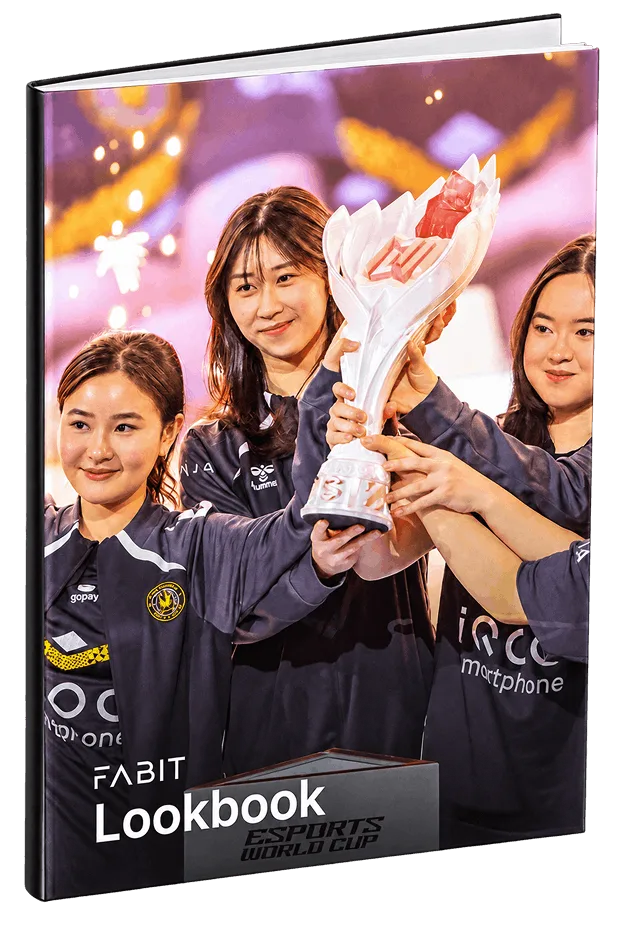

Tendances de conception de trophées à surveiller : qu'est-ce qui façonne la conception de récompenses en 2026
Trophy design trends in 2026 reflect a broader shift in how organizations approach recognition: more intentional, more specific, more connected to the values and visual culture of the awarding body, and more attuned to the media environments in which awards are presented and shared. The awards that attract attention and generate coverage today are those that have something to say beyond « this is a trophy », pieces with genuine design conviction that connect their form and material to the occasion and the audience they serve.
Cet article examine les orientations qui façonnent la conception des trophées et des awards en 2026, des choix de matériaux et des méthodes de fabrication à la philosophie de conception et à l'influence croissante des médias numériques sur la manière dont les objets de reconnaissance sont conçus.
Fabit
Trophées personnalisés, conçus en 3D
Fabit conçoit et produit des trophées entièrement personnalisés pour les marques et les événements mondiaux. Conception 3D, production en interne à Anvers et livraison dans le monde entier, avec une réponse sous 24 heures.
Spécificité de conception sur excellence générique
The most consistent trend in contemporary award design is the rejection of generic « trophy-ness » in favor of designs that are clearly and specifically connected to the occasion or organization they represent. Awards that could belong to any event, any organization, or any year are increasingly out of step with what commissioners and recipients want.
La spécificité dans la conception d'un trophée signifie l'intégration de références visuelles propres à l'occasion de remise, au langage visuel du sport, à l'identité géographique de l'événement, au récit d'une saison ou d'une réalisation particulière. Plus un trophée communique clairement ce qui est spécifiquement reconnu, plus il est significatif à recevoir et plus il devient mémorable en tant qu'artefact.
Cette tendance est en partie alimentée par l'environnement médiatique entourant les grandes récompenses. Lorsqu'un trophée de championnat est dévoilé, il génère une couverture et une discussion proportionnelles à son intérêt et à son caractère distinctif. Un objet générique suscite un intérêt minimal ; un design émanant d'une réflexion claire et d'une conviction visuelle génère une attention organique significative qui amplifie la visibilité de l'événement.
Les organisations reconnaissent également que les récompenses génériques reflètent une reconnaissance générique, le message implicite qu'il s'agit d'un processus formel plutôt que d'une véritable appréciation. Les récompenses personnalisées signalent que de la réflexion et de l'investissement ont été consacrés à la reconnaissance, ce qui amplifie l'impact de cette reconnaissance sur les récipiendaires.
Matériaux naturels et signaux de durabilité
Les matériaux naturels et issus de sources durables gagnent du terrain dans la conception des awards, reflétant à la fois les véritables engagements environnementaux des organisations qui les commandent et une évolution esthétique plus large vers des matériaux aux qualités honnêtes et tangibles.
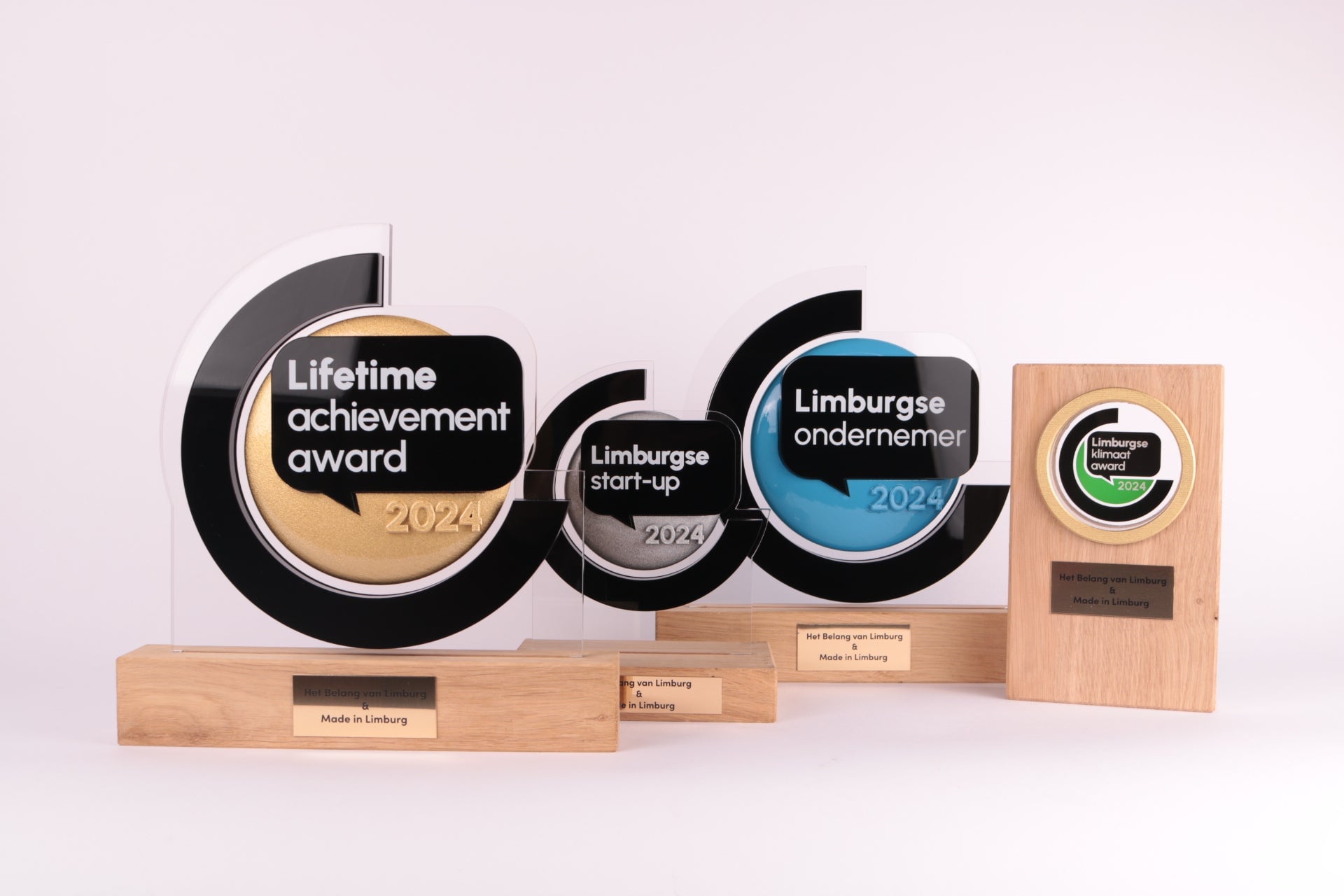
Bois bénéficie de plusieurs tendances convergentes : il est chaleureux, individuel, biodégradable et facilement certifiable selon des normes d'approvisionnement durable. Les designs contemporains de trophées en bois, allant bien au-delà de l'esthétique traditionnelle de la plaque marron, utilisent des bois durs de première qualité dans des formes audacieuses et modernes qui ne ressemblent en rien aux pièces de reconnaissance en bois conventionnelles.
La pierre gagne du terrain en tant que matériau de choix pour sa durabilité exceptionnelle, son caractère naturel distinctif et ses fortes associations à la durabilité. L'ardoise, le calcaire, le marbre et le granit offrent tous une qualité visuelle et une authenticité matérielle qui résonnent auprès des publics fatigués des alternatives synthétiques génériques. Le poids et la permanence de la pierre communiquent efficacement la qualité d'une récompense.
Le liège, le bambou, les matériaux issus de déchets agricoles compressés et les composites biosourcés émergent comme des alternatives véritablement intéressantes pour le design, capables d'atteindre des credentials de durabilité au-delà de ce que le bois seul peut offrir. Ces matériaux nécessitent une pensée créative en matière de design pour être bien utilisés, mais ils sont de plus en plus disponibles auprès de fournisseurs spécialisés.
Le signal de durabilité issu du choix des matériaux naturels est plus efficace lorsqu'il est authentique plutôt que performatif. Les organisations qui font des choix de matériaux naturels parce qu'ils correspondent à de véritables engagements en matière de durabilité produisent des programmes de reconnaissance qui paraissent cohérents. Les organisations qui utilisent des matériaux naturels comme geste marketing tout en ignorant d'autres aspects environnementaux de leur chaîne d'approvisionnement créent des contradictions que les publics avertis remarquent.
Formes géométriques et architecturales audacieuses
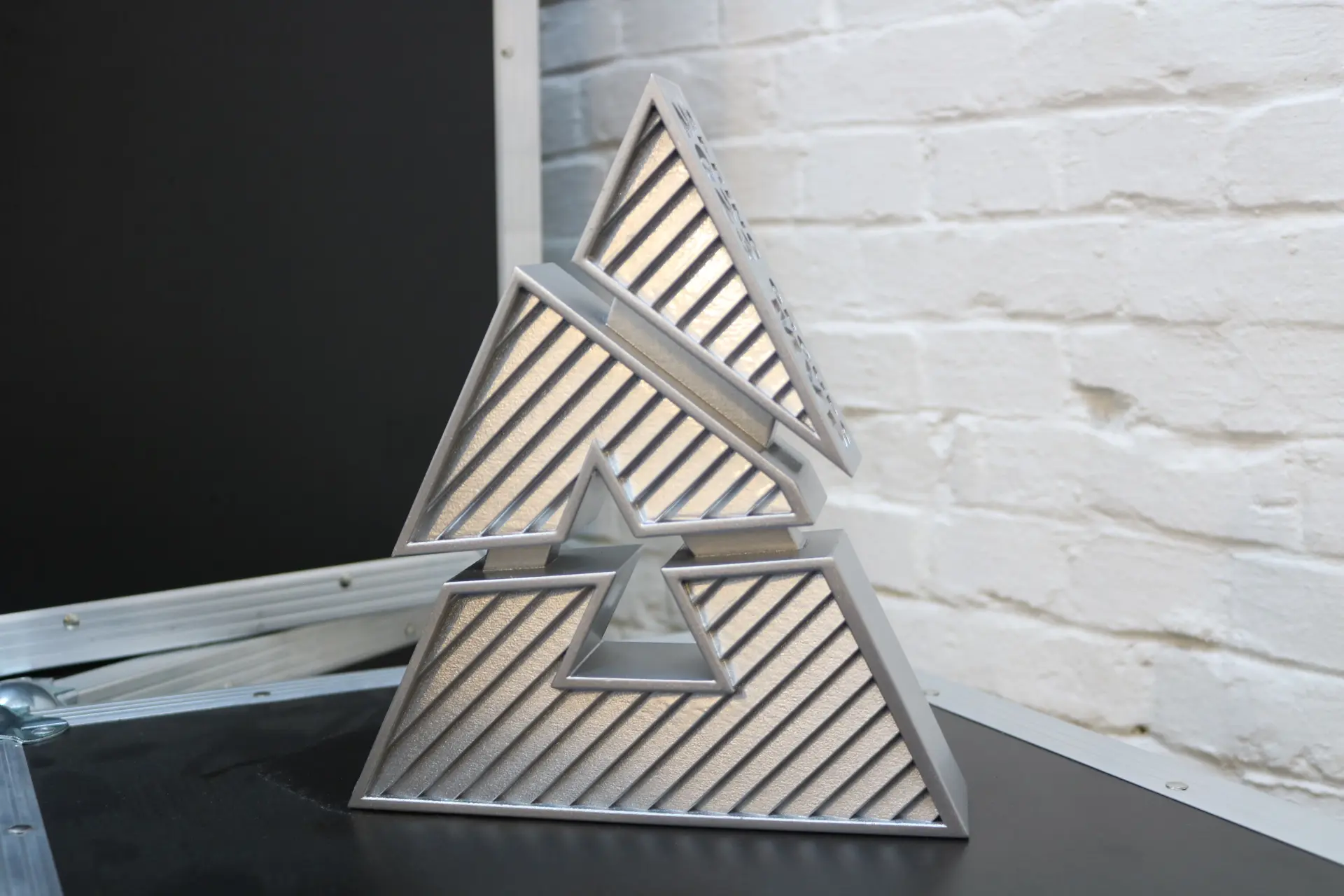
La conception contemporaine de trophées est de plus en plus influencée par le langage visuel de l'architecture et du design de produits plutôt que par les conventions traditionnelles de fabrication de trophées. La géométrie épurée, les proportions fortes et les formes qui font référence à l'esthétique architecturale ou industrielle remplacent les éléments figuratifs et la décoration de surface ornée des trophées conventionnels.
Les formes géométriques se prêtent bien aux procédés de fabrication de précision, tant à l'usinage CNC qu'à l'impression 3D, et créent des déclarations esthétiques épurées et modernes qui se photographient et se diffusent bien. Leur clarté visuelle se lit efficacement à l'échelle de la scène et en photographie, ce qui les rend appropriées pour les environnements médiatiques dans lesquels opèrent les cérémonies de remise d'awards contemporaines.
L'influence des esthétiques de conception scandinave et nord-européenne sur la conception d'awards est notable. Des formes sobres, fonctionnelles et honnêtes quant aux matériaux, qui expriment la qualité par la proportion et la finition plutôt que par l'élaboration, apparaissent de plus en plus dans les contextes d'awards d'entreprise et sectoriels qui favorisaient auparavant des approches plus décoratives.
L'asymétrie et les proportions inattendues sont explorées avec plus d'assurance dans la conception contemporaine de récompenses. Les trophées qui utilisent des répartitions de poids surprenantes, des silhouettes non conventionnelles ou des surprises structurelles créent un intérêt visuel et une distinction sans nécessiter de décoration de surface élaborée. Ces approches exigent plus de savoir-faire en design que les formes symétriques et conventionnelles.
Intégration d'éléments numériques et d'éclairage
L'intégration de composants électroniques, de LED, d'éclairages programmables et d'éléments interactifs dans les trophées physiques est en train de passer du statut de simple nouveauté à celui d'une approche de conception reconnue, en particulier dans les domaines de l'e-sport, de la technologie et du divertissement, où la culture visuelle est orientée vers le numérique.
L'intégration de LED dans les trophées offre des possibilités d'effets visuels dynamiques que les matériaux statiques ne peuvent pas réaliser. Un trophée qui réagit au toucher, qui change de couleur au moment de la présentation, ou qui s'illumine dans la palette de couleurs spécifique de la marque crée un moment médiatique qu'un trophée statique ne peut pas générer. Ces effets sont conçus pour fonctionner autant à l'écran que pour le public présent.
Les éléments d'éclairage programmables permettent différents comportements lumineux selon les contextes : un mode de révélation dramatique pour la cérémonie, un mode ambiant calme pour l'exposition, et un mode couleur spécifique à la marque pour la photographie et la vidéo. Cette adaptabilité contextuelle est une véritable innovation de conception qui témoigne d'une réflexion sophistiquée sur la manière dont le trophée sera utilisé tout au long de sa vie.
Les défis techniques de l'intégration de composants électroniques dans un objet de présentation de qualité sont importants : autonomie de la batterie, étanchéité pour la manipulation et l'affichage, intégration visuelle des composants électroniques dans la forme du trophée, et fiabilité à long terme des éléments électroniques qui doivent fonctionner des années après la cérémonie. Ce sont des problèmes solubles mais qui nécessitent une expertise spécialisée que tous les fabricants de trophées ne possèdent pas.
Personnalisation approfondie
La personnalisation des récompenses évolue de la simple gravure de noms vers une reconnaissance plus approfondie et spécifique de la réussite reconnue. La récompense physique est de plus en plus conçue pour porter un récit plus riche que la combinaison conventionnelle de nom, catégorie et année.
La gravure étendue, gravée au laser ou imprimée à l'intérieur de la récompense plutôt que simplement sur une plaque, permet d'incorporer un texte de reconnaissance plus long. Un paragraphe reconnaissant la réussite spécifique, le record battu, le projet achevé, la qualité démontrée, transforme la récompense en un document personnel ainsi qu'en un objet de reconnaissance.
La personnalisation multi-formats, combinant texte gravé, graphiques imprimés et codes QR renvoyant à des enregistrements numériques, crée une intégration physique-numérique qui étend l'expérience de reconnaissance au-delà de l'objet physique seul. Un code QR sur la surface de la récompense qui renvoie à une vidéo de félicitations de la direction de l'organisation, ou à un enregistrement numérique de la réussite, ajoute une dimension que la surface physique seule ne peut pas porter.
L'impression de données variables, qui permet d'appliquer des graphiques et du texte différents à chaque unité d'une série de production sans coût d'installation supplémentaire, rend possible une personnalisation des trophées par destinataire qui était auparavant irréalisable. Des photographies individuelles, des graphiques spécifiques à la réussite ou des visualisations de jalons de carrière peuvent être intégrés à chaque award d'un programme sans nécessiter de travail de conception séparé pour chaque destinataire.
Miniaturisation et reconnaissance portable
Les objets de reconnaissance se diversifient en termes de forme, avec des versions miniaturisées de distinctions importantes et des formats de reconnaissance portables gagnant en importance aux côtés des trophées et plaques conventionnels.
Des versions miniatures de trophées de championnat prestigieux, des répliques à petite échelle qui respectent l'intégrité du design de l'original, destinées à être posées sur un bureau ou exposées, sont de plus en plus souvent produites pour être distribuées à un public plus large qui ne peut se voir remettre l'original. Ces pièces ont du succès car elles font véritablement référence au trophée original, contrairement à de simples petits trophées génériques sur lesquels on se contente d'apposer le nom du trophée.
Les épingles et badges de reconnaissance, produits en métal et émail de qualité plutôt qu'en plastique bon marché, font leur retour en tant que format de reconnaissance qui porte une véritable distinction. Les épingles en édition limitée pour des réalisations significatives, produites en émail cloisonné de qualité avec des détails métalliques de précision, créent des objets de reconnaissance portables que les récipiendaires apprécient car ils signalent l'appartenance à une communauté de réussite spécifique.
Les objets de reconnaissance conçus pour un affichage proéminent dans des contextes numériques, tels que les badges de profil, les superpositions de crédentiels numériques et les graphiques pour les réseaux sociaux, sont conçus avec le même soin que les récompenses physiques, car pour de nombreux publics, ces objets numériques sont plus visibles dans la vie quotidienne que leurs équivalents physiques.
Transparence et honnêteté des matériaux
Un changement philosophique vers l'honnêteté matérielle est visible dans la conception de récompenses contemporaines : une préférence pour les matériaux qui ressemblent à ce qu'ils sont plutôt que des matériaux qui simulent des alternatives plus prestigieuses. L'acrylique ressemble à de l'acrylique, le bois montre son grain, la pierre montre sa texture.
Ce changement reflète une valeur de plus en plus importante d'authenticité culturelle dans toutes les disciplines du design. L'authenticité des matériaux, en utilisant chacun pour ce à quoi il excelle vraiment plutôt que comme substitut à quelque chose de plus cher, crée une déclaration de qualité différente de l'ambition de simuler des matériaux précieux par le placage et le traitement de surface.
Les matériaux transparents qui révèlent leur construction, montrant des structures internes, des couches laminées ou des éléments encastrés à travers des corps transparents, créent une complexité visuelle par l'honnêteté du matériau plutôt que par la décoration de surface. Un trophée en acrylique ou en résine transparent qui montre sa construction est plus intéressant que celui qui la cache.
Cette tendance n'élimine pas les récompenses traditionnelles en métal plaqué ou en cristal, celles-ci restant tout à fait appropriées dans de nombreux contextes, mais elle crée un espace pour un type de conception différent qui convient particulièrement aux cultures organisationnelles contemporaines qui valorisent la transparence et l'authenticité comme valeurs professionnelles.
Échelle comme affirmation de design
La taille des trophées est réexaminée en tant que variable de conception avec un potentiel expressif plutôt qu'un simple paramètre pratique. Des objets de reconnaissance très grands et très petits sont utilisés délibérément pour créer des impressions spécifiques.
Les trophées de grande taille, conçus pour imposer le respect sur scène, dans les halls d'accueil ou dans les espaces communs, dégagent une autorité visuelle par leur simple présence. Un trophée de très grande taille montre que la réussite qu'il symbolise revêt une importance réelle. Sa taille fait elle-même partie intégrante du message.
De très petits objets de reconnaissance, finement ouvragés, portent une signification différente : ils communiquent la.
Cette exploration de l'échelle aux deux extrémités du spectre crée un paysage de reconnaissance plus varié. Alors que la plupart des trophées occupaient auparavant une gamme de tailles relativement étroite, appropriée pour l'affichage sur un bureau ou une étagère, le design contemporain des récompenses accepte des pièces nettement plus grandes et nettement plus petites qui remplissent différentes fonctions d'affichage et de reconnaissance.
Conception culturellement spécifique et géographiquement ancrée
Les conceptions d'awards qui font référence au contexte culturel ou géographique spécifique d'un événement sont de plus en plus reconnues comme plus puissantes que celles qui visent une esthétique internationale neutre. Un trophée produit pour un événement dans un pays ou une ville spécifique, qui intègre des références authentiques à cet endroit, crée un lien plus significatif entre l'award et son occasion.
L'intégration de matériaux locaux, la pierre provenant d'une carrière régionale, le bois d'espèces indigènes, le métal avec des références artisanales aux traditions artisanales locales, ancrent un trophée dans son lieu d'une manière que les matériaux génériques ne peuvent pas. Ces choix nécessitent plus d'efforts d'approvisionnement mais créent une spécificité matérielle véritablement distinctive.
L'iconographie culturelle et les références visuelles issues du patrimoine de l'organisme décernant l'award ou du lieu de l'événement créent des éléments de conception qui résonnent profondément avec les publics qui comprennent ces références. Les meilleures conceptions culturellement spécifiques fonctionnent à deux niveaux : elles sont visuellement intéressantes pour tout le monde, et elles portent un sens supplémentaire pour ceux qui ont le contexte culturel pour apprécier les références.
Cette tendance est visible dans les grands trophées sportifs internationaux, où les influences du pays hôte sont intégrées dans les pièces de championnat de manière à marquer l'édition spécifique tout en conservant l'identité du trophée. Elle est également visible dans les programmes d'awards régionaux où le langage de conception de la culture locale s'exprime dans le caractère physique de l'objet de reconnaissance.
La fabrication additive comme outil de conception grand public
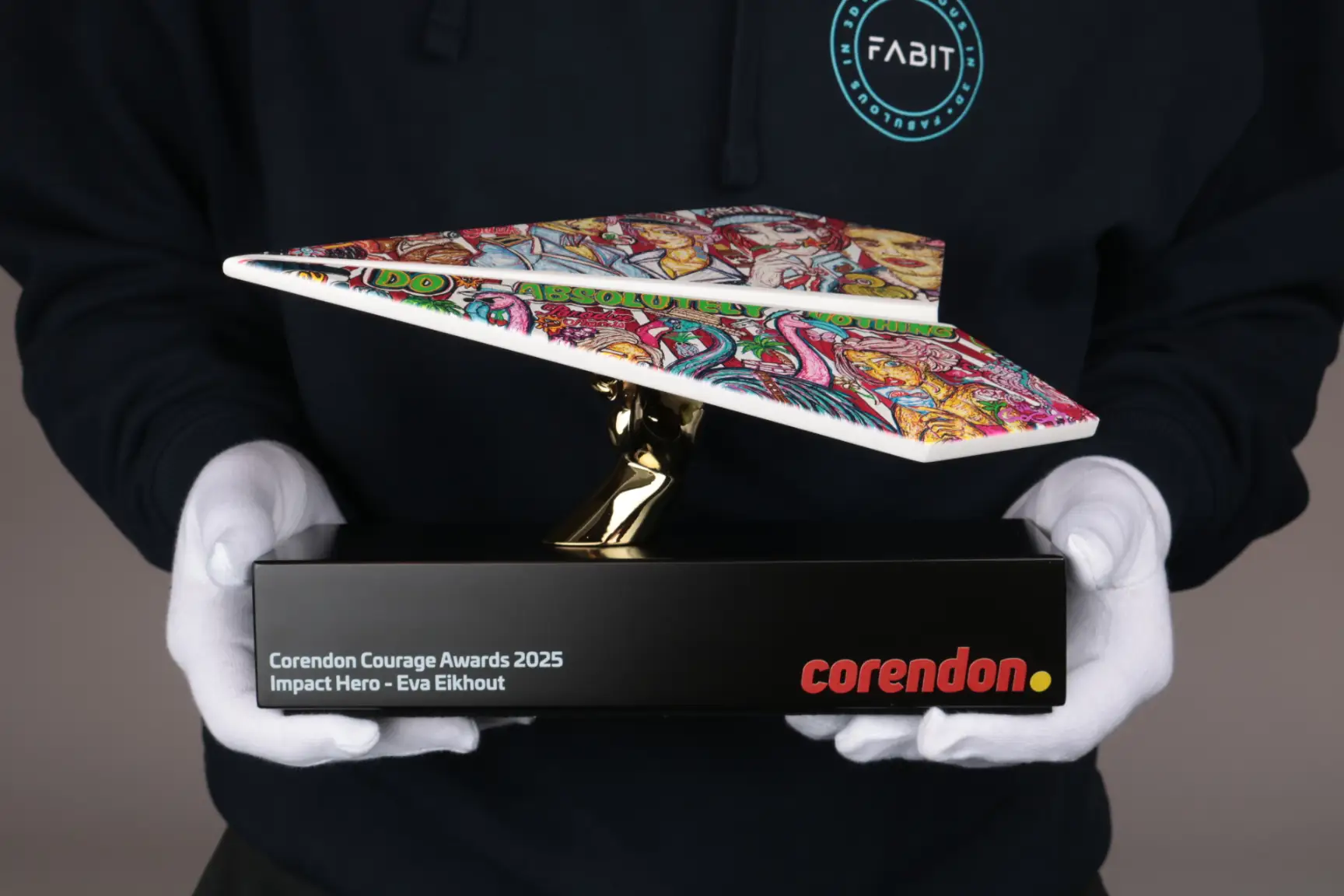
L'impression 3D et la fabrication additive sont passées d'approches expérimentales à des outils de production courants dans l'industrie des récompenses et des trophées. Cette transition remodèle ce qui est concevable, ce qui est réalisable et à quoi ressemble le processus de conception.
Les logiciels de conception qui permettent la modélisation 3D complexe avec une intégration directe aux flux d'impression rendent la fabrication additive accessible à un plus grand nombre de concepteurs. La barrière technique entre une idée de conception complexe et la production d'un prototype physique a été considérablement réduite, ce qui permet davantage d'expérimentation dans la conception et des itérations plus rapides.
Post-traitement et finition de qualité pour Trophées imprimés en 3D continue de s'améliorer à mesure que davantage de fabricants développent des capacités de finition spécialisées. Le placage de métaux, les procédés avancés de peinture et de revêtements, ainsi que les techniques d'assemblage de précision appliquées aux pièces imprimées en 3D produisent des résultats de plus en plus indiscernables des équivalents fabriqués de manière conventionnelle.
L'économie de la fabrication additive continue d'évoluer de manière à élargir ses applications viables. À mesure que les vitesses d'impression augmentent et que les coûts des matériaux diminuent, l'impression 3D devient compétitive par rapport à la fabrication conventionnelle sur un plus large éventail de quantités et de niveaux de complexité. La tendance indique clairement une adoption accrue de la fabrication additive dans la production d'awards.
L'évolution de la relation entre la reconnaissance physique et numérique
Les trophées physiques et la reconnaissance numérique sont de plus en plus conçus comme des éléments complémentaires d'un système de reconnaissance unifié plutôt que comme des alternatives. Les programmes de reconnaissance les plus sophistiqués en 2026 déploient à la fois la reconnaissance physique et numérique avec une compréhension délibérée de ce que chacun fait que l'autre ne peut pas.
Les trophées physiques offrent une permanence, une qualité matérielle, une expérience tactile et une présence d'affichage que les formats numériques ne peuvent reproduire. Une récompense physique posée sur un bureau crée une présence de reconnaissance continue et ambiante que les badges et certificats numériques n'offrent pas. L'objet physique est irremplaçable pour la dimension personnelle et durable de la reconnaissance.
La reconnaissance numérique offre immédiateté, partageabilité, portée et la capacité d'exister dans les environnements numériques où les publics passent de plus en plus leur vie professionnelle et sociale. Une récompense numérique qui apparaît sur un profil LinkedIn, est vérifiable par une preuve basée sur la blockchain, ou génère de l'engagement sur les réseaux sociaux étend la visibilité de la reconnaissance d'une manière que les récompenses physiques ne peuvent pas.
Le défi de conception consiste à créer des systèmes de reconnaissance où les éléments physiques et numériques sont cohérents et se renforcent mutuellement plutôt que de simplement coexister. Les trophées physiques qui renvoient à de riches enregistrements numériques, les certificats numériques qui ont un objet physique correspondant, et les moments de reconnaissance conçus pour la présence physique comme.
Un design qui parle à cet instant
La conception de trophées en 2026 est plus réfléchie, plus spécifique et plus adaptée aux contextes dans lesquels les récompenses sont vécues que lors des décennies précédentes. Les tendances décrites dans cet article convergent vers des objets de reconnaissance qui méritent leur place par une véritable conviction de conception, une intégrité matérielle et un lien clair avec les occasions et les valeurs qu'ils sont censés célébrer.
Les organisations qui commandent des awards avec ce niveau d'intentionnalité produisent systématiquement des pièces que les récipiendaires chérissent, que les publics remarquent et qui contribuent de manière significative aux programmes de reconnaissance qu'elles sont conçues pour servir.