
Engraving is where a trophy becomes personal. It is also where a lot of otherwise beautiful awards quietly fall apart. The name is spelled right, the logo is there, but the method was wrong for the material, and the finish looks flat, cloudy or cheap. The engraving method is not a technical afterthought. It shapes the entire result.
The short answer: Trophies are engraved using several methods, chiefly laser engraving, sub-surface laser engraving, sandblasting, mechanical or rotary engraving, and CNC. Each interacts differently with glass, crystal, metal and wood. The right method depends on the material, the level of detail and whether you want a crisp modern line or deep tactile relief.
Laser engraving, the modern standard
Laser engraving uses a focused beam to mark the surface of a material with extreme precision. On metal and wood it produces clean, permanent, high-detail results, ideal for small text, fine logos and intricate patterns. It is fast, repeatable and consistent across a run, which matters when you are producing a series of matching awards.
On glass and crystal, surface laser engraving creates a frosted, etched effect. It is precise and elegant, though it reads as a matte mark rather than a deep cut. For most corporate and event awards, laser is the workhorse method for good reason.
Fabit
Custom awards, designed and built in house
Fabit designs and produces custom awards for brands, ceremonies and programs. 3D design, in house production and worldwide delivery, with a response within 24 hours.
Sub-surface engraving, detail trapped in light
Sub-surface laser engraving is the premium option for crystal. Here the laser focuses inside the material and creates tiny fracture points beneath the surface, forming an image or even a full 3D model suspended within the crystal. The surface stays perfectly smooth while the design floats inside.
This is where our in-house 3D capability becomes a genuine differentiator. Because we model in 3D from the start, we can place a three-dimensional logo, car, trophy icon or portrait inside a crystal block with real depth. Under stage lighting the effect is striking, and it is very hard for a generic supplier to match.
Sandblasting, depth you can feel
Sandblasting propels abrasive material against the surface, cutting a deep, tactile impression. On glass and crystal it produces a bold, frosted mark with real physical depth, so the engraving catches light differently and feels substantial under the fingertips.
It is the method to choose when you want a large logo or crest to read from across a room, or when tactile weight matters as much as visual clarity. It is less suited to hairline detail, so we often pair it with laser work for the fine elements.
Mechanical and CNC engraving, for metal and relief
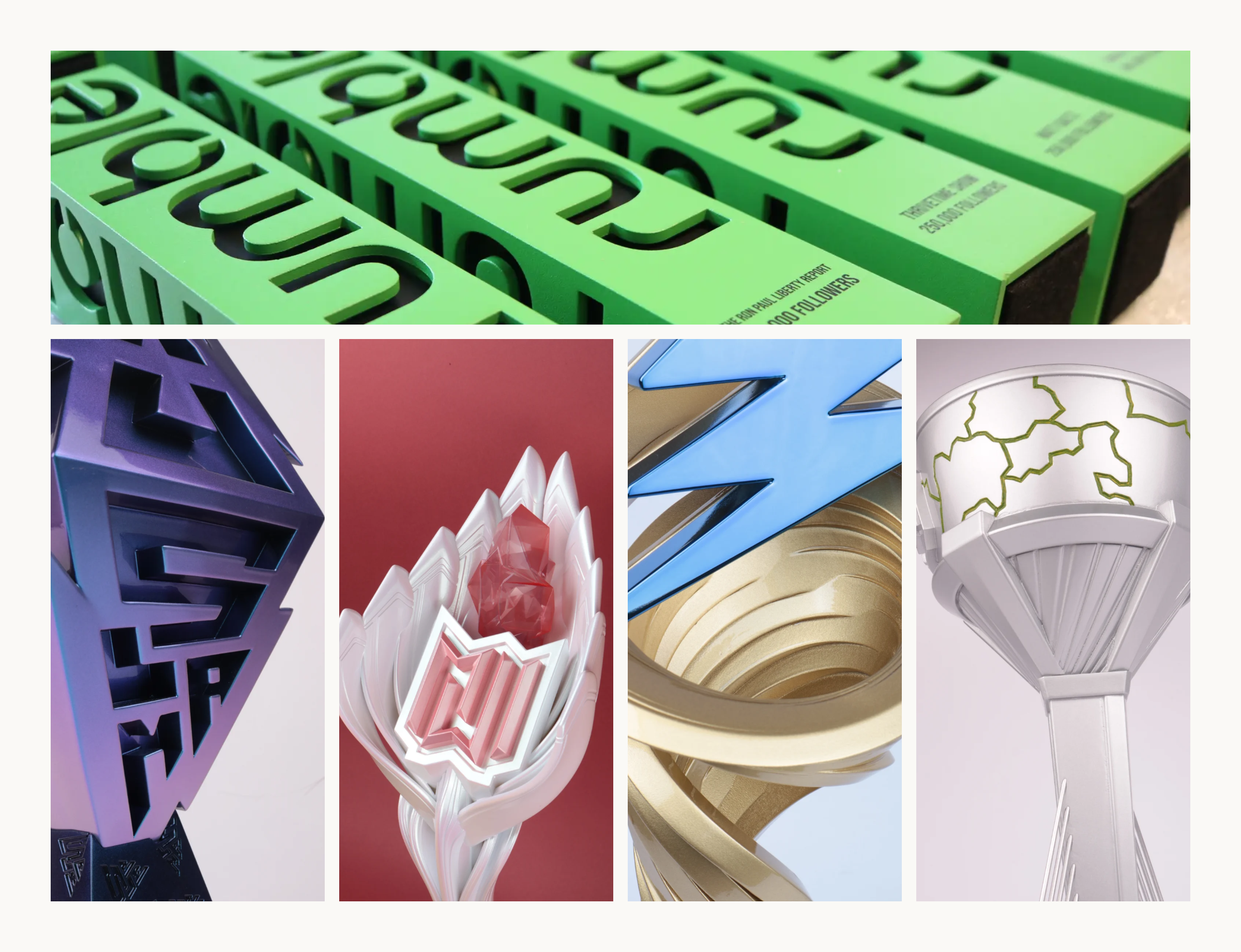
Rotary or mechanical engraving uses a rotating cutter to carve into metal, producing a crisp incised line with a traditional, heirloom character. CNC machining takes this further, milling deep relief, contours and three-dimensional forms into metal and other solids.
These methods suit medals, plaques and metal components where you want genuine depth and a hand-finished feel. Combined with our craft finishing, they give a piece the tactile quality that separates a considered award from a stamped one. You can see how we combine techniques across our materials.
Matching the method to the material
The single most common mistake is applying one method to every material. Here is how we think about it:
- Crystal centrepiece: sub-surface engraving for a 3D internal feature, plus surface laser for names and text.
- Glass award: surface laser for crisp modern detail, or sandblasting for bold tactile depth.
- Metal trophy or medal: mechanical or CNC engraving for incised depth, laser for fine logos.
- Wood accents: laser engraving for clean, permanent contrast against the grain.
Why the method changes the perceived value
Two awards can carry the same name and logo yet feel worlds apart. A shallow surface mark on the wrong material looks like an afterthought. A sub-surface 3D feature or a deep sandblasted crest looks engineered and intentional. The recipient may not know the technical difference, but they feel it instantly.
This is why we treat engraving as a design decision, not a production step. Before we cut anything, we decide how each element should be rendered so the finished piece reads as one refined object. Our work for partners in sport, motorsport and entertainment, including the Global Champions Tour and Durbuy GT Tour, lives or dies on that level of detail. See it in our cases.
How we plan engraving in-house
Because everything happens under one roof, we plan engraving alongside the form itself. We model where a logo sits, how light will travel through an engraved area, and how text aligns with the geometry of the piece. Nothing is squeezed in at the end.
That control means we can promise consistency across a full run and precision on a single flagship piece. It is the practical benefit of keeping 3D design and craft together rather than outsourcing the marking to a third party.
Frequently asked questions
What is the most detailed engraving method? Laser engraving offers the finest surface detail, while sub-surface laser lets us place full 3D models inside crystal. For deep tactile relief, sandblasting and CNC lead.
Can you engrave a full-colour logo? Engraving itself is monochrome by nature, but we can combine it with colour printing or infill techniques to reproduce brand colours where the design calls for it.
Will engraving fade over time? No. All these methods physically alter the material, so the mark is permanent and will not wear off with handling or display.
Can you engrave the same design across dozens of awards? Yes. Laser and CNC methods are highly repeatable, so a series stays perfectly consistent from the first piece to the last.
Request a quote
The right engraving method is the difference between an award that looks ordered and one that looks engineered. We design, engrave and finish every piece in-house in Antwerp and deliver worldwide. Tell us what you are creating and we will respond within 24 hours. Request a quote and we will recommend the method that makes your award unforgettable.