Sinteren is een thermisch proces dat poederdeeltjes tot een massieve massa versmelt door ze onder hun smeltpunt te verhitten, zodat de korrels zich verbinden en verdichten zonder volledig vloeibaar te worden, en een kwetsbaar onderdeel op poederbasis verandert in een sterk, samenhangend object. Het is een hoeksteen van de poedermetallurgie en komt voor aan het einde van verschillende 3D-printworkflows, waaronder binder jetting en metaalspuitgieten. Inzicht in sinteren maakt duidelijk waarom sommige additieve processen een ovenstap nodig hebben om bruikbaar te worden en waarom Fabit de voorkeur geeft aan volledig smeltende methoden wanneer het doel een dichte, gedetailleerde, duurzame metalen award is.
Hoe sinteren werkt
Sinteren berust op een principe dat vastestofdiffusie heet. Wanneer een massa poeder wordt verhit tot een hoge temperatuur, dicht bij maar onder het smeltpunt, beginnen de atomen op de contactpunten tussen deeltjes te migreren. Tussen aangrenzende korrels vormen en groeien halzen, de poriën ertussen krimpen en het hele lichaam verdicht geleidelijk en wint aan sterkte. Het poeder wordt nooit volledig vloeibaar, en dat onderscheidt sinteren van het volledige smelten bij SLM of EBM. In de loop van de ovencyclus wordt een los gebonden groen onderdeel een massief stuk met een fractie van zijn oorspronkelijke porositeit.
Omdat materiaal verplaatst en poriën sluiten, krimpen gesinterde onderdelen. Die krimp voorspellen en beheersen is een van de kernvaardigheden van het proces, omdat de uiteindelijke afmetingen ervan afhangen. Ovenatmosfeer, temperatuurprofiel en houdtijd beïnvloeden allemaal de uitkomst, en wie ze beheerst, onderscheidt een goede sinter van een gecompromitteerde.
Waar sinteren voorkomt in additieve workflows
Verschillende 3D-printroutes zijn afhankelijk van sinteren om de uiteindelijke eigenschappen te bereiken. Bij binder jetting is het geprinte groene onderdeel slechts gelijmd poeder, dus moet het worden gesinterd, en vaak geïnfiltreerd, om dicht metaal te worden. Bij metaalspuitgieten, dat zijn metallurgie deelt met bepaalde additieve routes, worden gegoten onderdelen ontbonden en vervolgens gesinterd. Zelfs sommige laserprocessen die lasersinteren heten, smelten poeder samen door gedeeltelijk smelten en diffusie in plaats van volledige vloeibaarheid. In elk geval is sinteren de stap die een kwetsbare voorloper verandert in iets wat u kunt vasthouden, bewerken en tentoonstellen.
Sinteren vergeleken met volledig smelten
Het onderscheid tussen sinteren en volledig smelten staat centraal in ons vak. Volledig smelten, zoals bij SLM, maakt het poeder volledig vloeibaar zodat het in één thermisch moment tot volledig dicht metaal versmelt, zonder aparte ovenstap en met minimale resterende porositeit. Sinteren verbindt deeltjes onder het smeltpunt, wat milder is en workflows zoals binder jetting mogelijk maakt, maar vaak wat resterende porositeit achterlaat en altijd krimp met zich meebrengt die beheerd moet worden. Voor een premium award die massief moet aanvoelen, een spiegelpolijst moet kunnen krijgen en generaties moet meegaan, zijn de dichtheid en het detail van volledig smelten overtuigend. We leggen dit openlijk uit, omdat proces en doel op elkaar afstemmen de kern is van ons advies bij elke opdracht voor een trofee op maat.
Wat sinteren oplevert
- Maakt poederworkflows mogelijk: het verandert gelijmde of gegoten groene onderdelen in massieve objecten.
- Breed materiaalbereik: metalen, keramiek en sommige polymeren kunnen allemaal worden gesinterd.
- Geschikt voor volume: het past bij processen die zijn ontworpen voor grotere productieaantallen.
- Beheerste eigenschappen: zorgvuldige cycli stemmen sterkte en dichtheid af.
- Gevestigde metallurgie: tientallen jaren kennis van poedermetallurgie vormen de basis.
De overwegingen
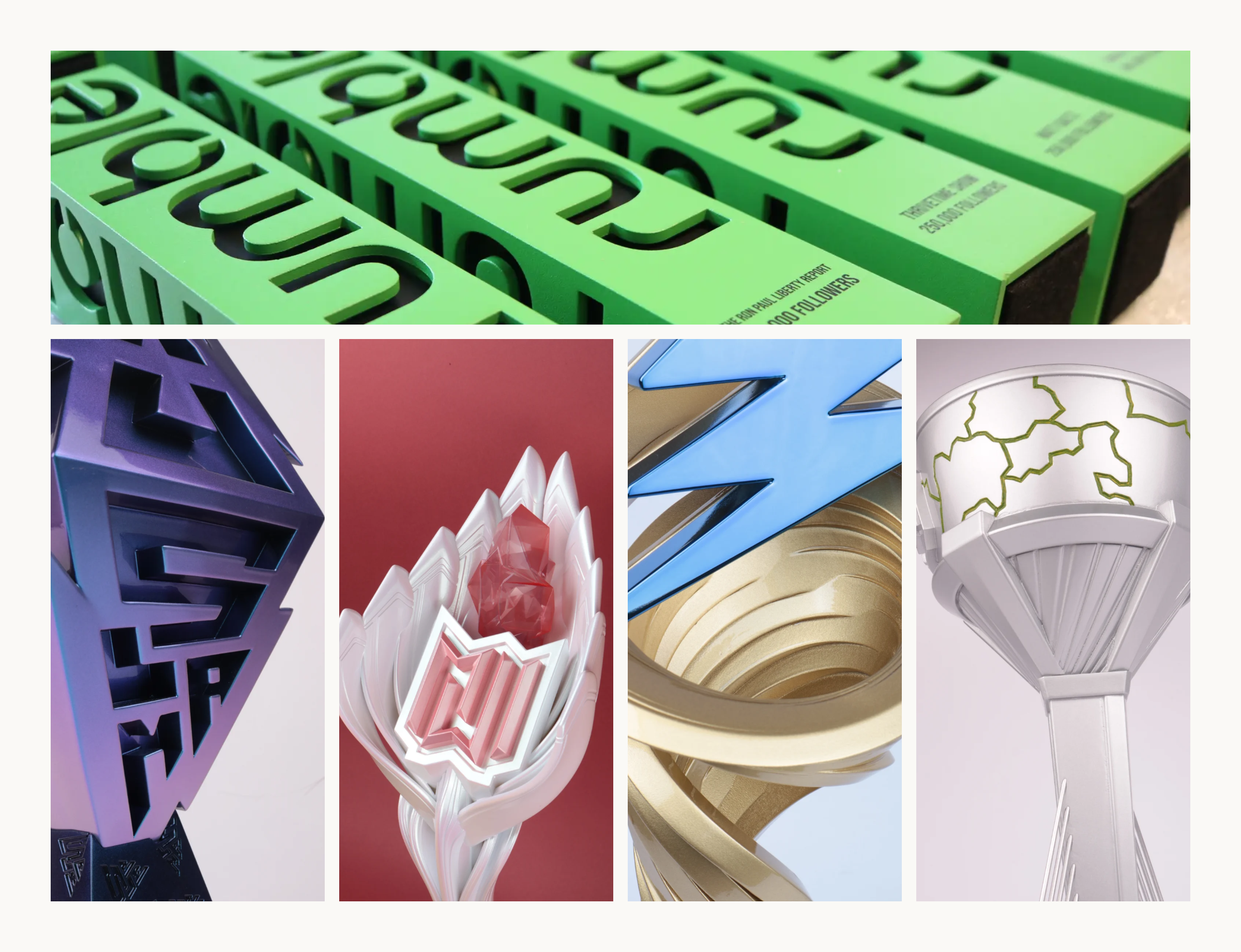
Sinteren vraagt ook respect. Krimp moet nauwkeurig worden voorspeld, anders lopen de afmetingen uit de pas. Resterende porositeit kan de sterkte beperken en beïnvloeden hoe goed een oppervlak poetst. En de extra ovenstap voegt tijd en complexiteit toe aan de workflow. Dit zijn geen gebreken maar kenmerken die door ervaren handen moeten worden beheerd. Wanneer de prioriteit van een klant het scherpe, dichte, spiegelglanzende resultaat van een volledig gesmolten stuk is, sturen we daarop aan en bewaren we sintergebaseerde methoden voor projecten waarin hun specifieke sterke punten tellen. Ons volledige materiaalpalet staat op de materiaaldossier.
Hoe Fabit dit inzicht toepast
Fabit is een door vakmanschap gedreven studio die echte metalen awards op museumniveau bouwt. Onze kernproductie gebruikt volledig smeltende powder bed fusion, waardoor de meeste van onze stukken hun dichtheid in één gecontroleerde build bereiken en daarna zorgvuldige handafwerking krijgen. Kennis van sinteren, naast binder jetting en metaalspuitgieten, houdt ons advies eerlijk en compleet, zodat we voor elk idee de juiste route kunnen aanbevelen. Omdat we onze productie zelf coördineren vanuit Antwerpen, bewaken we de kwaliteit van begin tot eind, reageren we binnen 24 uur en leveren we afgewerkte stukken wereldwijd.
Uw project starten
Of uw award zijn uiteindelijke vorm nu via smelten of via een sintergebaseerde route bereikt, de reis begint met een concept en deskundige begeleiding. Om vandaag nog vorm te geven aan uw award opent u onze online ontwerptool en laat ons u helpen de route te kiezen die uw visie het best dient.
Veelgestelde vragen
Is sinteren hetzelfde als smelten? Nee. Sinteren verbindt poeder onder het smeltpunt door diffusie, terwijl smelten het poeder volledig vloeibaar maakt. Smelten levert in één stap volledig dicht metaal op.
Waarom krimpen gesinterde onderdelen? Doordat poriën sluiten en deeltjes versmelten, verdicht het onderdeel en trekt het samen, dus krimp moet worden voorspeld en gecompenseerd.
Welke processen gebruiken sinteren? Binder jetting, metaalspuitgieten en sommige lasersinterroutes zijn er allemaal van afhankelijk om de uiteindelijke dichtheid te bereiken.
Kan een gesinterd onderdeel worden gepolijst? Ja, al kan resterende porositeit de afwerking beïnvloeden, wat een reden is waarom we volledig gesmolten metaal verkiezen voor awards met hoogglans.
Sinteren is de onzichtbare chemie die veel objecten op poederbasis mogelijk maakt, en inzicht erin helpt ons met vertrouwen het proces te kiezen waarmee uw award het allerbeste wordt.
Gerelateerde termen