DMLS, or Direct Metal Laser Sintering, is a metal 3D printing process that uses a high-powered laser to fuse fine metal powder together layer by layer, building solid metal objects directly from a digital file. It is the technology that lets a bespoke award be made of genuine stainless steel, titanium or aluminium, with real weight, real density and geometry that could never be milled or moulded. For a studio like Fabit, DMLS is the bridge between digital design freedom and the unmistakable authority of solid metal.
How DMLS works
A DMLS machine spreads an extremely thin layer of metal powder, typically between twenty and fifty microns thick, across a build platform inside a sealed chamber filled with inert gas. A precisely controlled laser then traces the cross-section of the part for that layer, heating the powder just enough to fuse the particles together and to the layer below. The platform lowers by one layer thickness, a fresh layer of powder is spread, and the process repeats. Thousands of layers later, a fully dense metal object emerges from the powder bed.
Because the surrounding unfused powder partially supports the part as it builds, and because dedicated support structures anchor overhangs, DMLS can produce shapes with internal channels, lattices and undercuts that are impossible with subtractive methods. The inert atmosphere prevents oxidation, which is essential for reactive metals like titanium.
DMLS versus other metal methods
The traditional routes to a metal award are casting and CNC machining. Casting requires a pattern and a mould, which adds cost and lead time for small runs and limits internal complexity. CNC machining starts from a solid billet and removes material, which is precise but cannot reach enclosed or highly organic geometry and wastes material. DMLS sidesteps both constraints. It needs no mould, so a single bespoke piece is viable, and it adds material only where required, so complexity carries almost no penalty. For a run of one striking metal object, DMLS is often the most direct path.
Materials available through DMLS
DMLS runs a serious palette of engineering and precious-adjacent metals, and the choice shapes both the look and the feel of the finished award:
- Stainless steel for a heavy, durable, brushed or polished piece with excellent corrosion resistance.
- Titanium for a lightweight yet premium object with a distinctive tone, prized for its strength-to-weight ratio.
- Aluminium alloys for lighter parts that still read as solid metal and take anodising well.
- Tool steels and specialist alloys for parts that need particular hardness or surface character.
Fabit advises on this choice as part of the design conversation, matching the metal to the message. A titanium piece for a technology milestone reads differently from a polished stainless steel piece for a financial deal.
Why DMLS matters for premium awards
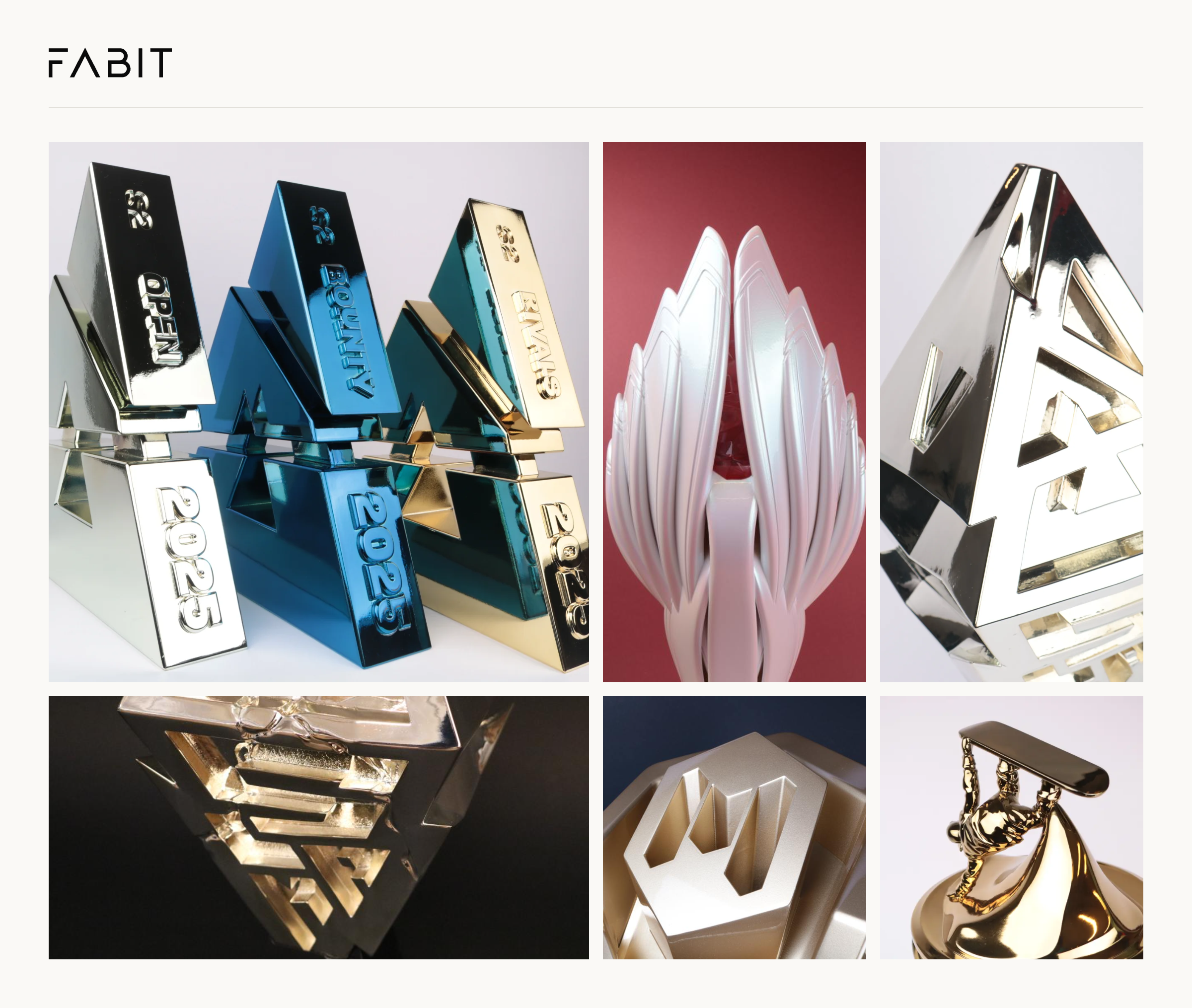
Weight is meaning. When someone lifts a DMLS award, the density communicates seriousness in a way no plated plastic can. DMLS delivers that authenticity while preserving the design freedom of additive manufacturing, so a client’s own logo geometry, product form or architectural signature can be rendered in solid metal rather than approximated. It is the combination of genuine material and impossible geometry that makes DMLS special for deal toys and top-tier awards.
Finishing a DMLS part
A DMLS part comes off the machine with a slightly grainy, matte surface and attached supports. Turning it into a finished award is craft-intensive. Supports are removed, the part is often heat-treated to relieve internal stress, and then the real finishing begins: bead blasting, tumbling, hand polishing to a mirror sheen, brushing for a satin look, or plating and coating. This is where Fabit’s in-house makers earn their place, because the difference between a printed metal part and a finished metal award is entirely in the finishing.
DMLS in Fabit’s workflow
At Fabit, DMLS sits alongside resin and powder printing under one roof in Antwerp, which means a single award can combine a DMLS metal core with a crisp resin-printed detail or an embedded element. We keep the whole chain in-house, from design validation to printing to finishing to worldwide shipping, and we respond to enquiries within 24 hours. To see how metal fits into a bespoke piece, explore our materials overview, review examples on the 3D printed trophy page, or start shaping an idea in our design studio.
Veelgestelde vragen
Is DMLS the same as metal 3D printing? DMLS is one of the main metal 3D printing technologies. “Metal 3D printing” is the umbrella term, and DMLS is the specific laser powder-bed fusion process most often used for detailed metal awards.
Are DMLS parts real metal? Yes. DMLS produces fully dense metal parts, not metal-look coatings. A DMLS stainless steel award is solid stainless steel throughout.
Is DMLS expensive? Metal printing costs more than resin or powder printing because of the machine, material and finishing involved, but for small runs it is often more economical than tooling a mould, and the result justifies the investment for flagship pieces.
Can Fabit combine DMLS with other materials? Yes. Because we print metal, resin and nylon in-house, we routinely combine a DMLS metal element with resin detail or embedment to create richer, multi-material awards.
Related terms