

Los mejores materiales para premios corporativos: vidrio, metal, madera y más
Los mejores materiales para premios corporativos son los que transmiten el mensaje adecuado al público adecuado en el contexto adecuado. No existe una respuesta universal: el material óptimo para un premio de reconocimiento del sector bancario no es el mismo que el de una empresa tecnológica, una firma de servicios profesionales o una organización centrada en la sostenibilidad. Entender qué comunica cada material, y a quién, es la base de una decisión de encargo bien informada.
Esta guía examina las principales opciones de material para premios corporativos y cubre sus cualidades visuales, propiedades prácticas, aplicaciones habituales e implicaciones de coste. Está pensada para responsables de marca, líderes de RR. HH. y profesionales de compras que necesitan encargar premios de reconocimiento que representen adecuadamente a su organización.
Fabit
¿Está considerando la resina? Descubra lo que es posible con trofeos de resina.
Premios personalizados, diseñados y fabricados en casa
Fabit diseña y produce reconocimientos personalizados para marcas, ceremonias y programas. Diseño en 3D, producción propia y entrega en todo el mundo, con respuesta en menos de 24 horas.
Por qué importa el material en el reconocimiento corporativo
Los premios corporativos cumplen dos funciones a la vez: reconocen el logro de una persona o un equipo y representan a la organización que reconoce. El material elegido comunica los valores de la organización, sus estándares estéticos y la seriedad con que se toma el reconocimiento, antes de que el destinatario lea una sola palabra de la inscripción.
Una firma de servicios financieros que entrega premios en cristal óptico transmite algo distinto de una que entrega el mismo reconocimiento en acrílico, aunque ambos premios tengan un diseño idéntico. El cristal comunica refinamiento, permanencia y una inversión meditada. El acrílico comunica practicidad y eficiencia, cualidades valiosas en el contexto adecuado, pero no el mensaje principal para un momento de reconocimiento insignia.
El material también afecta a cómo se exhibe un premio. Los premios corporativos acaban normalmente en escritorios, aparadores o estanterías de oficina, donde colegas, clientes y visitantes los verán durante años. Un material que luce bien bajo la iluminación controlada de un evento pero peor con la luz variable de una oficina no cumple su función principal de exhibición.
La percepción que el destinatario tiene de la calidad de un premio se forma muy deprisa y es difícil de cambiar por otros medios. La calidad del material es la primera y más persistente señal de cuánto vale el premio a los ojos de la organización que lo entrega. Acertar en esto es fundamental para la eficacia del programa de reconocimiento.
Vidrio y cristal: el estándar corporativo
Vidrio y cristal son los materiales por defecto de los premios corporativos premium en la mayoría de los sectores profesionales, y con razón. Su claridad visual, su peso y la forma en que interactúan con la luz crean una impresión de calidad difícil de lograr con cualquier otro material a un precio comparable.
El cristal óptico, producido con especificaciones muy estrictas de claridad y densidad, es el estándar premium de esta categoría. Los premios de cristal tienen un peso y una luminosidad característicos. Refractan la luz y crean sutiles efectos de arcoíris en las superficies cercanas, algo que atrae la mirada como ningún material plano u opaco puede hacerlo.
El vidrio, aunque más ligero y menos denso que el cristal, ofrece un atractivo visual similar a un precio más bajo. Técnicas como el chorreado profundo, el grabado al ácido y la impresión UV permiten que los premios de vidrio lleven diseños complejos con precisión. El vidrio de color, disponible en una amplia gama de tonos, amplía la paleta de los diseñadores.
La principal limitación práctica del vidrio y el cristal es su fragilidad. Ninguno de los dos materiales resiste bien las caídas o los golpes, por lo que el envío y la manipulación son una consideración real. Los destinatarios deben recibir los premios en embalaje protector y con indicaciones de cuidado. En cuanto a durabilidad de exhibición, el vidrio y el cristal figuran entre las opciones más duraderas siempre que no sufran impactos.
Metal: autoridad y permanencia
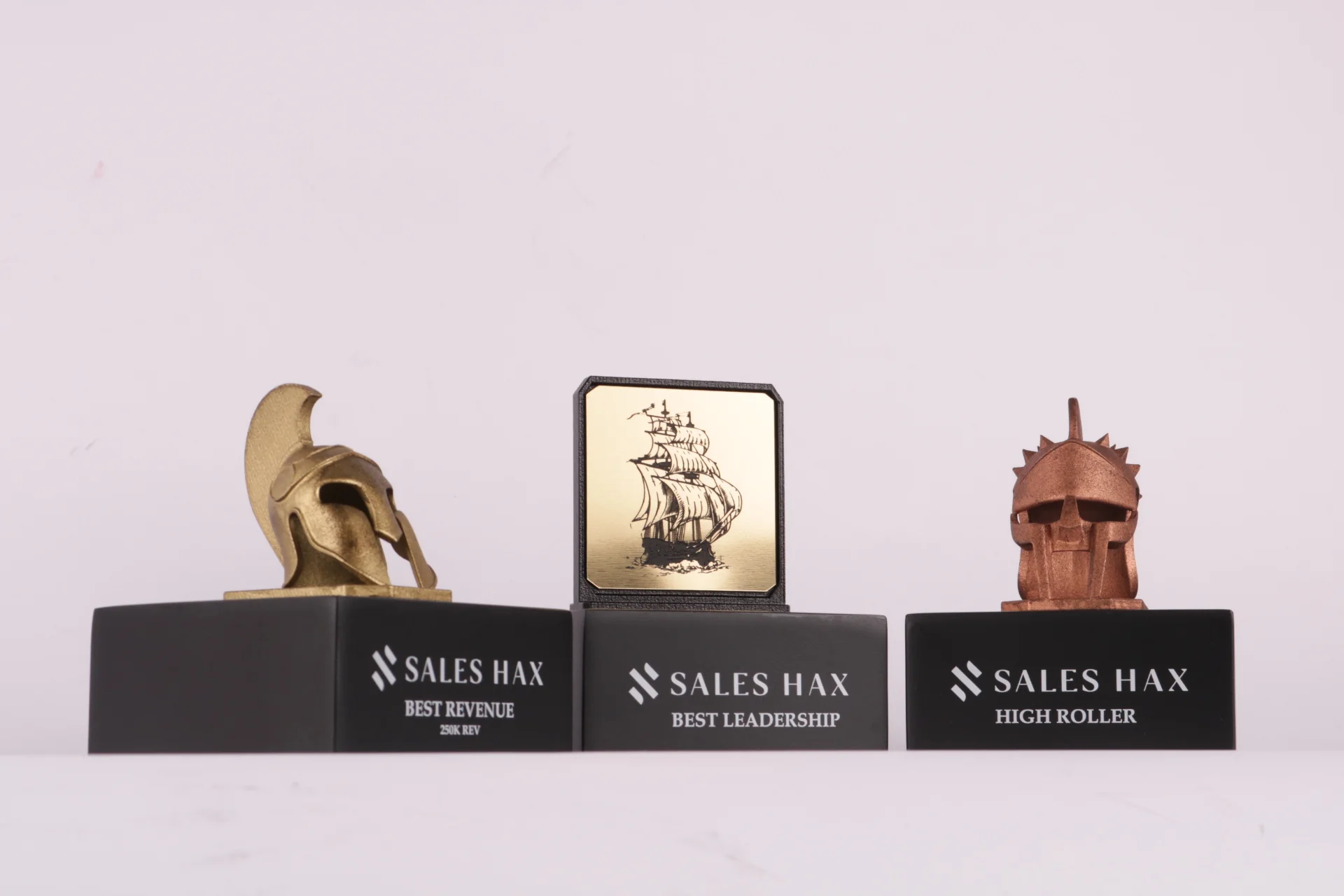
Los premios de metal han sido el estándar del reconocimiento de prestigio durante siglos y conservan su autoridad cultural en el contexto corporativo. El peso y la solidez del metal transmiten permanencia y sustancia. Cuando un destinatario toma en la mano un premio de metal, la experiencia física, el peso, la solidez fría de la superficie, forma parte del propio reconocimiento.
La aleación de zinc con chapado en oro, plata o bronce es el metal más utilizado en la producción de premios corporativos. La combinación de un coste relativamente accesible, una excelente mecanizabilidad para formas complejas y la posibilidad de aplicar acabados chapados de alta calidad lo convierte en una elección versátil para programas que requieren complejidad de diseño dentro de un presupuesto.
El aluminio ofrece una alternativa más ligera, con excelentes características de mecanizado y la posibilidad de anodizarse en una gama de colores. Los premios contemporáneos de aluminio, con superficies mecanizadas con precisión y un diseño cuidado, pueden ser visualmente impresionantes sin un peso excesivo. El color anodizado abre posibilidades de alineación con la marca que los acabados chapados no ofrecen.
El acero inoxidable y el latón se sitúan en el extremo premium de los metales para premios corporativos. Ambos son más caros de producir que la aleación de zinc, pero ofrecen una calidad de material realmente distinta. El acero inoxidable, en particular, tiene una cualidad contemporánea y arquitectónica que encaja bien con los programas de premios de los sectores tecnológico e industrial.
Madera: calidez, singularidad y sostenibilidad
La madera aporta a los premios corporativos cualidades distintivas que ningún material fabricado puede replicar. Su veta natural, la variación entre piezas y su forma de interactuar con los acabados crean objetos con auténtica singularidad. No hay dos premios de madera exactamente iguales, lo que paradójicamente aumenta su valor en un contexto donde el reconocimiento trata, por definición, de la persona.
Premios de madera natural son especialmente apropiados para organizaciones en las que la sostenibilidad es un valor central. Un premio bien trabajado en madera de origen sostenible es una expresión tangible del compromiso ambiental, no como gesto simbólico, sino como una elección de material que refleja los valores de la organización en un objeto permanente entregado a la persona reconocida.
Distintas especies de madera crean impresiones visuales y culturales muy diferentes. Los tonos profundos y ricos del nogal resultan sofisticados y refinados. La veta marcada del roble tiene un carácter de herencia adecuado para organizaciones de larga trayectoria. El cerezo aporta calidez y delicadeza. El arce o el fresno de tono claro crean una estética contemporánea y limpia. La elección de la especie es una decisión de diseño con verdadero peso.
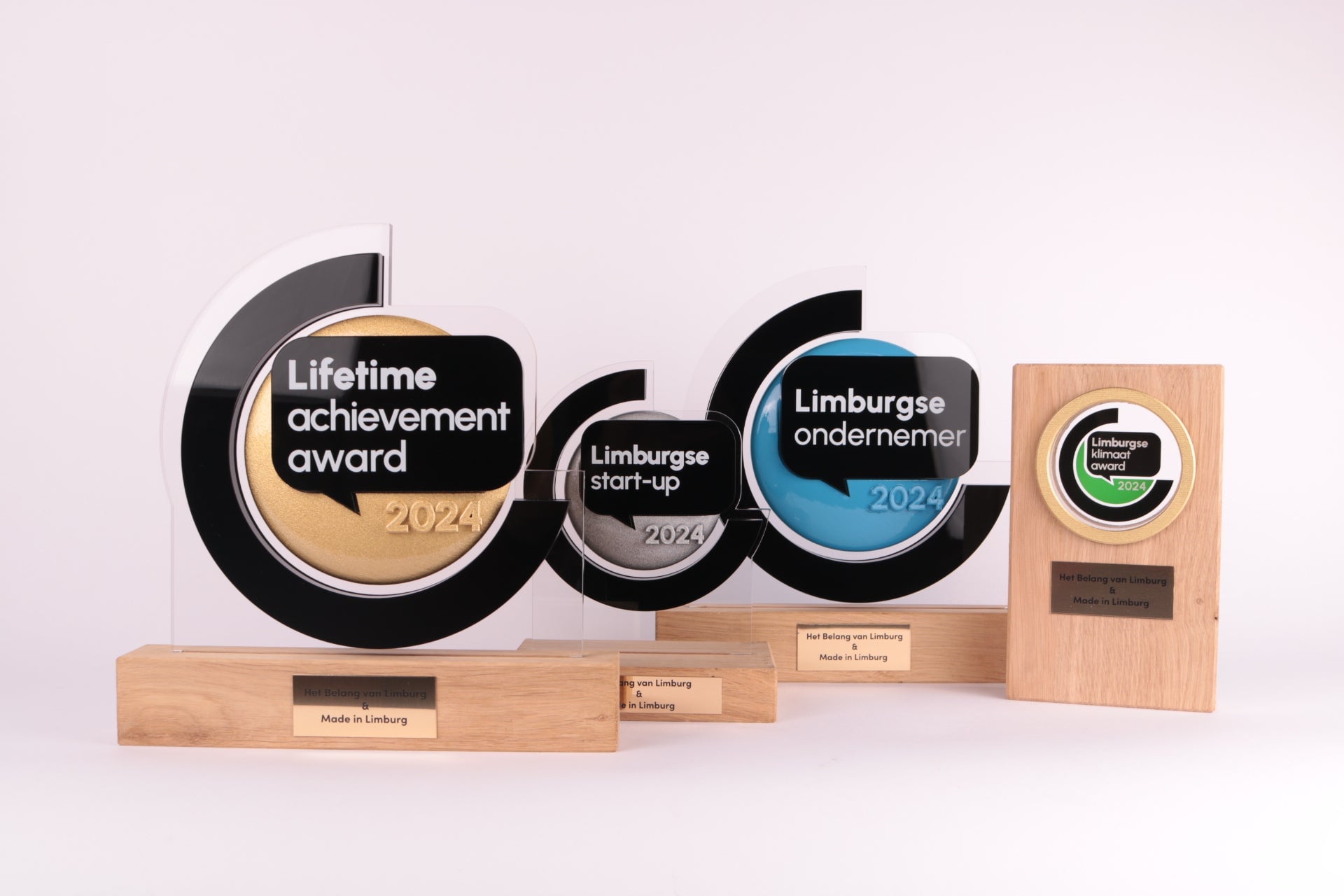
La madera combina bien con otros materiales en diseños híbridos de premios. Un chapado metálico o unos detalles de metal incrustados sobre un fondo de madera crean un contraste a la vez cálido y con autoridad. Los elementos de vidrio o cristal engastados en madera dan luminosidad a la pieza sin perder la calidez del material natural. Estas combinaciones son cada vez más habituales en el diseño de premios corporativos premium.
Acrílico: diseño contemporáneo y eficiencia de costes
Acrílico ha mejorado de forma notable su reputación en el mercado de premios corporativos durante la última década. Antes se asociaba sobre todo al reconocimiento de bajo presupuesto, y hoy el acrílico de alta calidad se usa en diseños sofisticados en muchos contextos corporativos. Su claridad óptica, su mecanizabilidad y su versatilidad lo convierten en una opción realmente sólida para programas de diseño contemporáneo.
El acrílico transparente, mecanizado con tolerancias precisas y pulido a un alto estándar, puede imitar el aspecto del vidrio y el cristal con un coste y un peso notablemente menores. En programas de reconocimiento que requieren mayores cantidades sin un presupuesto proporcionalmente mayor, el acrílico de calidad ofrece un impacto visual que sale bien en fotos y se exhibe con atractivo.
El acrílico de color, disponible en una paleta muy amplia de tonos vivos y sutiles, abre posibilidades de diseño que el vidrio y el cristal no pueden igualar a un coste comparable. La impresión interna, en la que los gráficos quedan atrapados entre capas de acrílico transparente, crea una profundidad y una complejidad visual propias de este material. La retroiluminación LED a través de acrílico transparente o esmerilado genera efectos espectaculares en eventos.
El corte por láser permite mecanizar en acrílico formas complejas de gran precisión, con un excelente acabado de los bordes. La rapidez y la precisión del mecanizado láser hacen que el acrílico sea especialmente adecuado para diseños en los que la complejidad geométrica y la eficiencia de producción son prioridades. Los diseños geométricos contemporáneos en acrílico pueden resultar realmente llamativos y distinguirse de los formatos de premio más convencionales.
Piedra y mármol: prestigio y longevidad
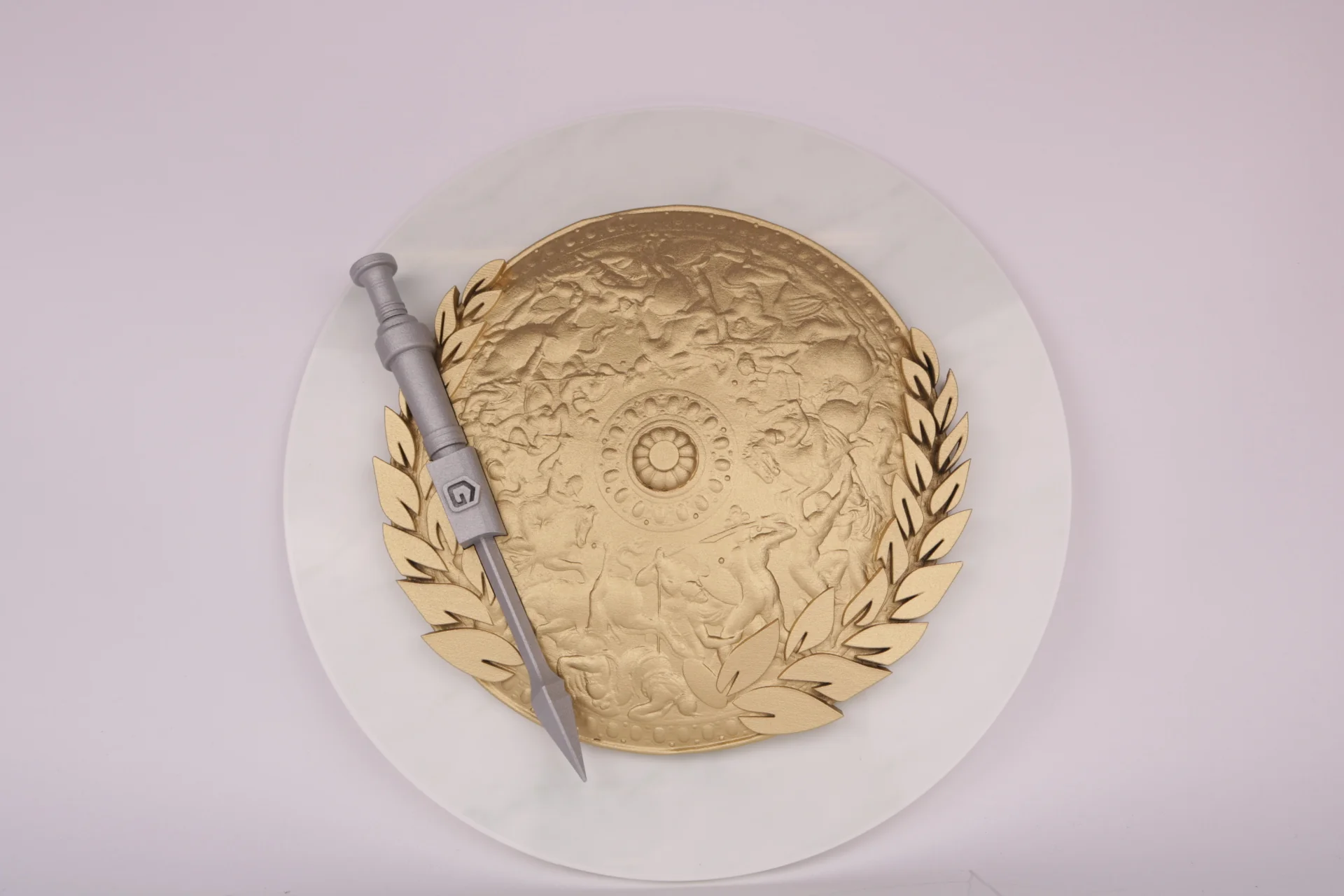
La piedra natural, ya sea mármol, granito, pizarra u ónice, ofrece una calidad material que ningún material fabricado replica por completo. Los premios de piedra tienen una longevidad excepcional: no se empañan, no se decoloran ni se degradan en condiciones normales de exposición. Un premio de mármol tendrá el mismo aspecto dentro de treinta años que hoy.
El carácter visual del mármol varía considerablemente según el tipo. El mármol blanco de Carrara posee una elegancia clásica, asociada al arte y a la arquitectura, que transmite un prestigio excepcional. El granito negro es audaz y arquitectónico. La pizarra tiene un carácter más discreto y contemporáneo. Cada variedad transmite un mensaje visual distinto, y la elección adecuada depende del contexto de la organización.
La principal limitación de la piedra en la producción de premios corporativos es su peso. Una pieza de mármol de cierto tamaño puede ser muy pesada, lo que afecta al coste de envío, a la practicidad de manipulación y a la experiencia de quien la recibe. Para los premios que los galardonados deben transportar ellos mismos, un peso extremo supone un verdadero inconveniente. Para piezas de reconocimiento de exposición permanente, es menos relevante.
La piedra se utiliza con frecuencia como base de premios corporativos que combinan materiales: un elemento de cristal o de metal montado sobre una base de mármol o granito. La base de piedra aporta estabilidad, anclaje visual y prestigio material, mientras que los demás materiales aportan los elementos principales del diseño. Esta combinación es un enfoque clásico que sigue siendo eficaz en contextos de reconocimiento corporativo premium.
Cómo elegir el material según el sector
Cada sector tiene expectativas y preferencias distintas sobre los materiales de los premios corporativos, determinadas por la cultura, las convenciones de identidad visual y los entornos en los que normalmente se exhibirán. Conocer estas normas sectoriales ayuda a quienes encargan los premios a tomar decisiones que resulten adecuadas para su público.
Las organizaciones de servicios financieros (bancos, firmas de inversión, aseguradoras) tienden a preferir el cristal, el vidrio y los metales premium. Estos materiales encajan con las convenciones de identidad visual del sector y con los entornos en los que se exhibirán sus premios: oficinas formales, salas de juntas y recepciones que subrayan la permanencia y la precisión.
Las empresas tecnológicas prefieren cada vez más los materiales contemporáneos y las formas atrevidas. El aluminio mecanizado con precisión, el acrílico con iluminación integrada o los diseños híbridos que remiten a la estética digital son opciones apropiadas en el sector tecnológico. La madera con detalles metálicos también funciona bien en empresas tecnológicas cuya cultura valora la artesanía junto con la innovación.
Los despachos jurídicos y las firmas de servicios profesionales tienden a preferir materiales tradicionales (cristal, madera o metal premium) acordes con el énfasis de su sector en la tradición, la confianza y la estabilidad. Los materiales contemporáneos o experimentales pueden resultar incongruentes en contextos profesionales donde el lenguaje visual de la organización es deliberadamente conservador.
Las organizaciones creativas y de marketing tienen más libertad en la elección del material. Los materiales distintivos, poco habituales o experimentales suelen recibirse bien en entornos creativos, donde la originalidad es un valor profesional. Para estas organizaciones, un premio de cristal convencional puede resultar menos apropiado que una pieza que refleje la cultura creativa que desean proyectar.
Opciones de materiales sostenibles para premios corporativos
La sostenibilidad es una consideración cada vez más importante en la compra de premios corporativos, en especial para las organizaciones con compromisos medioambientales públicos u obligaciones de información sobre su cadena de suministro. Un programa de reconocimiento cuyos premios físicos se fabrican con materiales perjudiciales para el medio ambiente genera una contradicción incómoda para las organizaciones con ambiciones reales de sostenibilidad.
Algunos fabricantes ofrecen metales reciclados (aluminio producido con material reciclado o aleación de zinc que incorpora material reciclado), lo que reduce el impacto de extracción de la producción de premios metálicos. La calidad visual de los premios fabricados con metal reciclado es indistinguible de la de los fabricados con material virgen.
La madera recuperada o con certificación de sostenibilidad es la opción de material más directa para las organizaciones en las que la sostenibilidad es el factor principal. La madera con certificación FSC procedente de bosques gestionados de forma responsable ofrece credenciales medioambientales verificables, y la madera recuperada de derribos o de fuentes de salvamento tiene un impacto de extracción aún menor.
Las alternativas de origen biológico al acrílico convencional están surgiendo a medida que evoluciona la tecnología de fabricación. Algunas formulaciones de plástico de origen vegetal tienen características visuales y de procesado lo bastante próximas a las del acrílico convencional como para utilizarse en la producción de premios. Estos materiales aún no están tan disponibles como las opciones convencionales, pero son cada vez más viables para las organizaciones que los buscan específicamente.
La durabilidad de un premio es, en sí misma, una consideración de sostenibilidad. Un premio bien hecho que dura cincuenta años tiene un mejor perfil ambiental que uno que se deteriora y se desecha en cinco, sea cual sea el material con el que esté fabricado. Especificar materiales y procesos de construcción de calidad es una decisión de sostenibilidad, incluso cuando se toma sin una intención medioambiental explícita.
Diseños multimaterial para lograr el máximo impacto
Algunos de los premios corporativos más eficaces visualmente combinan dos o más materiales, aprovechando las propiedades específicas de cada uno para distintos aspectos del diseño. Los premios multimaterial pueden lograr una riqueza y una complejidad de efecto visual que las piezas de un solo material rara vez igualan.
El cristal o el vidrio combinados con metal forman una pareja especialmente lograda. La luminosidad del cristal o del vidrio frente a la autoridad del metal crea un diálogo visual entre materiales más interesante que cualquiera de ellos por separado. Las bases metálicas con elementos de cristal, o las estructuras metálicas que envuelven paneles de vidrio, exploran esta relación con eficacia.
La madera y el metal son otra combinación muy eficaz en el diseño de premios corporativos. La calidez y la variación natural de la madera frente a la precisión y la superficie fría del metal mecanizado crean un fuerte contraste estético. Estas combinaciones atraen especialmente a las organizaciones que quieren comunicar a la vez artesanía e innovación.
El acrílico combinado con materiales naturales (madera, piedra o componentes metálicos) aprovecha la capacidad del acrílico para transmitir color y efectos de luz, mientras que los materiales naturales aportan anclaje y calidad táctil. En productos en los que el impacto visual es una prioridad junto con la autenticidad del material, estas combinaciones funcionan especialmente bien.
Los diseños multimaterial requieren una ingeniería cuidadosa para garantizar la estabilidad, la durabilidad y la coherencia estética de la pieza terminada. Cada material tiene tasas de dilatación, requisitos de adhesión y características de durabilidad distintos. Para obtener un buen resultado es esencial contar con experiencia de fabricación en la combinación concreta que se especifica.
Consideraciones de presupuesto por categoría de material
Conocer el coste relativo de los distintos materiales ayuda a asignar el presupuesto a los elementos que más influyen en la experiencia de quien recibe el premio. El coste del material es un factor, pero no el único que determina el coste total del premio: el diseño, las herramientas, la personalización y el embalaje también contribuyen.
El acrílico es el punto de entrada más económico para premios corporativos personalizados con una calidad visual real. Una pieza de acrílico bien diseñada, con una personalización cuidada y un embalaje adecuado, puede lucir excelente con un coste unitario moderado. En programas de reconocimiento grandes, donde la cantidad determina el presupuesto, el acrílico ofrece la mejor relación entre coste e impacto visual.
Los premios de vidrio y de metal de gama media ocupan el tramo intermedio del mercado. Estos materiales son adecuados para la mayoría de los contextos de reconocimiento corporativo y transmiten la señal de calidad que el público profesional general espera del reconocimiento institucional. El coste unitario en este nivel suele variar mucho según la complejidad.
Los premios de cristal, de metal premium y de piedra ocupan el extremo superior del abanico de premios corporativos. Estos materiales son adecuados para el reconocimiento más destacado: premios principales a empleados, grandes obsequios a clientes y reconocimientos de larga trayectoria a directivos senior, donde la inversión en material debe ser proporcional a la importancia de la ocasión.
Una estrategia presupuestaria sensata consiste en aplicar un enfoque escalonado de materiales en el programa de reconocimiento: materiales de calidad pero accesibles para las categorías más amplias y materiales premium para las más importantes. Así se crea una jerarquía visible que los empleados comprenden y que da más sentido a la inversión en los premios de máximo nivel.
Evaluar muestras antes de decidir el material
El paso más útil al elegir el material de un premio corporativo es evaluar muestras físicas antes de tomar la decisión final. Las fotografías, las especificaciones y las descripciones son útiles, pero no pueden captar las cualidades táctiles, el peso y el carácter superficial de los distintos materiales como lo hace una muestra física.
La mayoría de los fabricantes pueden facilitar muestras de materiales o pequeños ejemplos de premios terminados en distintos materiales para su evaluación. Solicite muestras representativas de la calidad que recibirá realmente en producción, no piezas de exposición preparadas específicamente para la evaluación.
Evalúe las muestras en el entorno donde se exhibirán los premios, y no solo bajo la iluminación controlada de una sala de exposición. La luz natural, los fluorescentes de oficina y la luz ambiental doméstica interactúan de forma distinta con cada material. Un cristal que luce espectacular en una sala a oscuras puede verse más apagado bajo la luz fluorescente de una oficina.
Implique en la evaluación a las personas cuya opinión más importa. Si el director general va a entregar el premio en una ceremonia anual, su reacción ante las muestras de material es relevante. Si los premios suelen exhibirse en despachos domésticos, la opinión de alguien con un entorno de exposición similar aporta una perspectiva valiosa. Las buenas decisiones sobre materiales se basan en el contexto real.
Materiales al servicio del propósito del premio
Los mejores materiales para premios corporativos son los que sirven al diseño, comunican los valores adecuados al público adecuado y se comportan bien en los entornos donde vivirán a largo plazo. Ningún material es superior en todos los casos: lo que importa es que sus propiedades se ajusten al propósito concreto del premio.
Las organizaciones que abordan la elección del material con este criterio encargan de forma constante premios que los galardonados valoran y exhiben con auténtico orgullo. La inversión necesaria para acertar con esta decisión es modesta en relación con el conjunto del programa de reconocimiento, y su impacto en la eficacia del programa es desproporcionadamente grande.